Video Localization
July 3, 2026
Video Localization: How to Adapt Your Videos for Global Audiences
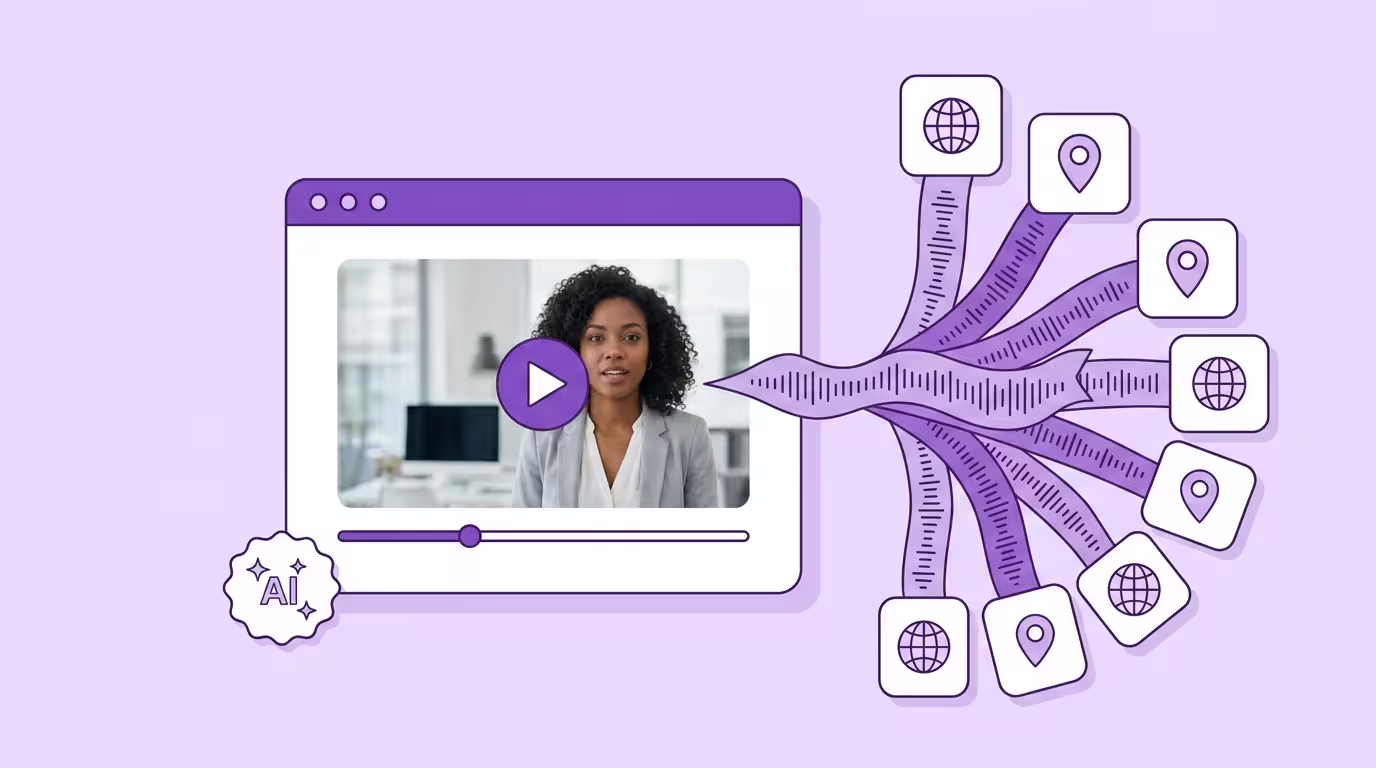
Video localization is the process of adapting video content — including spoken dialogue, on-screen text, subtitles, and cultural references — so it feels native to viewers in a specific market. Unlike simple translation, which converts words from one language to another, localization adapts the entire experience: the voice, the visuals, the cultural nuances, and the pacing. A localized video communicates the same meaning in a way that actually resonates with people who live in a different culture, speak a different language, and have entirely different expectations of what "professional content" looks like.
That distinction matters more than most companies realize. 76% of consumers prefer to buy products with information in their native language, according to CSA Research's landmark "Can't Read, Won't Buy" study (Source: CSA Research, https://csa-research.com/Featured-Content/For-Global-Businesses/Cant-Read-Wont-Buy). And only about 20% of the world's population speaks English — meaning that without localization, you're invisible to the vast majority of potential viewers. A poorly dubbed video doesn't just feel awkward. It actively undermines trust.
This guide covers the key methods of effective video localization, best practices for localizing video content at scale, and how modern tools have fundamentally changed the economics of reaching new audiences in multiple languages. Whether you're a content creator expanding into new markets, a marketing team scaling campaigns internationally, or an L&D department training a global workforce — this is what you need to know.
Key Takeaways
- Video localization adapts the entire viewing experience — voice, visuals, timing, and cultural context — while translation only converts the words.
- The business case is unambiguous: 76% of consumers prefer buying in their native language, and only about 20% of the world speaks English (CSA Research).
- AI has collapsed the economics: traditional dubbing runs roughly €80 per finished minute, AI-powered localization a fraction of that — a five-minute video is localized in about ten minutes per language.
- Visual synchronization is the quality bar in 2026: without mouth movements matching the target-language audio, even good dubbing feels translated the moment the speaker is on screen.
What Is Video Localization?
Video localization adapts every layer of a video to feel native in a target market — not just the words, but the voice, the visual elements, the pacing, and the cultural context. Where simple translation handles language, localization handles the entire viewer experience.
Think about what happens when you're watching videos in your native language versus one that's been translated. The translated version might be accurate, but something feels off. Maybe the speaker's mouth movements don't match the audio. Maybe the humor falls flat because culture-specific references weren't adapted. Maybe the on-screen text still shows prices in dollars when you're buying in euros. Localization fixes all of that.
A fully localized video typically involves:
Audio adaptation — dubbing, voice over, or voice cloning that preserves the speaker's original tone
Subtitles and captions — not just translated speech, but adaptation for reading speed and cultural preferences
Visual adaptation — on-screen text, graphics, date formats, currency, units of measurement, and visual consistency across localized versions
Cultural adaptation — references, examples, humor, and imagery that resonate with the target audience in different regions
Timing adjustments — accounting for text expansion (translated text can be 30–50% longer than the original) and speech rhythm differences across different languages
The scope varies by project. A YouTube creator might only need new audio and translated thumbnails. An enterprise e-learning team might need every on-screen element rebuilt for twelve markets. But the principle is the same: make the intended viewers forget this wasn't originally created for them. And when done well, localization doesn't just remove barriers — it makes content accessible to diverse audiences and builds connection across markets that pure translation never achieves. For context on the broader landscape, see our guide to AI video translation.
For a deeper look at how localization differs from straight translation, see our breakdown of video localization vs. translation.
Why Video Localization Matters in 2026
The Business Case
The AI video translation market is projected to grow from $2.68 billion in 2024 to $33.4 billion by 2034 — a CAGR of 28.7% (Source: Market.us, 2024, https://market.us/report/ai-video-translation-market/). That's not incremental growth. That's an industry being rebuilt from the ground up.
The driver is simple: video works. And video in the viewer's native language works dramatically better. 90% of consumers say videos help them make purchasing decisions — yet most content exists only in one language, locking out new audiences across the globe. Localized videos see approximately 30% higher watch-through rates, which translates directly into better customer engagement and conversion rates. For L&D teams, it means better knowledge retention. For creators, it means algorithmic reach in markets that were previously invisible.
Localized content also improves search engine visibility. Search engines prioritize content in local languages, meaning a localized video with translated titles, descriptions, and tags can rank in markets your original video would never reach. That's organic traffic you're leaving on the table without a video localization strategy.
The economics have shifted, too. What used to require studio bookings, professional voice actors, and weeks of post-production now takes hours with modern tools. Traditional localization of a five-minute corporate video into three languages cost roughly $1,200 (5 minutes × 3 languages × $80/minute). Today, AI-powered localization delivers comparable results at a fraction of that — cost effective enough to localize every piece of video content, not just flagship productions.
The Cultural Dimension
Numbers tell part of the story. But the real reason localization matters is trust.
When a German enterprise watches a video where the speaker sounds authentically German — not dubbed-over-English German, but native-cadence, native-phrasing German — the entire perception of the product changes. The same applies to a Japanese training video, a Brazilian marketing campaign, or a French customer support tutorial. Cultural relevance creates emotional connection that simple translation cannot.
Cultural adaptation is where most localization efforts either shine or fall apart. A direct translation of an American idiom doesn't work. A case study featuring only US companies doesn't resonate with a European audience. Adapting visual and symbolic elements matters too — colors, gestures, and symbols can have vastly different meanings depending on the local culture. Localization means rethinking all of these elements — and it's the part that AI alone still can't fully handle. The best results come from AI-powered workflows with human review built in, where localization professionals and native experts collaborate to catch cultural nuances that automated tools miss.
The Four Core Methods of Video Localization
Not every video needs the same treatment. The right localization methods depend on your content type, budget, quality requirements, and how much the speaker's identity matters to the message. Here are the key methods:
Subtitling
The most accessible entry point. Subtitles translate speech into text overlaid at the bottom of the screen while keeping the original audio intact. Fast, affordable, and effective for content where viewers expect to read — think international film, conference recordings, or social media clips where most people watch with sound off anyway. Subtitles should be clear, concise, and easy to read, with attention to font size, color, and background contrast.
The limitation: subtitles compete for attention with visual elements. For training videos with on-screen demonstrations, or for content where the speaker's voice IS the brand, subtitles alone don't deliver a truly localized experience.
Voice Over
A narrator reads a translated voiceover script over the original video, with the original audio typically lowered in volume. Common in documentaries, news segments, and some corporate content. Voice over is a step up from subtitles in terms of making content accessible, but it creates a disconnect — the viewer hears two voices, knows they're watching translated content. For existing videos that need a quick localization solution, voice over is often the fastest path.
AI Dubbing
Dubbing replaces the original audio entirely with new audio in the target language. Traditional localization required casting voice actors, booking studios, and managing multiple recording sessions per language. AI dubbing does this automatically — and with voice cloning technology, the translated audio preserves the original speaker's voice characteristics, tone, and emotion.
When combined with generative visual synchronization, AI dubbing becomes the closest thing to reshooting a video in another language. The speaker's mouth movements match the spoken dialogue in the target language. The voice sounds like them. The result doesn't feel dubbed at all.
This is where the industry has moved fastest. At Dubly, we see this consistently: companies that start with subtitles for cost reasons switch to AI dubbing once they see the engagement difference. The cost gap that used to justify subtitles-only approaches has largely disappeared.
For a deep dive into how this technology works, see our guide to AI dubbing.
Versioning (Reversioning)
Versioning adapts existing videos for a specific audience or region by modifying select elements — swapping examples, updating graphics, adjusting the marketing campaign messaging — without recreating the entire video. It's a cost-effective choice for localizing existing videos across different regions when the core message stays the same but the packaging needs to change. Think: same product video, but with region-specific pricing, testimonials, and regulatory disclaimers.
Transcreation
The most intensive form of localization. Transcreation doesn't just translate content — it recreates it for the target market. New scripts, new examples, sometimes new visual narratives. Used primarily for high-stakes brand campaigns where the emotional impact matters more than literal accuracy.
Transcreation is expensive and time-consuming. But for flagship content — a brand launch video, a Super Bowl ad adapted for European markets, a CEO keynote — it can be worth it.
Methods Compared
| Method | Cost | Speed | Quality | Best For |
|---|---|---|---|---|
| Subtitling | $ | Hours | Good | Social media, conferences, film |
| Voice Over | $$ | Days | Good | Documentaries, news, corporate |
| AI Dubbing + Lip Sync | $$–$$$ | Hours | Excellent | Marketing, e-learning, YouTube |
| Versioning | $$–$$$ | Days | Good | Marketing campaigns, regional ads |
| Transcreation | $$$$ | Weeks | Excellent | Brand campaigns, keynotes |
How the Localization Process Works
The localization process follows a similar arc whether you're localizing one explainer video or a library of 500 training modules. Understanding the process of adapting videos for new markets helps you plan realistic timelines and avoid common pitfalls.
Content Analysis
Transcription, script extraction, and flagging elements for cultural adaptation
Translation
Translation plus cultural adaptation for text expansion and tone
Audio Production
Voice cloning synthesizes the script in the speaker's voice
Visual Adaptation
Lip sync, screen text, format, and accessibility
Quality Assurance
Audio-visual sync, native review, and in-market sign-off
Content Analysis and Script Preparation
Before anything gets translated, someone needs to understand what the video actually says and what it means. That starts with automated transcription and script extraction, then moves into identifying elements that need cultural adaptation: idioms, culture-specific references, product names, legal disclaimers, on-screen text, and sound effects that may carry different connotations in different regions.
For existing videos, this analysis phase also determines what can be localized in place versus what needs to be recreated. Not every element requires the same treatment — some on-screen text can be overlaid, while embedded graphics may need full redesign.
A glossary of brand-specific terminology saves enormous time across localization projects. At Dubly, customers who use the glossary feature from the start report significantly fewer revision cycles — the AI gets the terminology right on the first pass.
Translation and Cultural Adaptation
The script gets translated — but not just word-for-word. A skilled localization process adjusts for:
Text expansion — German and French text runs 20–30% longer than English. Scripts need to be adapted so the translated audio doesn't feel rushed or unnaturally compressed.
Cultural context — References, examples, and even humor get swapped for locally relevant alternatives.
Tone calibration — What reads as confident in American English can come across as aggressive in Japanese. Tone needs to be recalibrated, not just translated.
Audio Production
This is where the method you choose kicks in. For AI dubbing with voice cloning, the localization process is largely automated: the original speaker's voice characteristics are analyzed, the translated script is synthesized in their voice, and the result is a natural-sounding audio track in the target language. Voice actors are still used for premium projects, but AI voice over and dubbing now handle the majority of volume.
One thing that surprises most people: the cloned voice doesn't carry over the original accent. A German speaker dubbed into English sounds natively English — not German-accented English. That's by design. Native pronunciation in the target language is what makes localized content feel authentic.
Visual Adaptation
Audio is only half the equation. A fully localized video also addresses visual elements:
Lip synchronization — Generative technology adjusts the speaker's mouth movements frame by frame to match the spoken dialogue in the target language. Without it, even perfect dubbing creates a jarring disconnect.
Screen text and graphics — Lower thirds, title cards, data visualizations, and any text burned into the video need to be rebuilt in the target language while maintaining visual consistency.
Format adaptation — Date formats, currency symbols, units of measurement, and even color associations vary by market.
Audio description — For accessibility, some markets require descriptive audio tracks alongside the localized dialogue.
Internationalizing your video production upfront — separating text from graphics, avoiding rapid speech, leaving room for text expansion — makes all of this dramatically easier. For more on the technology behind visual synchronization, see our deep dive on lip sync.
Quality Assurance and In-Market Review
The final step — and the one most teams skip at their own peril. Quality assurance for localized video isn't just proofreading. It involves:
Watching the full video for audio-visual sync
Checking cultural appropriateness with native speakers
Verifying that glossary terms are used consistently
Testing subtitle readability and timing
Enterprise teams often add an in-market review stage where local stakeholders sign off before publication. Conducting local testing with focus groups from the target audience helps identify overlooked cultural or technical issues before a full launch. That extra step catches things automated QA misses — and prevents costly corrections after publication.
Want the full step-by-step? See our video localization workflow guide.
Best Practices for Successful Video Localization
A strong video localization strategy goes beyond choosing the right method. These best practices separate effective localization from mediocre results:
Plan for localization from the start. Internationalize your source content — avoid text-heavy graphics, leave space for text expansion, and keep spoken dialogue at a moderate pace. This makes localizing video content into multiple languages dramatically cheaper and faster.
Localize metadata, not just video. Translate titles, descriptions, and tags for each target market. Search engines index this metadata separately per language — it's one of the highest-ROI activities for reaching new audiences through organic search.
Use a centralized glossary. Brand terminology, product names, and industry jargon should be consistent across all localized versions. Manual editing of one-off translations without a glossary creates drift that compounds with every new video.
Collaborate with native experts. Even the best AI needs human review for tone, formality, and cultural preferences. Build relationships with reviewers in your key markets — they'll catch nuances that no translation platform can.
Don't localize everything at once. Start with your highest-performing existing videos — the ones that already drive engagement and conversions. Prove the ROI there, then expand to your full video library.
Test before scaling. Run your first localized versions past native speakers in the target audience before committing to a full rollout across different regions. A small investment in testing prevents expensive re-work.
AI-Powered Video Localization: What's Changed
Two years ago, localizing video content meant choosing between expensive and slow (professional dubbing) or cheap and mediocre (automated subtitles). That tradeoff no longer exists.
AI has changed three things simultaneously:
Speed. A five-minute video can be localized — with voice cloning, translated audio, and visual synchronization — in roughly ten minutes per language. Not days. Not weeks. Minutes. The bottleneck has shifted from production to human review.
Cost. Traditional localization with professional dubbing runs approximately €80 per finished minute when you factor in casting, studio time, and revision cycles (Source: VDS Gagenkompass, https://www.sprecherverband.de/vds-gagenkompass/). AI-powered localization costs a fraction of that — cost effective enough that companies localize all their video content, not just flagship productions. That's a fundamental shift in what's possible without sacrificing quality.
Quality. This is where the skeptics get surprised. Modern voice cloning doesn't produce robotic, flat voices. It preserves the speaker's emotional range, pacing, and personality. The output is often indistinguishable from a native recording — especially for professional talking-head and training videos.
This is also where tools separate. AI works exceptionally well for structured content: corporate presentations, tutorials, interview-format videos. Highly emotional delivery, a speaker who's shouting, crying, or using extreme vocal dynamics, is where generic AI voices flatten out and lose the performance, while Dubly's voice cloning preserves the speaker's emotional tone and energy so the delivery still carries across every language. Cultural adaptation is the one part you still hand to a human. You need human judgment for that.
The best approach in 2026 is hybrid: AI handles the heavy lifting (translation, voice synthesis, visual adaptation), humans handle the judgment calls (cultural review, glossary management, quality sign-off). No single tool or translation platform replaces the combination of modern tools and localization professionals working together.
Explore how AI is reshaping this space in our guide to AI video localization.
Video Localization by Industry
E-Learning and Corporate Training
The compliance training your German employees watch shouldn't be a subtitled version of an American video. Not because subtitles are bad — but because learning outcomes measurably improve when localized content feels native. E-learning platforms report a 40% increase in localization demand over the past two years, and the reason is retention data: people learn better in their native language. Multilingual videos for training aren't a luxury — they're how you reach global audiences effectively.
New Com Academy internationalized their entire academy without reshooting a single minute of content — and saved over 85% in localization costs (see the New Com Academy case study). For organizations with hundreds of training videos, that kind of efficiency fundamentally changes what's possible.
Dive deeper into this use case: video localization for e-learning.
Marketing and Brand Content
Marketing video lives or dies on emotional resonance. A product launch that crushes it in the US falls flat in Germany if the voice sounds generic, the examples are irrelevant, and the phrasing feels translated rather than native.
HAVAS Social — one of Germany's leading social media agencies — uses AI-powered localization to scale content across markets without the production overhead of reshooting per region. As their Head of Content Marketing put it: "Dubly radically simplified our localization workflow."
Dubly.AI fully translates and lip syncs all video content into new languages — saving us costly productions, countless revisions, and a lot of stress. The results feel impressively authentic.

Moritz Hausdoerfer
Head of Content Marketing, HAVAS Social
For marketing teams managing multilingual campaigns, also check our marketing solutions and the full guide to video localization for marketing.
YouTube and Creator Content
60% of YouTube views come from non-English-speaking regions. For creators, that's not a niche — that's where the majority of the global audience lives. YouTube's Multi-Language Audio feature has made it possible to upload dubbed versions that play automatically based on the viewer's language settings. Localizing video titles, descriptions, and tags for each market further improves discoverability on the platform.
The pattern we see with creators is consistent: they start with one language pair — usually their native language to English — and within three months, they're running multilingual videos in three or more languages. The audience growth snowballs. Marius Quast saw a 590% increase in international reach after localizing his content (see the Marius Quast case study). Buycycle runs five YouTube channels from a single source recording (see the Buycycle case study).
More on this: video localization for YouTube and our creator solutions.
How to Choose a Localization Platform
Quality Criteria
Three things separate serious localization platforms from basic translation tools:
Visual synchronization quality. When the speaker is visible, their mouth movements must match the target language audio. Look for generative technology that adapts frame by frame, not just audio timing adjustments. Dubly's Lip Sync 2.0 handles multi-speaker scenes, dynamic movements, and even partially occluded faces.
Voice cloning fidelity. The cloned voice should sound like the original speaker — same tone, same energy, same emotional range. Not a generic AI narrator. Not a different voice that happens to speak the target language.
Language coverage. But don't chase numbers. 38 languages with excellent quality beats 130 languages with mediocre output. Ask for samples in your specific target languages before committing. The right tool handles multiple languages without sacrificing quality in any of them — see our guide to multilingual video localization for how to prioritize which markets to tackle first.
Security and Compliance
For enterprise teams, this is non-negotiable. Your videos — internal communications, training materials, product demos — contain proprietary information. Before uploading it to any platform, verify:
Data residency — Where are your videos processed and stored? EU-based processing on servers in Germany provides the strongest GDPR compliance.
AI training policies — Does the platform use your uploads to train its AI models? That's a dealbreaker for most enterprise legal teams.
Certifications — TÜV certification, ISO 27001, DPA agreements with all subprocessors.
More on security considerations: data security at Dubly.
Workflow and Scalability
A platform that works for one video needs to also work for five hundred. Look for:
API access for automated workflows
Team management with roles and permissions
Glossary and terminology management that scales across projects
Bulk processing capabilities
Editable translations — the ability to tweak AI output without re-running the entire process
See our full comparison of video localization software.
How Dubly Approaches Localization
We built Dubly because the existing tools weren't solving the real problem. Most platforms could translate audio. Very few could make a video actually feel native in another language — with the speaker's own voice, natural visual synchronization, and professional-grade output that enterprises trust with their content.
Here's what that looks like in practice:
Upload
your video — MP4 or MOV, up to 4K, up to 5 GB, unlimited length
AI translates
the content with voice cloning that preserves the original speaker
Lip Sync 2.0
adapts the speaker's mouth movements to match the new audio — multi-speaker, dynamic scenes, even partially covered faces
Download
the localized version — or push it via API
The entire process takes minutes per language, not weeks. A five-minute video is typically done in about ten minutes per target language. No manual editing required for standard use cases, though every translation converts to an editable format for human review.
What sets this apart isn't just the technology. It's the decisions behind it. German server infrastructure — not just European, German. No AI training on customer data. TÜV-certified data processing. Full editorial control: every output is reviewable before publication.
GDPR compliance isn't an afterthought here. In our experience, it's the number one topic in enterprise sales conversations — and the number one reason European companies choose a European provider.
We used to produce every language version separately in a studio — now one recording is all it takes to run five channels worldwide. Thanks to Dubly, we save massively on time and cost — and still sound like ourselves in every language.

Buycycle
Case study
Try Dubly free — 1 minute, all features including Lip Sync & Voice Cloning, no credit card required.
About the author

Simon Pieren
Co-Founder | Marketing & Sales