The HeyGen Alternative for Translating Real Video
HeyGen builds avatars. Dubly dubs the people already in your video — their own voice, 96.4 against 76.8 on lip sync, processed in Germany.
 Book a demo
Instant results
HeyGen is an avatar platform. Dubbing is one feature among many. Dubly only dubs. Pick HeyGen to build AI presenters from a script — 175+ languages, free tier. Pick Dubly for the footage you filmed: 96.4 against 76.8 in an independent lip sync benchmark, processed in Germany, no training on your footage, and a named person instead of an AI reply. From €69 a month on the annual plan.
















An avatar tool that also dubs
What it is built for, and where that shows.
Built for script-to-avatar video
HeyGen's product is the AI avatar. Write a script, pick a presenter, get a polished talking head in minutes — no camera, no studio, no reshoot when the script changes. It is genuinely good at that, and the avatar library is deep. Dubbing came later, next to it.
That is the whole difference. Avatars, script-to-video, interactive presenters and dubbing all share one roadmap. Dubbing is our entire company, and you can see it in the mouths: 96.4 against 76.8 on the same clips.
The paperwork is fine. It was never the question. HeyGen publishes SOC 2 Type II, a data processing agreement and the EU-US Data Privacy Framework. What none of that changes is the address: HeyGen processes your video in the United States, on AWS. We process it in Germany and never train on it. What that means in practice.
- Built for
- AI avatars, script-to-video, dubbing
- Languages
- 175+ languages & dialects
- Plans
- Creator: $29/mo · Business: $149/mo + $20/seat
- Free tier
- 3 videos a month, up to 1 minute
- Data processing
- United States, on AWS
Where the two tools actually differ
Two rows go to HeyGen. The rows a purchase turns on are further down.
Dubly.AI
Translate one video free HeyGen
What a real month costs on each
Dubly bills credits: one minute of dubbing is one credit, lip sync two. So 150 credits are 150 dubbed minutes, at a rate you can read before you sign. HeyGen bills credits plus seats. The same 150 minutes lip-synced are 300 credits, €869 a month. Our figures are on the pricing page.
50 product videos of three minutes — 150 minutes dubbed a month
- Monthly plan
- €489/mo€359/mo on the annual plan
- Business
- $149/moplus $20 per extra seat
HeyGen does not publish how many translated minutes those 1,500 credits buy, so ask before you compare the two figures. Here it is printed on the page: one credit, one minute.
What the lower list price does not cover
- A named contact on every plan: a person, not an AI reply
- Video processed in Germany, under German and EU law
- A written promise that your footage never trains a model
- Lip sync at 96.4 instead of 76.8 on the same footage
- Unlimited users — at HeyGen every extra colleague is another $20
- Purchase orders, payment terms and vendor onboarding, instead of a card
The cheaper line buys a different product. HeyGen's price is for avatar video with dubbing beside it. Ours is for the footage you filmed: 96.4 against 76.8 on the same clips, processed in Germany, a named person on every plan. For a handful of short clips HeyGen is enough. For anything carrying your brand, it is not.
Four clips where lip sync gets hard
Same footage, 1,000 test clips: 96.4 for Dubly, 76.8 for HeyGen. These four cases decide whether a video is publishable. How the score is measured.
The translation comes back finished — and you can still change every line of it
Text, voice, timing and lip movement already work together when the video comes back. For the moments where that is not quite enough, the visual editor lays the translation out as a timeline: every spoken line is its own block, and you hear each change before it reaches the finished video.

The visual editor: the translated video as a timeline. Every spoken line is a block you can move, stretch, split or re-voice — with lip movement on its own track underneath.
Put a line exactly where it belongs
Drag a block until the sentence lands on the cut, or only starts once something appears on screen. Nothing snaps into place; only the neighbouring lines limit you.
Set the speaking pace
Pull a block by its edge, or set the pace with a slider. It only goes as far as the voice still sounds natural, and shows you how long the line runs as you drag.
Split, add, leave out
Divide a long block in two. Write a new line into a gap and have Dubly speak it in the same cloned voice. Or drop a passage the target market has no use for.
Lip movement per moment, not per video
A second track shows where lip movement applies. Switch it on where someone is speaking on camera, and leave it off over product shots and slides.
Rewrite one line and hear it back
Change the source text, the translation, the pace or the voice for a single line, regenerate it and listen right away — nothing else in the video moves.
Nothing ships until you approve it
Your finished video stays untouched while you work. Every step can be undone, and the bar at the bottom leaves two ways out: re-render, or discard.
When a single moment is off, the usual fix is to change the text and render the whole video again. Here you change the moment — its position, its pace, its voice, its lip movement — and the rest of the translation stays exactly as it was.
Four things HeyGen cannot give you
We are not neutral. HeyGen does avatars; we do dubbing. Here is what that difference is worth.
Lip sync built for avatars, not for the face you filmed
On a generated presenter the mouth is drawn from nothing, so it always fits. Your footage has a real jaw, real movement and a microphone in the way. We rebuild it frame by frame: 96.4 against 76.8 in the independent benchmark. The gap grows exactly where your videos get interesting.
Your footage stays in Germany, on every plan
HeyGen processes customer video in the United States, on AWS. The paperwork for that transfer is in order, and it still does not move the file back. We are a German company on German servers, under German and EU law, and we never train on your material. What that means in practice.
Multi-speaker is not on their list
A panel, an interview, two people in one shot. HeyGen does not list multi-speaker support on its translate page, so ask before you commit. Dubly handles each speaker itself: own cloned voice, own sync, in one pass. The third clip above is two people in one take.
Our credits cover the team; their seats do not
HeyGen charges credits plus seats, so every extra colleague is another $20 a month — and how many translated minutes a credit buys is nowhere on their site. We charge for credits and nothing else: unlimited users on every plan, and a rate you can read off the pricing page.
Four things you get here and nowhere else
96.4 lip sync score
Against 76.8 for HeyGen — 1,000 test clips on the same footage, judged blind by real viewers in an independent benchmark.
Processed in Germany
A German company, German servers, no transfer to a third country. Our infrastructure has passed a TÜV SÜD penetration test.
A person, not an AI reply
A named contact on every plan, from the first euro — plus purchase orders, invoice terms and vendor onboarding.
Never trains a model
Your footage is processed and returned. It never becomes training data — in writing, on every plan.
Switching, without the part everyone dreads
No migration project. Just a person who makes sure the first ten videos come out right.
A named person, not a ticket queue
One contact who stays with you through the changeover and knows your material.
A test run on your own footage
Upload a video you already translated elsewhere and compare. That decides it, not us.
Support for larger volumes
Back catalogues, bulk processing and API access — plus help planning it if you are mid-contract elsewhere.
Procurement on your terms
Purchase orders, payment terms, vendor forms — and a switcher offer if you are carrying an unused plan elsewhere.
There is nothing to migrate. Videos are processed fresh either way: no import, no library to move, the same source files. What stays behind is unused credit at HeyGen — tell us how much.
So which one should you buy?
HeyGen is the better choice if you…
- Want AI avatars, or videos made from a script rather than a camera
- Need interactive avatars for real-time conversation
- Need the longest language list: 175+ against our 40+
- Want a permanent free tier: HeyGen has one, ours is one test video
- Are making short, head-on clips where the mouth only has to be close
Dubly is the better choice if you…
- Want the best lip sync here: 96.4 against 76.8 on the same footage
- Have real footage of real people who should keep their own voice
- Have to say where the video is processed — ours stays in Germany
- Want a person on the other end: a named contact, not an AI reply
- Run a catalogue, not a campaign: long videos, many of them, unlimited users
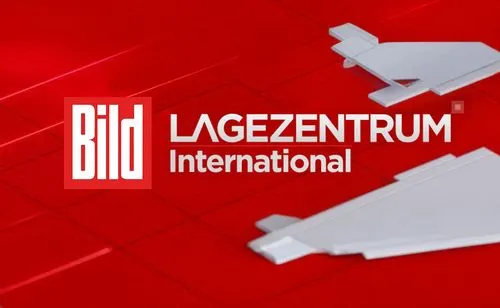
BILD runs its newsroom format in English, with its own presenters
“With Dubly.AI, we were able to make a complex news format like BILD's Lagezentrum accessible to an international audience — for the first time, both cost-effectively and with high production quality.”
 Patrick MarkowskiHead of AI Operations, BILD & Axel Springer
- Translated news broadcasts
- 60
- Translated news broadcasts
- Views from translated videos
- 1.2M
- Views from translated videos
- Subscribers gained in a few months
- 10,600
- Subscribers gained in a few months
Book a demoInstant results
Questions people ask before switching
Including the ones where the answer is not in our favour.
What each was built for. HeyGen generates video from a script and added dubbing beside it. Dubly only dubs: it takes footage that already exists and replaces the speech, the voice and the mouth movements. A script belongs at HeyGen. A camera file belongs here.
Dubly, and not by a little: 96.4 against HeyGen's 76.8 in an independent lip sync benchmark across 1,000 test clips on the same footage. We rebuild the mouth frame by frame, which is what holds when the speaker moves. The four clips above are the evidence.
Yes. Voice cloning carries the speaker's own timbre and pace into the new language, so your CEO sounds like your CEO in Spanish. HeyGen clones voices too. The difference shows the moment that voice has to match a moving face.
Yes, in one pass. Dubly separates the speakers itself and gives each their own cloned voice and their own sync — panels, interviews, two-handers. HeyGen does not list multi-speaker support on its translate page, so ask them before you assume it.

Got any questions left?
We’d be happy to give you a personal demo of Dubly.AI and discuss your specific use cases.
Last checked: 02 September 2026
The figures for HeyGen come from their own public pricing, product and policy pages. Ours come from the price list on our pricing page, and the lip sync score from an independent benchmark across 1,000 test clips.