AI Dubbing Alternatives, Compared
We get asked to compare ourselves to the same handful of tools every week. Here they are in one place — what each one is built for, how its lip sync holds up, where it processes your video, and where Dubly comes out ahead.
 Book a demo
Instant results
The right tool follows from what you already have. If you need a presenter who never stood in front of a camera, buy an avatar platform — you write a script, it makes the video. If you need lip sync as a building block inside your own product, buy the API. If you have real footage of real people, and they should keep their own face and their own voice in the next language, Dubly is the strongest option in this table: the highest lip-sync score of any tool here, and a named person on support from the first plan. For European and DACH companies it is the clearest choice of all — a German company, processing in Germany under GDPR, with a data processing agreement and a written promise that your footage never trains a model. Five of the seven tools here process in the United States, and none of them makes that promise.
Who we get compared to
What each tool is built for, and where that shows. Every card opens the full comparison.
Dubbing tools

Rask AI
Built for a fast start on a single video
- Video processed in
- United States
- Lip sync
- 51.8

Vozo
An all-round toolkit, not a dubbing product
- Video processed in
- United States
- Lip sync
- 50.4

ElevenLabs
Built on voice. Aimed at agents.
- Video processed in
- United States
- Lip sync
- Not part of dubbing
Avatar platforms

Lip-sync APIs

Video editors

All of them, on the same seven facts
One row per tool, one source per number. Where a vendor publishes nothing, the cell says so rather than guessing.
| Tool | Built for | Lip sync | Video processed in | Trains on your video? | Monthly price | Target languages | Human support |
|---|---|---|---|---|---|---|---|
| Dubly.AI | Dubbing existing footage, with lip sync | 96.4 | Germany | No | from €89/mo | 40+ target · 100+ source | Yes |
| Rask AI | Fast self-serve dubbing, one video at a time | 51.8 | United States | No clear answer | Creator: $60/mo · caps at 25 min | 135+ languages & dialects | Not disclosed |
| Vozo | Seven AI tools; dubbing is one of them | 50.4 | United States | Only for other customers' models | Creator: $29/mo · caps at 50 min | 165+ languages & dialects | Named contact from Enterprise up |
| ElevenLabs | Voice agents and voice generation | Not part of dubbing | United States | Yes — unless you opt out | Pro: $99/mo · 45 min included, then metered | 90+ languages & dialects | Priority support from Enterprise up |
| HeyGen | AI avatars, script-to-video, dubbing | 76.8 | United States | No clear answer | Business: $149/mo + $20/seat | 175+ languages & dialects | Not disclosed |
| Synthesia | AI avatars, script-to-video, dubbing | 68.3 | Ireland (AWS) | Pre-training only | Creator: €79/mo · caps at 30 min | 70+ languages & dialects | Not disclosed |
| Sync Labs | Lip sync — API, Studio, editor plugins | 54.8 | United States | Yes | Growth: $49/mo + $0.07925/sec on lipsync-2-pro + $25/seat | 95+ languages & dialects | Not disclosed |
| VEED | Browser editing, recording, subtitles, translation | 81.3 | Belgium (Google Cloud, EU) | Paid plans only | Pro: €47/mo per editor · caps at 30 min | 29+ languages & dialects | Not disclosed |
Last checked: 02 September 2026
How the score is measuredWhere Dubly comes out ahead
Four differences that hold whichever of the tools above you are looking at.
The best lip sync in this table, and not by a little
96.4 against 81.3 for the next best tool here, scored on the same footage. That gap is the difference between a translated video you publish and one you explain away.
Processed in Germany, not in the United States
5 of the 7 tools above process your video on US infrastructure. Dubly processes it in Germany — which is the whole conversation once the footage has your employees or your customers in it.
Your footage never trains a model
Not ours, and not anyone else's. None of the other 7 publishes the same commitment: most say nothing on the question at all, and one grants it only if you opt out.
A named person answers, from the first plan
Not a chatbot and not a queue. Where the tools above name a human at all, it starts at Enterprise — and most of them name one nowhere.
What the others are built for
Every tool here is good at something. Where that something is not dubbing footage you have already shot, this is what it is.
Rask AI is the better choice if you…
Film short, head-on clips where the sync only has to be good enough
Vozo is the better choice if you…
Have to translate the text inside the picture: we do not do that
ElevenLabs is the better choice if you…
Are building conversational voice agents, what the whole company is built around now
HeyGen is the better choice if you…
Want AI avatars, or videos made from a script rather than a camera
Synthesia is the better choice if you…
Live in an LMS: SCORM export and a multilingual player are theirs, not ours
Sync Labs is the better choice if you…
Only need the mouth, and want it as a component in a pipeline you own
VEED is the better choice if you…
Want one subscription that edits, records, subtitles and publishes
Where these numbers come from
A comparison written by one of the products in it is worth exactly as much as its sources. Here are ours.
The lip-sync score comes from an independent benchmark
1,000 videos, every tool on the same footage, and five viewers per video judging blind which result looks best. The score is the share of judgments a tool won, and every page that quotes it quotes the same figure. How the score is measured.
The prices are the vendors' own
Read off their public pricing pages, in the currency they bill in. We do not convert a dollar price into euros to make a column line up, and we compare plans that do comparable work rather than the cheapest number on each site.
“Not disclosed” is not a failing grade
Where a vendor publishes nothing on a point, the table says exactly that. A company without a public data processing agreement may well sign one on request — reading a missing page as a refusal would be a claim we cannot support.
Every figure carries a date
Vendors change their pricing without telling us. Each fact records the page it was read from and the day it was read; the date under the table is the oldest of them.
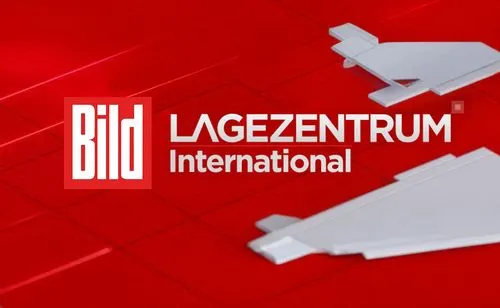
BILD runs its newsroom format in English, with its own presenters
“With Dubly.AI, we were able to make a complex news format like BILD's Lagezentrum accessible to an international audience — for the first time, both cost-effectively and with high production quality.”
 Patrick MarkowskiHead of AI Operations, BILD & Axel Springer
- Translated news broadcasts
- 60
- Translated news broadcasts
- Views from translated videos
- 1.2M
- Views from translated videos
- Subscribers gained in a few months
- 10,600
- Subscribers gained in a few months
















Questions about this comparison
Including the one about whether you should believe it.
It depends on what you are starting from, and a page written by one of the tools is the wrong place to look for a neutral ranking. What the table above does is narrower and more useful: it puts the same six facts side by side. If your material is a person talking to a camera, and they should keep their own voice and their own mouth movements, Dubly is the strongest option in it — the highest lip-sync score here, processed in Germany, with a person who answers. If you need an avatar, or lip sync as an API, it is a different shortlist entirely.
Only as far as it is checkable, which is why every figure names the page it came from and the day it was read. On each comparison page we also publish the reasons to buy the other tool, and they are real reasons rather than straw ones. What we do not do is pretend to be neutral: we sell one of the products in the table, and you should read it knowing that.
Same clip, both tools, same target language. Then watch the mouth with the sound off, and listen to the voice with the picture off — the two failure modes are easier to spot apart than together. Test in the language you actually need rather than in Spanish because the demo was in Spanish, and use footage with a real speaker in it, not a screen recording.

Got any questions left?
We’d be happy to give you a personal demo of Dubly.AI and discuss your specific use cases.
Book a demoInstant results
Last checked: 02 September 2026