AI Lip Sync
June 11, 2026
Lip Sync for Video Translation: Why Visual Matching Is the Missing Piece
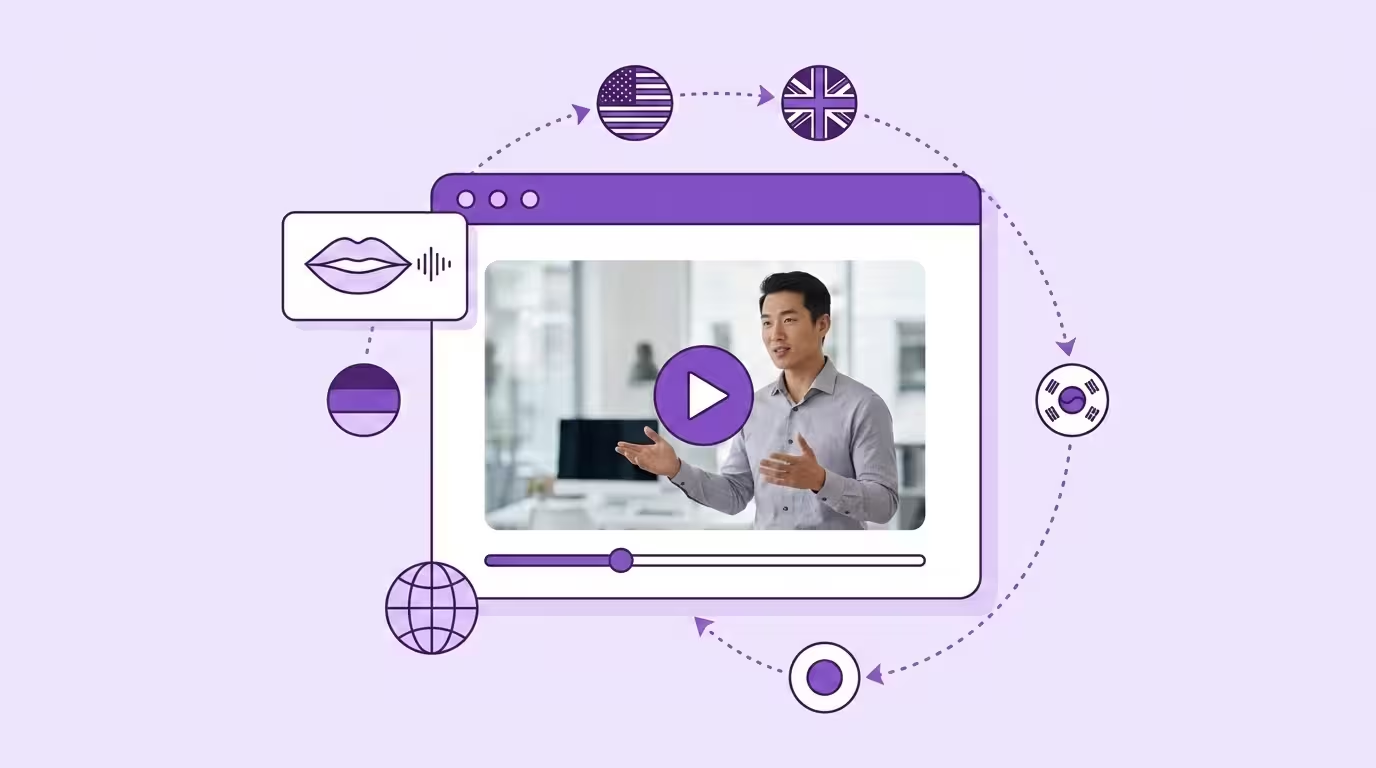
AI video translation used to mean subtitles. Then it meant AI dubbing — replacing the audio with a cloned voice in another language. Both are improvements. Neither is complete. Because if the speaker's lip movements visibly say one language while the audio says another, the viewer's brain catches the mismatch. Even subconsciously.
Lip sync for video translation is the piece that makes everything else work visually. The voice clone sounds right. The translation reads right. But without visual matching, the video content still looks dubbed. With it, the video looks like it was filmed in the target language from the start — breaking through language barriers for global audiences.
We see this with our own customers. The difference between "dubbed with lip sync" and "dubbed without lip sync" isn't subtle. It's measurable in engagement, completion rates, and — for content creators — subscriber growth in international audiences across multiple languages.
Key Takeaways
- AI video translation without accurate lip sync produces an audio-visual mismatch that viewers notice — engagement and retention drop
- Lip sync generates new lip movements frame-by-frame, making dubbed video look native in multiple languages
- The scale advantage: one production, many languages, each looking locally produced — no re-shooting, reaching a wider audience in new markets
- For training, marketing, creator, and news video content, lip sync is the difference between "dubbed" and "native"
- AI lip sync with voice cloning costs ~€5/minute vs. €5,000–20,000 per language for traditional re-shoots
The Problem: Great Audio, Wrong Visual
AI video translation with voice cloning has gotten remarkably good. A German speaker dubbed into Japanese sounds Japanese. The emotional delivery transfers. The pacing matches. On audio alone, you'd never know the video content was translated into multiple languages.
But video isn't audio alone.
The speaker says "arigato gozaimasu" — but their mouth clearly formed "vielen Dank." Two seconds of that disconnect and the viewer's attention splits. They're no longer absorbing the content. They're processing the mismatch. For training videos, that means reduced retention. For marketing, reduced conversion. For creators, reduced watch time.
This is the gap lip sync fills. You can translate video content perfectly. You can clone the voice flawlessly. But without visual matching, the result still looks dubbed. That visual credibility is what makes everything else land.
How Lip Sync Transforms Video Translation Quality
Before and After: A Real Scenario
Take a 5-minute product launch video. Your Head of Product explains the new feature — passionate, gesturing, looking into the camera. You need it in Spanish, Japanese, and Portuguese for three key markets.
Without lip sync: The voice clone sounds native in all three languages. But in every close-up, the speaker's mouth clearly forms English words while the audio says something different. Spanish viewers notice. Japanese viewers notice. The video feels like what it is — a translation with visual leftovers from the original. Poor localization adaptation measurably reduces viewer retention.
With lip sync: Same voice clone. But now the speaker's mouth matches the translated words in each language — frame by frame, phoneme by phoneme. Spanish viewers see a Spanish video. Japanese viewers see a Japanese video. The product launch feels locally produced for each market. Same speaker. Same energy. Different language. No visual compromise.
Lip Sync 2.0 makes this possible: it analyzes the dubbed audio, maps the required mouth shapes for each target language, and generates new frames for the mouth area. The rest of the face stays untouched. Processing takes approximately 2 minutes per minute of video.
The Scale Advantage
Lip sync for video translation isn't just about quality. It's about scalability.
Traditional video localization that includes visual matching required re-shooting with local talent. One video, ten languages, ten productions. AI video translation with lip sync eliminates the re-shoot entirely. One video, multiple languages, one production — each version looking native to its market. Content creators, marketing teams, and educational content producers can reach global audiences without multiplying production costs.
With Dubly.AI, we were finally able to make our instruction-heavy content accessible to French-speaking customers — lip-synced, precisely translated, and fully on-brand.

Flavio Holstein
CEO, Augletics
Translate Your First Video
Results in just a few minutes
No credit card required
Best translation quality worldwide
Use Cases Where Lip Sync Makes the Biggest Difference
YouTube and Creator Content
Creators live and die by watch time. A viewer who notices a mouth mismatch — consciously or not — is more likely to click away. When you translate videos for international audiences, lip sync protects the creator's most valuable metric.
YouTube's Multi-Language Audio feature makes this even more impactful. An AI video translator with lip sync lets creators upload dubbed tracks, and international viewers automatically hear and see content that feels native. Translate videos once, reach audiences in every market. The algorithm rewards the increased watch time. More watch time, better recommendations, more subscribers.
Corporate Training
A safety instructor explaining a procedure. A compliance expert walking through regulations. A CEO delivering a strategic update. Educational content where the instructor's credibility comes partly from visual trust — their lip movements matching their words. Video content dubbed with lip sync maintains that authority across multiple languages. Without it, employees subconsciously discount the message. AI video translation with lip sync removes language barriers for international audiences without re-filming.
Marketing and Brand Content
Brand perception is built on details. A product launch video dubbed into Spanish without lip sync screams "afterthought." The same video with lip sync says "we built this for the Spanish market." That distinction directly affects how the audience perceives the brand's commitment to their market.
Media and News
News credibility depends on visual authenticity. When you translate video news content into Arabic, the anchor needs to look like they're speaking Arabic — not like they were dubbed from English. An AI video translator with lip sync provides that visual integrity, making internationally distributed news content appear locally produced. Translate videos for each market, and the audience trusts the source.
What Makes Good Lip Sync for Video Translation
Not all lip sync delivers the same quality for translation use cases. What matters:
Language-specific mouth shapes. Different languages produce different visual patterns. "R" in French looks different from "R" in Japanese. Any serious video translation tool needs language-specific phonetic mapping for lip sync — not a one-size-fits-all approach. When you translate video into Japanese, the lip shapes need to look Japanese.
Natural coarticulation. Real speech flows. Sounds overlap. The next mouth position starts forming before the current one ends. Lip sync that treats each sound as a discrete position looks robotic. Good lip sync models the continuous flow.
Multi-speaker capability. Real video content has multiple speakers. Interviews, panels, training dialogs for educational content. Most AI video translation tools handle one face. Lip Sync 2.0 handles multiple speakers in the same frame, independently tracked.
Dynamic head movement. Speakers don't sit still. They turn, nod, gesture. Most tools require a static, frontal face. Lip Sync 2.0 adapts to dynamic movement in real time — each head angle gets its own optimized generation strategy.
Integration with voice cloning. Lip sync for video translation only works when the audio is already properly dubbed. The best AI video translator combines voice cloning and lip sync in one pipeline — sharing timing data produces better results than stitching separate video translation tools together.
Explore Lip Sync 2.0: Full feature breakdown
The Business Case
The math is straightforward. Whether you translate videos for one market or ten, the cost structure changes fundamentally with an AI video translator:
Traditional video localization with visual matching:
Re-shoot per language €5,000–20,000 depending on production complexity
Timeline weeks per language
Quality variable (different talent, different takes)
AI video translation tool with lip sync:
Translate video + lip sync per language ~€5/minute
Timeline minutes per language
Quality consistent (same speaker, same delivery, every language)
A 10-minute video localized into 5 languages: traditional = €25,000–100,000 over weeks. AI with lip sync = ~€250 in an afternoon. Same visual quality. Same speaker. 99% cost reduction.
Pricing details: Dubly Pricing
Conclusion
Lip sync is what completes AI video translation. Without it, you have great translated audio attached to the wrong visual. With it, you have multilingual content that looks native in every language — the original speaker's voice, the original video, accurate lip sync across multiple languages. A wider audience in new markets without compromising quality.
The technology exists today. It's not theoretical. Lip Sync 2.0 processes video at 2 minutes per minute, handles multiple speakers, adapts to movement, and produces results that are indistinguishable from the original video. Combined with AI dubbing and voice cloning, it's the complete video translation pipeline. For any organization producing multilingual content for global audiences, accurate lip sync isn't optional. It's the standard — making the speaker's native language irrelevant to the viewer's experience.
Back to the complete guide: AI Lip Sync
Translate Your First Video
Results in just a few minutes
No credit card required
Best translation quality worldwide
About the author

Simon Pieren
Co-Founder | Marketing & Sales