AI Dubbing
June 1, 2026
Voice Cloning for Video Translation: How AI Preserves Your Voice Across Languages
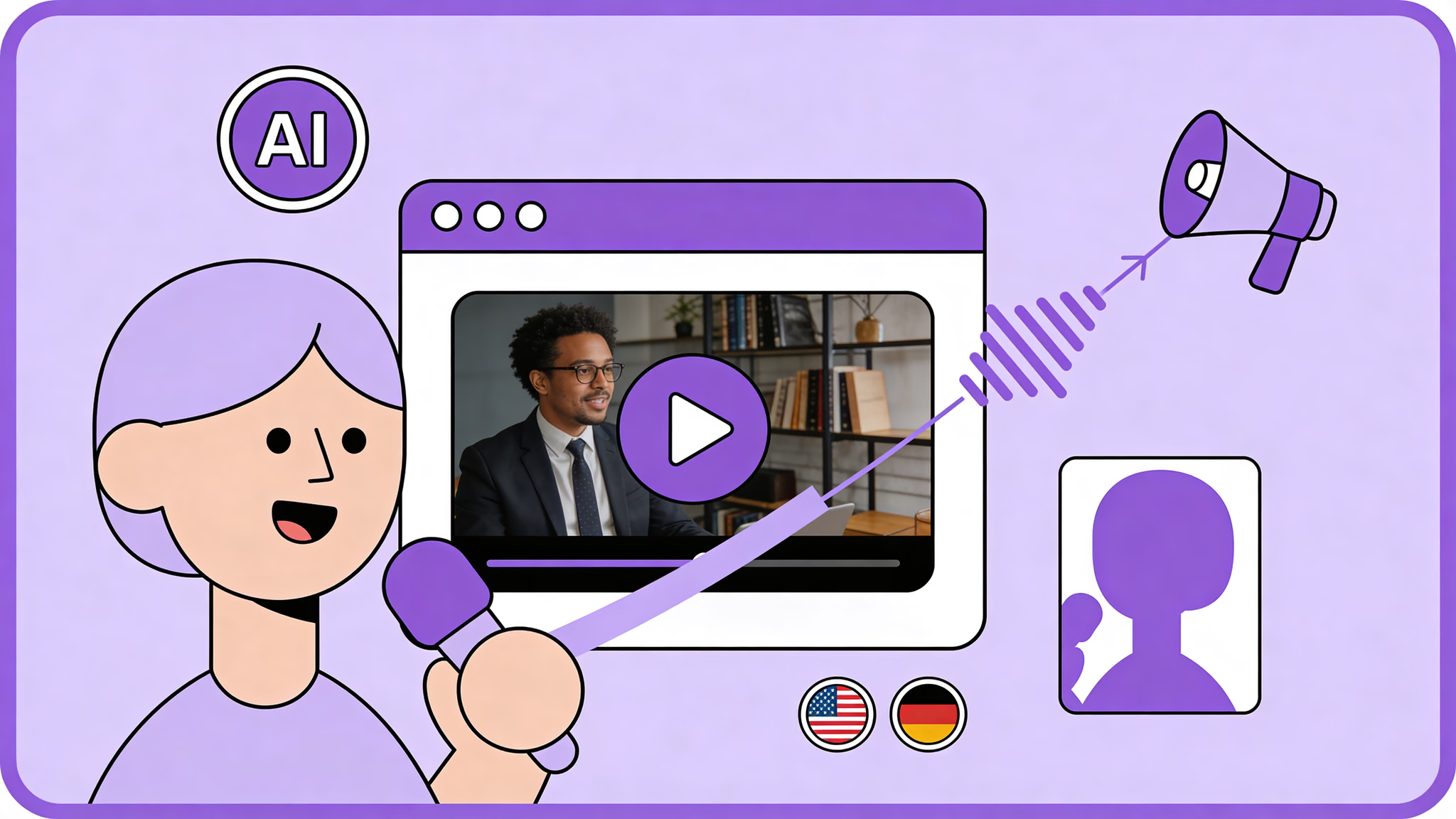
Voice cloning replicates a speaker's vocal identity — tone, pitch, cadence, emotional delivery — and generates speech in another language with native pronunciation. Not a similar voice. Not an approximation. The same person, speaking a language they might not know, sounding like they've spoken it their entire life.
That last point matters more than most people realize. The AI doesn't transfer your accent. A German speaker cloned into English doesn't sound like a German speaking English. They sound like a native English speaker who happens to have the same voice. This is the core insight that separates modern voice cloning from everything that came before — and it's the reason dubbed videos actually work.
Here's what voice cloning actually does, how it fits into the dubbing pipeline, where it excels, and where it still has limits.
Key Takeaways
- Voice cloning preserves the speaker's vocal identity across languages while generating native pronunciation — it doesn't transfer accents
- The technology excels at conversational speech, presentations, and training content. Extreme emotions and singing remain challenging.
- Consent is required — ethically and legally. Professional platforms ensure all rights stay with the content owner.
- Modern voice cloning needs minimal reference audio (minutes, not hours) and integrates with lip sync for complete dubbed videos.
What Voice Cloning Actually Does
Let's clear up a common confusion. Voice cloning is not text-to-speech. TTS takes written text and reads it aloud with a generic AI voice — think Siri or Google Assistant. Useful for navigation. Terrible for video.
Voice cloning does something fundamentally different. It analyzes a specific person's vocal characteristics — the unique fingerprint of how they speak — and builds a model that can generate new speech in that person's voice. The cloned voice speaks translated text, but it sounds like the original speaker. Their tone. Their energy. Their personality.
For video translation, this changes everything. Instead of hiring voice actors who sound vaguely like your CEO, or using a stock narrator that strips all personality from your content — the original speaker delivers the message in every language. Same person, same authority, same connection with the audience.
Native Pronunciation, Not Accent Transfer
This is the detail I explain most often. When we built Dubly's voice cloning system, the assumption from most people was: "So my German accent will be in the English version too?"
No. That's precisely what doesn't happen.
The AI generates native pronunciation in the target language. A German speaker cloned into Japanese sounds Japanese. A Brazilian speaker cloned into French sounds French. The vocal identity transfers — the timbre, the warmth, the energy. But the phonetics are generated fresh for each language.
Why does this matter? Because accent carry-over is what makes traditional dubbing feel foreign. Remove the accent, keep the voice, and the result is a dubbed video that genuinely sounds like the speaker filmed in that language. Viewers in Brazil hear a Brazilian voice. Viewers in Japan hear a Japanese voice. Same person both times.
How Voice Cloning Works in the Dubbing Pipeline
Voice cloning is stage three of the four-stage AI dubbing process. It can't work without the stages before it — and the stage after it depends on its output.
Stage 1 — Speech Recognition identifies what was said, by whom, with precise timestamps.
Stage 2 — Neural Translation converts the transcript into the target language with timing constraints.
Stage 3 — Voice Cloning takes the translated text and generates audio in the original speaker's voice with native pronunciation. This is where the magic happens.
Stage 4 — Lip Synchronization adjusts the speaker's mouth movements to match the cloned audio.
The voice cloning model needs reference audio from the original speaker — but not much. Modern systems work with minutes of input. Some need as little as 30 seconds. The AI extracts the speaker's vocal DNA: pitch range, speaking rhythm, tonal patterns, how they emphasize words, how they breathe between sentences.
Then it synthesizes new speech that matches these patterns while producing native sounds in the target language. The translated script goes in. Audio that sounds like the original speaker — in a completely different language — comes out.
Full pipeline breakdown: How AI Dubbing Works
What Voice Cloning Can and Can't Do
I'd rather be honest about this than oversell it.
Where It Excels
Conversational speech. Interviews, presentations, explainers, tutorials, training videos. This is voice cloning's sweet spot. The technology handles natural speech patterns — pauses, emphasis, rhythm changes — with near-perfect accuracy. Most people genuinely can't tell the difference between original and cloned output.
Consistent tone across languages. A CEO quarterly update needs to sound authoritative in every language. A creator's energy needs to carry over. Voice cloning preserves the emotional baseline of the speaker. Confident stays confident. Warm stays warm. Serious stays serious.
Multiple speakers in one video. Each person gets their own cloned voice profile. Speaker A stays Speaker A across all languages. No voice crossover, no confusion. Panel discussions, interviews, multi-presenter videos — the system keeps everyone distinct.
Where It Struggles
Extreme emotions. Screaming, sobbing, whispering at the very edge of audibility. Current models handle these less reliably. The technology reproduces emotional nuance in the normal range brilliantly — but extremes push it. This is improving with every model generation, but it's not solved yet.
Singing. Voice cloning for speech and voice cloning for singing are different problems. Musical pitch, vibrato, breath control — the models aren't built for this. If your content includes singing, expect manual work.
Very short reference audio. The system works with minimal input, but more reference audio means better results. A 30-second clip gives a decent clone. Five minutes gives an excellent one. If you're planning to clone a specific speaker across dozens of videos, invest in getting a good reference recording upfront.
Consent and Voice Rights
This matters and we don't shy away from it. Cloning someone's voice requires their consent. Period. This isn't a gray area — ethically or legally. In the US, Tennessee's ELVIS Act was the first state law to expressly protect AI-generated voice clones, and the EU's AI regulation requires user consent for creation and use of cloned voices.
Using voice cloning for video translation of content the speaker already approved is straightforward. The speaker said these words in one language; now they're saying them in another, in their own voice. But the consent needs to be explicit, documented, and the speaker needs to know their cloned voice will represent them in other languages.
At Dubly, all rights remain with the content owner. We don't claim ownership of cloned voices. We don't use customer voice data for model training. And our German server infrastructure means voice data stays in the EU under GDPR protection.
Translate Your First Video
Results in just a few minutes
No credit card required
Best translation quality worldwide
Voice Cloning Use Cases
Content Creators and YouTube
This is where voice cloning adoption started — and where it's growing fastest. Creators are personal brands. Their voice IS the brand. A stock narrator destroys the connection.
My videos sound like me in every language. And my channel isn't just German anymore — it's truly global now.

Marius Quast
Creator & Outdoor Filmmaker
The pattern we see: creators start with one language pair, see the audience response, and expand to three or more within months. Marius Quast grew his international reach by 590%. Not by creating new content — by cloning his voice into other languages.
Corporate Training and E-Learning
Training videos feature subject matter experts. Their authority comes from who they are, not just what they say. A safety training dubbed with a generic voice loses credibility. The same training in the expert's own voice — cloned into ten languages — maintains authority across every office.
New Com Academy saved over 85% in localization costs while maintaining precision on complex technical terminology. Voice cloning made the difference — each instructor was matched with a natural-sounding voice that maintains their authority in every language.
Marketing and Brand Voice
Brand consistency across languages is hard. Different voice actors in different markets mean different brand personalities. Voice cloning solves this: one speaker, consistent brand voice, every market.
Agencies managing international channels, like HAVAS Social, use this instead of hiring voice actors and booking recording studios for each language — they clone the original speaker's voice and maintain brand tone automatically.
Podcasts and Audio Content
Podcasts are pure voice. There's no video to distract from quality issues. If the cloned voice sounds off, listeners notice immediately. That makes podcasting both the hardest use case and the best quality benchmark. If voice cloning works for your podcast, it works for everything.
Creators produce multilingual podcast episodes from a single recording — reaching international audiences without re-recording. The host sounds like the host in every language. That's the whole point.
How Dubly's Voice Cloning Works
We built voice cloning as a core technology, not a bolt-on feature. Here's what that means in practice:
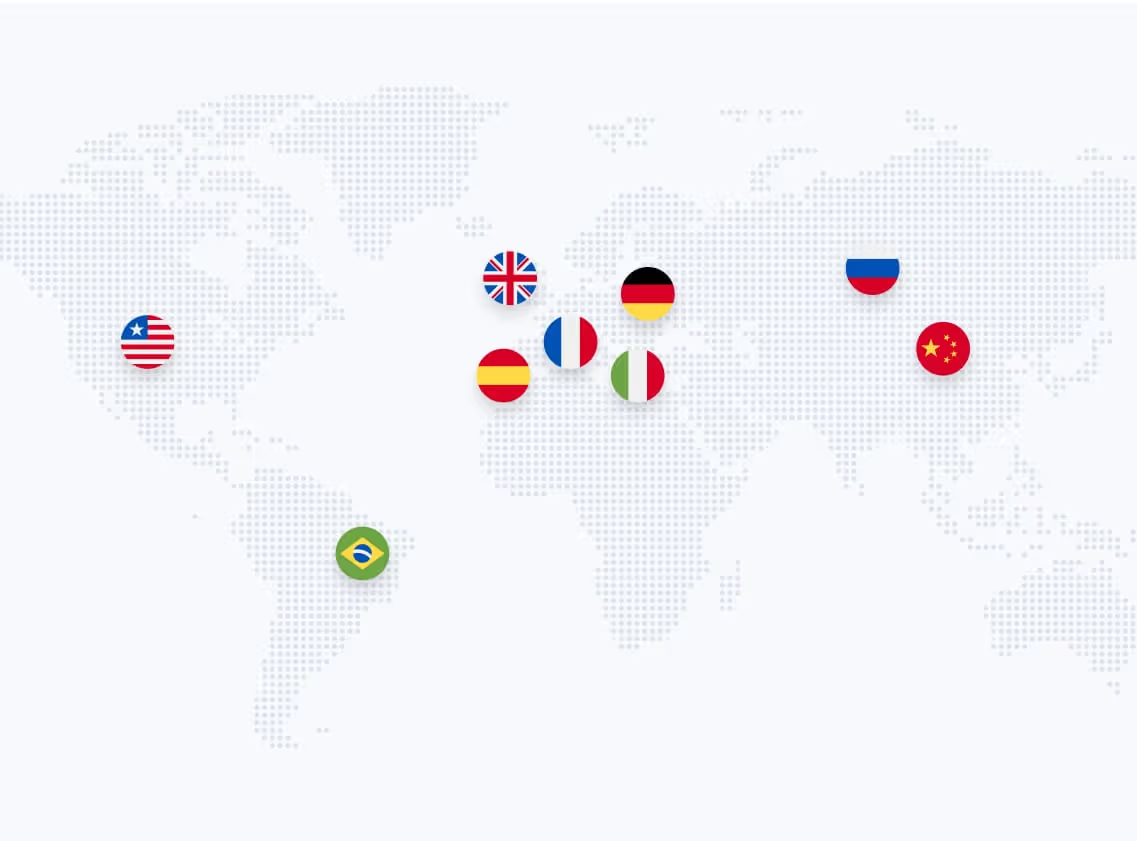
~38 languages with native pronunciation. Each language gets its own phonetic model. No accent bleed. A speaker cloned into Spanish sounds Spanish. Into Korean, Korean. The voice is the same. The pronunciation is native.
Emotional depth preservation. Excitement stays excited. Gravity stays grave. The cloning doesn't flatten emotional dynamics — it transfers them. This is what separates professional voice cloning from the robotic TTS of five years ago.
Integration with Lip Sync 2.0. Voice cloning produces the audio. Lip Sync 2.0 adjusts the visual to match. Together, they create dubbed videos where the speaker looks and sounds natural in every language.
Editable translations before cloning. You control what the cloned voice says. Review the translation, adjust terminology, fine tune phrasing — before synthesis happens. Custom glossaries keep brand terms consistent. Custom pronunciations handle names and jargon.
GDPR-compliant voice data handling. All voice data processed on German servers. Never used for model training. TÜV-certified. Full data processing agreements available.
How to choose the right tool: AI Dubbing Software Comparison
My videos thrive on energy, pace, and tone — and that's exactly what Dubly now delivers in English. The new channel is growing, and people are loving it.

Matthias Malmedie
Creator
Try voice cloning free — 1 minute with all features, no credit card required.
Translate Your First Video
Results in just a few minutes
No credit card required
Best translation quality worldwide
Voice Cloning vs. Other Approaches
| Approach | Voice | Lip Sync | Cost | Quality |
|---|---|---|---|---|
| Traditional dubbing (voice actors) | Different person | Manual timing | ~€80/min | High but inconsistent across languages |
| Text-to-speech | Generic AI voice | None | Low | Robotic, no personality |
| Basic voice cloning | Approximate match | None or basic | Medium | Recognizable but not convincing |
| Professional voice cloning (Dubly) | Original speaker, native pronunciation | Frame-by-frame generative | ~€5/min | Indistinguishable from original |
Conclusion
Voice cloning isn't about copying a voice. It's about extending a person's presence into languages they don't speak — while sounding completely native in each one. That distinction is everything.
The technology works. For conversational content, presentations, training, marketing, creator videos — the cloned output is indistinguishable from the original. Extreme emotions and singing remain the edges. Consent is non-negotiable.
What I tell people who are skeptical: try it with 60 seconds of your own content. Listen to yourself speaking a language you've never learned, in your own voice, with native pronunciation. That's usually the moment the skepticism disappears.
Back to the complete guide: AI Dubbing — How It Works, Tools & Use Cases
Translate Your First Video
Results in just a few minutes
No credit card required
Best translation quality worldwide
About the author

Maximilian Engler
Co-Founder | Product