AI Dubbing
June 1, 2026
AI Dubbing vs. Voiceover: What's the Difference and Which Should You Use?
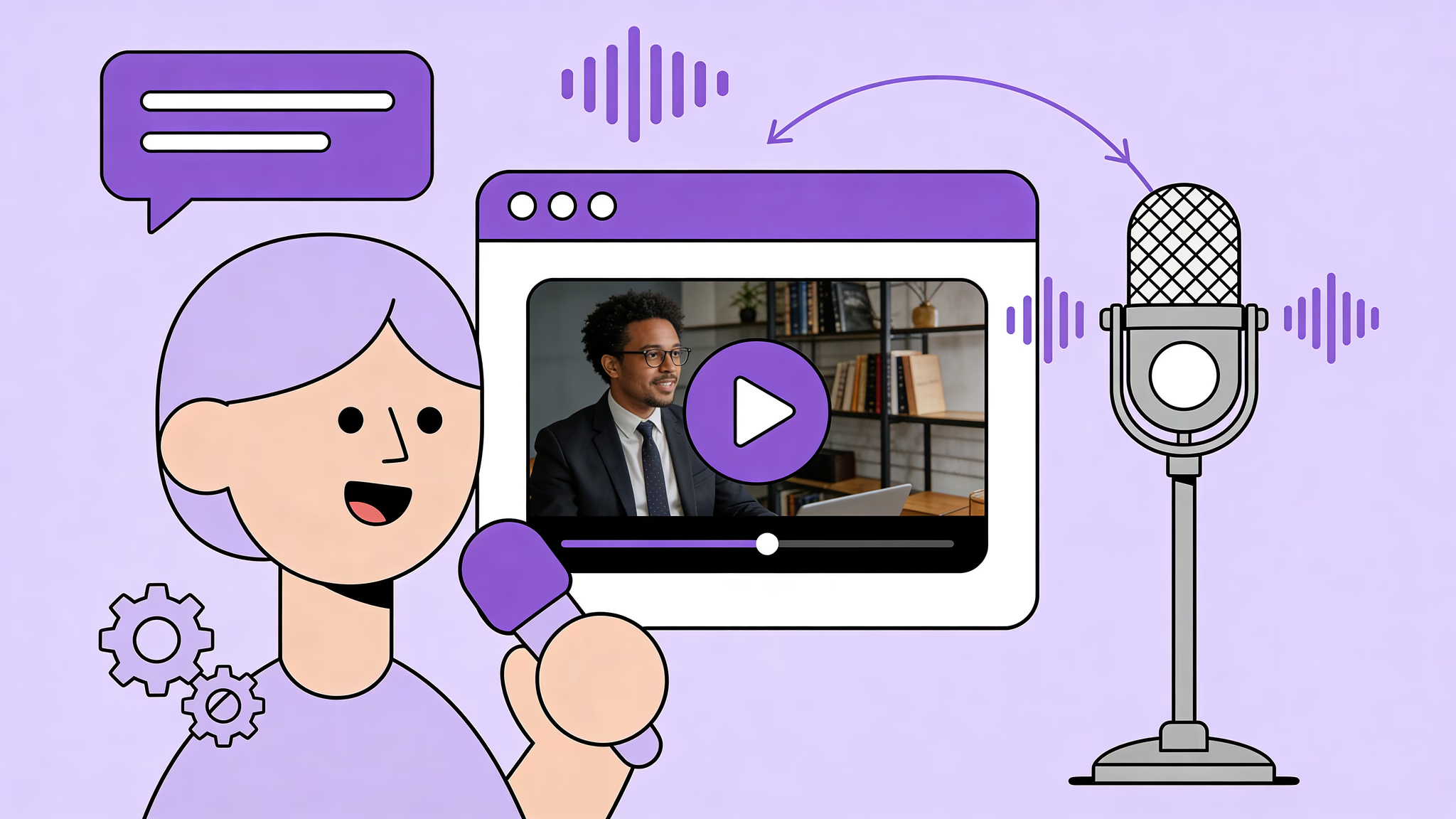
AI dubbing fully replaces the original audio with a cloned version of the speaker's voice in another language — including lip synchronization. Voiceover layers a translated narration on top of or instead of the original, typically using a different voice, without adjusting the visual. Same goal — reaching audiences in other languages. Completely different results.
The distinction sounds technical. It's not. It's the difference between a video that feels like it was made for the viewer's market and one that clearly wasn't.
Key Takeaways
- AI dubbing replaces audio with the speaker's cloned voice + lip sync. Voiceover layers a different narrator on top.
- Dubbing wins for any content where the speaker's face is visible or their identity matters
- Voiceover still works for documentaries, screen recordings, and quick low-stakes content
- The cost difference between AI voiceover and AI dubbing is ~€0–3/minute — negligible compared to the engagement gains
The Core Difference
Dubbing replaces the original audio track entirely. The speaker's voice is cloned into the target language with native pronunciation. Lip movements are adjusted frame-by-frame to match. The viewer hears and sees a video that looks and sounds like it was originally produced in their language.
Voiceover adds a translated narration. In traditional voiceover, you still hear the original speaker faintly underneath — the translated voice talks over them. In modern AI voiceover, the original audio may be fully replaced, but with a generic or semi-matched voice. No lip sync. No voice preservation.
Think of it this way: dubbing is invisible. Done well, the viewer never knows the video was translated. Voiceover is always visible — it always sounds and looks like a translation.
When AI Dubbing Wins
Personal Brand and Speaker Identity
If the speaker IS the content — a creator, a CEO, a trainer — their voice needs to carry over. A voiceover replaces that identity with a stranger's. Dubbing preserves it.
This is non-negotiable for YouTube creators. The audience follows a person. Replace the person's voice with a narrator and the entire connection breaks. We see this constantly — creators who switched from voiceover to dubbing report immediate jumps in international engagement because the audience finally connects with the actual person behind the content.
My videos thrive on energy, pace, and tone — and that's exactly what Dubly now delivers in English. The new channel is growing, and people are loving it.

Matthias Malmedie
Creator
Video Where Faces Are Visible
Any time a speaker's face is on screen, voiceover creates a disconnect. The mouth says one thing, the audio says another. Viewers can't always articulate what's wrong, but they feel it. Engagement drops.
Dubbing with lip synchronization eliminates this completely. The speaker's lips match the dubbed audio. No uncanny valley. No cognitive dissonance. The video just works.
For talking heads, interviews, training videos, product demos — basically any video format where someone's face is visible — dubbing is the clear winner.
Emotional and Brand-Critical Content
Voiceover flattens emotion. Even a good narrator can't replicate the original speaker's passion, frustration, excitement, or gravity. They're performing someone else's words with their own personality.
Dubbing preserves the original emotional delivery. The speaker's enthusiasm, their specific way of emphasizing a point, the pause before an important statement — it all transfers. For brand videos, leadership communications, and marketing campaigns, this difference directly impacts how the message lands.
Scalability Across Languages
Here's the practical difference: with voiceover, you hire a different narrator for each language. Ten languages means ten different voices representing your brand. Inconsistent. Expensive. Slow.
With AI dubbing, one speaker sounds like themselves in every language. Ten languages, same voice, same brand identity. The cost per additional language is marginal. That's a fundamentally different scaling model.
When Voiceover Still Makes Sense
Dubbing isn't always the answer. Some formats work better with voiceover — and it's worth being clear about when.
Documentaries and Narrated Content Documentaries have a long tradition of voiceover. The audience expects to hear the original language underneath, with a narrator providing the translation. Replacing the original audio entirely would feel wrong for this format. It's a genre convention, and fighting genre conventions rarely works.
Content Without Visible Speakers If no one's face is on screen — screen recordings, animated explainers, product walkthroughs with only UI visible — the lip sync advantage of dubbing disappears. Voiceover can work fine here, especially if the original speaker's voice isn't a brand asset. That said, even for faceless content, voice cloning adds value. A cloned voice maintains consistency across your content library. A voiceover narrator doesn't.
News and Interview Formats (Deliberately Foreign) Some news formats intentionally keep the original audio audible to signal authenticity — "this is a real person speaking in their real language, and here's the translation." In diplomatic, journalistic, or legal contexts, voiceover serves as a translation signal rather than a replacement. Removing that signal changes the meaning.
Quick, Low-Stakes Content Internal updates, rough-cut reviews, content that's consumed once and forgotten — voiceover is faster and cheaper for content where quality isn't the priority. Not every video deserves a full dubbing treatment. Some just need to be understood.
Translate Your First Video
Results in just a few minutes
No credit card required
Best translation quality worldwide
The Real Comparison
| Factor | AI Voiceover | AI Dubbing |
|---|---|---|
| Voice | Generic narrator or basic match | Original speaker's voice, cloned |
| Lip Sync | None | Frame-by-frame generative sync |
| Viewer Perception | "This is a translation" | "Was this the original language?" |
| Speaker Identity | Lost | Preserved |
| Emotional Delivery | Narrator's interpretation | Original speaker's emotion |
| Brand Consistency | Different voice per language | Same voice, every language |
| Cost | Lower per language | Higher per language, same flat rate every time — no re-negotiating per market |
| Best For | Docs, narrated content, quick translations | Talking heads, training, marketing, creator content |
The Cost Question
The cost argument has shifted. The dubbing and subtitling market reached $13.06 billion in 2024 (Source: Global Growth Insights, https://www.globalgrowthinsights.com/market-reports/dubbing-and-subtitling-market-117679), driven by demand for both approaches. Traditional voiceover with professional narrators costs €15–30/minute per language (casting, recording, editing). AI voiceover brought that down to €2–5/minute. AI dubbing with voice cloning and lip sync costs roughly €5/minute.
So the cost difference between AI voiceover and AI dubbing is minimal — maybe €0–3/minute. For that marginal difference, you get the speaker's actual voice, lip synchronization, and dramatically better viewer engagement.
The question isn't "can I afford dubbing?" anymore. It's "can I afford NOT to dub?" — especially when the engagement numbers consistently favor dubbed content.
Pricing details: Dubly Pricing
How to Decide for Your Content
A simple framework:
Choose dubbing when:
- The speaker's face is visible in the video
- The speaker's identity matters (creators, executives, trainers)
- Brand consistency across languages is important
- You need maximum engagement and retention
- The content has a long shelf life
Choose voiceover when:
- No faces are visible (screen recordings, animations)
- The format traditionally uses voiceover (documentaries)
- The original language must remain audible (news, diplomatic)
- The content is quick, low-stakes, and disposable
Choose both when:
- You're producing a documentary where some segments feature talking heads and others are narrated
- You want dubbed audio for the primary experience and voiceover as a fallback option
Most professional video content in 2026 falls into the "choose dubbing" category. That's not bias — it's math. The majority of business, training, marketing, and creator videos feature visible speakers where dubbing delivers measurably better results.
Full AI dubbing guide: AI Dubbing — How It Works, Tools & Use Cases
Compare with subtitles: AI Dubbing vs. Subtitles
Conclusion
Dubbing and voiceover solve the same problem differently. Voiceover translates the words. Dubbing translates the entire experience — voice, emotion, visual sync, speaker identity.
For most professional video content, dubbing delivers better results. The cost difference is negligible with AI tools. The engagement difference isn't.
The remaining question is format-specific: does this particular video need the speaker's identity to carry over? If yes, dub. If no, voiceover might be fine. For most content, the answer is yes.
Translate Your First Video
Results in just a few minutes
No credit card required
Best translation quality worldwide
About the author

Leon Bach
Growth Marketing Manager