AI Dubbing
June 1, 2026
AI Dubbing vs. Subtitles: Which Is Better for Your Video Content?
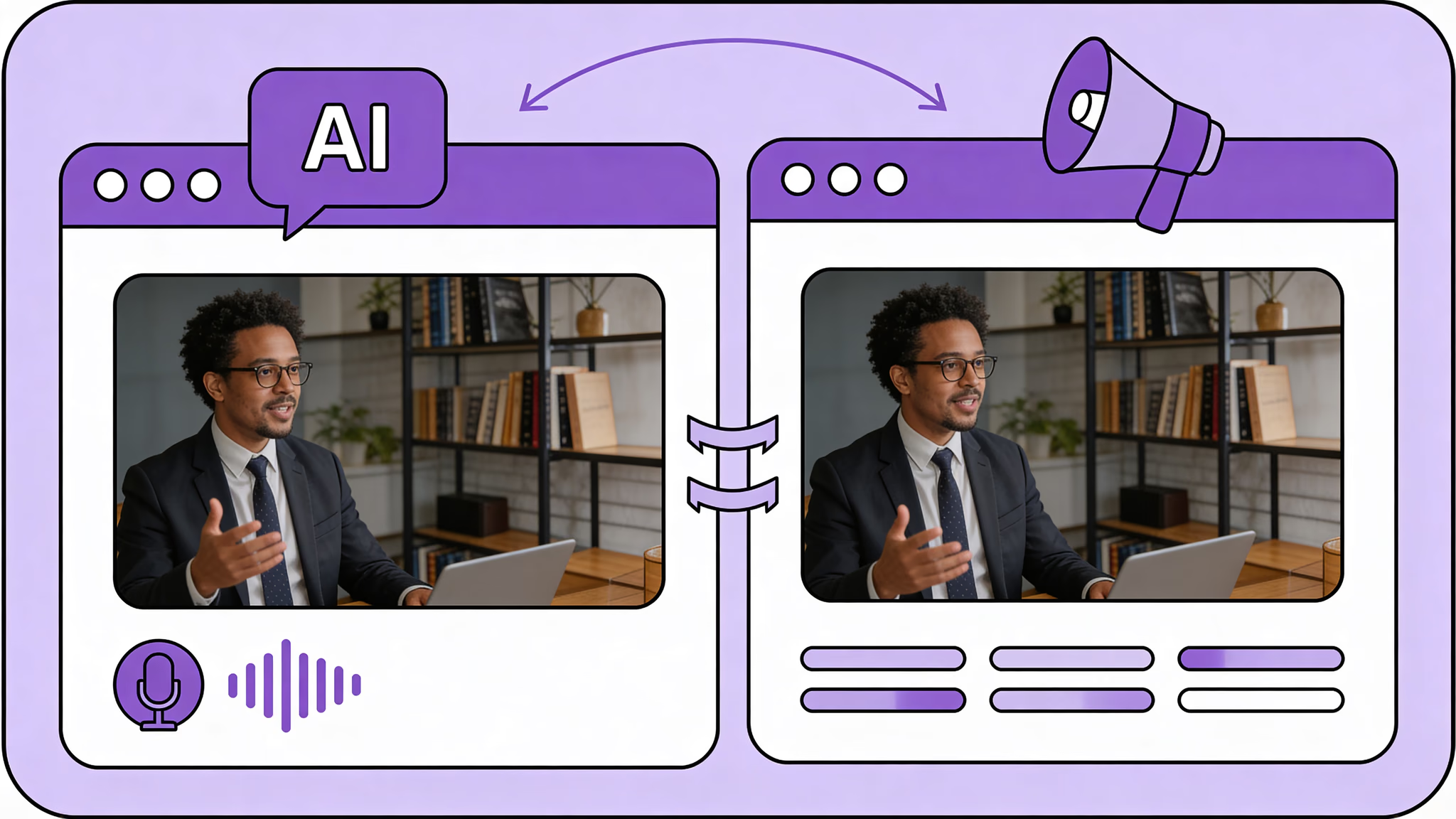
AI dubbing outperforms subtitles in viewer engagement, information retention, and accessibility for most professional video content. That's not opinion — it's consistent across every study and dataset we've seen. Dubbed videos get watched longer, understood better, and reach audiences that subtitles simply can't.
But "most" isn't "all." Subtitles still win in specific scenarios. And the smartest approach might be neither one nor the other — but both.
Where dubbing beats subtitles, where subtitles still make sense, what it actually costs, and why the either/or framing is increasingly outdated.
Key Takeaways
- Dubbed videos outperform subtitles in engagement, watch time, retention, and accessibility
- Subtitles still win when the original performance IS the content (film, keynotes) or for SEO indexing
- AI dubbing at ~€5/minute has eliminated the cost advantage subtitles had over traditional dubbing
- The best strategy: dub the audio + add subtitles as complement. Let the viewer choose.
The Core Difference: Subtitles and Dubbing Explained
Subtitles display translated text at the bottom of the screen. The original audio remains unchanged. The viewer reads while watching — splitting attention between the visual content and the translated text below.
AI dubbing replaces the original audio track with a new dubbed version in the target language. The speaker's voice is cloned with native pronunciation, and lip sync adjusts the mouth movements to match. The viewer watches and listens — in their native language — without reading anything. The original dialogue is gone, replaced by translated speech that sounds like the speaker filmed in that language.
That's not a small distinction. In the subtitles vs dubbing debate, it's a fundamentally different viewing experience. One asks the viewer to multitask. The other doesn't.
Why Dubbed Content Outperforms Subtitles
Engagement and Watch Time
Here's what we see with our own customers: dubbed content consistently has higher completion rates and time and completion rates than subtitled versions of the same video. Viewers prefer dubbed versions because they can just watch and listen instead of reading along.
Makes sense if you think about it. Reading subtitles requires constant attention to the bottom third of the screen. You miss facial expressions, product details, on-screen graphics — anything that isn't the translated text. With the dubbing process handling the voice track automatically, the viewer just watches. The way video content was designed to be consumed.
For YouTube creators, this directly impacts algorithmic performance. Higher watch time means better recommendations. Better recommendations mean more views. It's a compounding effect.
Information Retention
This is where the difference gets serious — especially for training and educational content. People learn better when they hear information in their native language rather than reading it off the bottom of a screen. Research from Amara.org confirms that multimodal processing — combining visual, auditory, and text elements — enhances information acquisition and retention (Source: Amara, https://blog.amara.org/2024/07/25/the-psychology-behind-captioning-and-subtitles-how-they-influence-viewer-engagement-and-memory/).
Think about a compliance training video. An employee reading subtitles while trying to follow a complex process demonstration is splitting attention between two tasks. The same employee watching a dubbed version in their language focuses entirely on the content. More retained. Fewer follow-up questions. Less re-training.
For e-learning companies, this isn't academic. It hits completion rates, test scores, and ultimately the value of the entire training investment.
Accessibility
This is the argument that ends most debates. Subtitles don't work for:
Viewers with reading difficulties dyslexia, low literacy, learning disabilities
Mobile viewers on the go small screens, quick glances, movement
Noisy environments gym, commute, factory floor (where audio through earbuds works, reading doesn't)
Visually impaired viewers subtitles are literally invisible to them
Children who may understand spoken language but can't read fast enough
Dubbing reaches all of these audiences. Subtitles exclude them. For any organization that takes accessibility seriously, this isn't a nice-to-have distinction.
Mobile and Short-Form Content
More than 70% of video consumption happens on mobile. On a phone screen, subtitles are tiny. They cover the lower portion of already-small video. And in formats like Stories, Reels, and TikToks — where content is designed for quick, immersive consumption — reading text at the bottom defeats the purpose.
Dubbed short-form content performs the way native content performs. Because to the viewer, it IS native content. They hear their language, they see natural lip movements, they engage. No friction.
When Subtitles Still Make Sense
I'm not going to pretend dubbing is always the right choice. There are real scenarios where subtitles win.
When the Original Performance IS the Content A keynote from a famous CEO. A documentary with a distinctive narrator. A film where the original actors' voices and delivery are the art. In these cases, the original audio is inseparable from the content. Replacing the original dialogue — even with a perfect clone — changes the experience. Subtitles retain the original audio track completely. For foreign language content where that performance is the primary value, subtitles are the better choice. Many viewers prefer subtitles specifically for this reason — they want to hear the original voice talent, not a replacement.
Budget Constraints for Casual Content Subtitles are cheaper than dubbing. That's a fact. For casual internal updates, quick social posts, or content with a short shelf life, subtitles might deliver enough value at lower cost. But this calculus has changed dramatically with AI dubbing. Traditional dubbing cost ~€80/minute with voice actors in recording studios, multiple revision rounds, and weeks of coordination — obviously subtitles won that comparison. AI dubbing at ~€5/minute with automated dubbing and voice cloning? The cost gap has narrowed to the point where the engagement benefits of dubbed content often justify the difference. Run the numbers for your specific video localization needs.
SEO Value of Subtitle Text Here's one that people overlook: subtitle text in SRT files is crawlable by search engines. A subtitled video gives Google indexed text in every language. A dubbed voice track alone doesn't. The smart play: use both subtitles and dubbing. Dub the audio for the viewer experience. Add subtitle text for SEO indexing. YouTube supports this natively through Multi-Language Audio — the dubbed audio for listening, auto-generated subtitles for crawling.
When You're Offering Both Increasingly, the answer isn't dubbing OR subtitles. It's both subtitles and dubbing together. YouTube Multi-Language Audio lets viewers choose their preferred voice track. Add subtitles as a secondary option for viewers who prefer them. This gives your global audiences maximum flexibility. A Brazilian viewer gets Portuguese dubbed audio by default. A hearing-impaired viewer in the same market switches to subtitles. A language learner might use both — listening to the dubbed version while reading along. Same video. Multiple access paths. That's what video localization looks like in 2026.
There's data behind this: in a recent survey, 84% of viewers said subtitles retain cultural authenticity by letting them hear the original actors' voices. But the same viewers also report higher engagement and completion rates with dubbed content. The takeaway? Offer both. Let the audience decide what matters more to them — cultural nuances of the original or the immersive experience of dubbing vs subtitles in their native language.
Translate Your First Video
Results in just a few minutes
No credit card required
Best translation quality worldwide
Subtitles vs. AI Dubbing at a Glance
| Dimension | Subtitles | AI Dubbing |
|---|---|---|
| Engagement | Reading splits attention | Just watch and listen |
| Watch time | Lower completion rates | Higher completion rates |
| Retention | Reduced via multitasking | Higher in native language |
| Accessibility | Excludes low-literacy + visually impaired viewers | Reaches all audiences |
| Mobile | Tiny text on small screens | Plays like native content |
| SEO indexing | Crawlable text per language | Audio not indexed |
| Cost (2026) | €5–15/min manual | ~€5/min with voice cloning |
| Best fit | Films, keynotes, SEO content | Training, marketing, creators |
The Cost Comparison
| Approach | Cost per Minute | Turnaround | Viewer Experience |
|---|---|---|---|
| Manual subtitles | €5–15/min (translation + timing) | Hours to days | Reading required, original audio |
| Auto-generated subtitles | Near zero | Minutes | Often inaccurate, reading required |
| Traditional dubbing | ~€80/min (voice talent, recording studios, revisions) | Days to weeks | High quality but different voice talent |
| AI dubbing | ~€5/min (voice cloning + lip sync) | Minutes | Original speaker's voice, native pronunciation |
| AI dubbing + subtitles | ~€5/min (subtitles auto-generated) | Minutes | Best of both — viewer chooses |
The comparison that mattered five years ago — subtitles at €10/min vs traditional dubbing at €80/min with voice talent and recording studios — is irrelevant now. AI dubbing at €5/min with the speaker's actual voice and lip sync accuracy changes the calculation entirely.
Current pricing details: Dubly Pricing
What This Means for Different Use Cases
YouTube Creators
Dub. The engagement difference is measurable and the algorithmic benefit compounds over time. Use YouTube Multi-Language Audio to offer dubbed tracks in your top markets. Subtitles as fallback for languages you haven't dubbed yet.
I get comments from all over the world every day — that shows me just how much working with Dubly has paid off. My videos sound like me in every language.

Marius Quast
Creator & Outdoor Filmmaker
Marius grew his international reach by 590% — with dubbing, not subtitles.
Training and E-Learning
Dub. The retention differences between dubbed content and subtitled training videos are too significant to ignore. Employees skip subtitled content. They don't skip dubbed content that sounds like it was made for them in their native language. The dubbing process preserves the original speaker's authority while the translated text gets delivered naturally through the voice track. New Com Academy saved 85% on video localization costs while maintaining precision on translated text and cultural context.
Solutions for training teams: E-Learning & Training
Marketing and Advertising
Dub your hero marketing videos — product launches, brand videos, campaigns that need emotional nuance and cultural context in every market. The dubbed version carries the original audio's energy while sounding native in each language. Subtitle your quick social clips where volume is high and shelf life is short. Use both subtitles and dubbing on your website where SEO indexing matters. Dubbing breaks through language barriers that subtitles can't — especially for marketing content where emotion drives conversion.
Corporate Communications
Dub. CEO messages, town halls, crisis communications — these need to land in multiple languages with the leader's own voice and authority intact. Subtitles on a CEO quarterly update tell employees this wasn't important enough to localize properly. Traditional dubbing with voice actors would take weeks. The automated dubbing process delivers in minutes while maintaining quality control.
Enterprise solutions: Enterprise Communication
How to Make the Switch
If you're currently using subtitles and considering dubbing, you don't have to switch everything at once.
Start with your highest-impact content. The videos with the most views, the most strategic importance, or the highest retention requirements. Dub those first. Measure the difference.
Keep subtitles as a complement. Don't remove subtitles — add dubbed audio alongside them. Both subtitles and dubbing together give viewers more access options, not fewer.
Test with one language pair. German to English, Spanish to English — whatever your biggest audience gap is. One language, a few videos, real results. Then expand.
Try it free: 1 minute of AI dubbing with voice cloning and lip sync, no credit card.
Conclusion
The subtitles vs dubbing debate is increasingly settled for professional video content. Dubbed content wins on engagement, retention, accessibility, and viewer experience. AI dubbing at ~€5/minute — with voice cloning, lip sync accuracy, and cultural nuances handled through the translation process — has eliminated the cost argument that kept subtitles as the default for decades.
Subtitles still have their place — for content where the original audio performance is sacred, for SEO indexing, and as a complement to video localization through dubbing. But as the primary strategy? For most video content, the dubbing process delivers better results. Human expertise still matters for quality control and cultural context, but the heavy lifting is automated.
The best approach in 2026: dub the audio, add subtitles for accessibility and SEO, let your global audiences choose. That's not a compromise. It's giving every viewer exactly what they need.
Back to the complete guide: AI Dubbing — How It Works, Tools & Use Cases
Translate Your First Video
Results in just a few minutes
No credit card required
Best translation quality worldwide
About the author

Leon Bach
Growth Marketing Manager