Tech
AI Lip Sync Explained: Stop Asynchronous Lips in Video Translations
Asynchronous videos look unprofessional. Learn how AI Lip Sync and Visual Dubbing perfect your translations – GDPR compliant and scalable.

Simon Pieren
Dec 23, 2025
Full Data Sovereignty
Personal point of contact
Highest Quality Lip Sync
Trusted by 1,200+ Companies
Tech
September 12, 2025
The idea is tempting: upload a video, select a language, and receive a fully translated version – with natural voiceover, accurate timing, and perfect lip sync – all within minutes.
And yes – for many videos, that’s exactly what happens with Dubly.
But like any technology, automated video translation has limits. Some content types require manual fine-tuning – and in rare cases, certain videos may not be fully suitable for automation (yet).
In this article, we’ll walk you through:
What works extremely well today
Which formats require more hands-on work
Where real limitations still exist
And how you can still translate almost anything with the right approach
Many formats are ideal for full automation with Dubly – no adjustments needed.
Tutorials and explainer videos
E-learning content and corporate trainings
Interviews or statements with a single speaker
Social media videos with direct address
Product demos and screencasts
**Webinars and presentations with clean audio
**
These types of content typically have:
Clear, steady narration
Minimal or no background noise/music
Neutral, understandable language
High audio quality
➡️ Result: High-quality translations, fast turnaround, little to no manual work required.

Some formats work well in principle but can be improved further with small adjustments – either through in-tool editing or optional review by a native speaker.
Dubly is capable of reproducing a wide range of emotions: excitement, seriousness, confidence, even subtle emphasis.
This works reliably for:
Educational content
Marketing videos
Presentations and testimonials
However, extreme emotional expressions – such as shouting, crying, or dramatic theatrical delivery – can still present challenges. In these rare cases, it's helpful to:
Manually adjust the tone or intensity
Bring in your own native speakers as reviewers for fine-tuning pace, rhythm and expression
Add short clarifications for sensitive or expressive moments
If multiple people are speaking at once or interrupting each other, automatic speaker separation becomes more difficult.
In these cases:
Manual speaker tagging or separation may be needed
Complex timing may require small edits post-translation
Still fully manageable with Dubly's in-tool editing features
Results in just a few minutes
No credit card required
Best translation quality worldwide
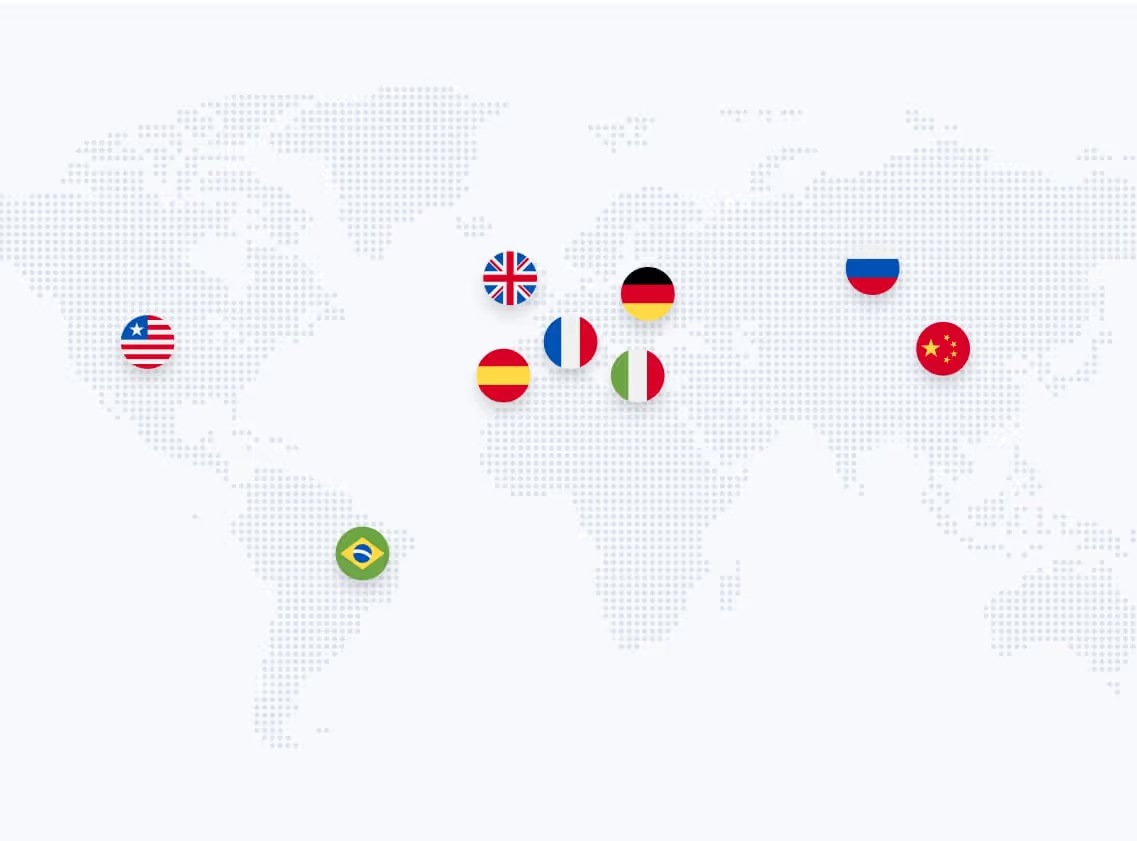
With Dubly, most videos can be translated automatically with great results.
That includes professional learning content, marketing assets, product videos, and more.
Even more complex videos – like creative campaigns or fast-paced multi-speaker discussions – are still very much translatable.
You just might need a bit of human support along the way.
Only in edge cases (very poor audio, heavily stylized speech) does it get tricky. But even then, we offer options to help you succeed.
About the author

Maximilian Engler
Co-Founder | Product
Tech
Asynchronous videos look unprofessional. Learn how AI Lip Sync and Visual Dubbing perfect your translations – GDPR compliant and scalable.
Simon Pieren
Dec 23, 2025
Use Cases
Looking for an AI video translator? We answer how to translate video free using 3 methods: Subtitles, Basic TTS, and Professional Lipsync.
Simon Pieren
Dec 8, 2025
Use Cases
Looking to "translate video free"? Learn the technical differences between standard dubbing and generative AI Lip Sync, and how to test professional quality risk-free.
Simon Pieren
Nov 28, 2025