AI Dubbing
June 1, 2026
AI Voice Dubbing: Why Voice Quality Makes or Breaks Your Dubbed Video
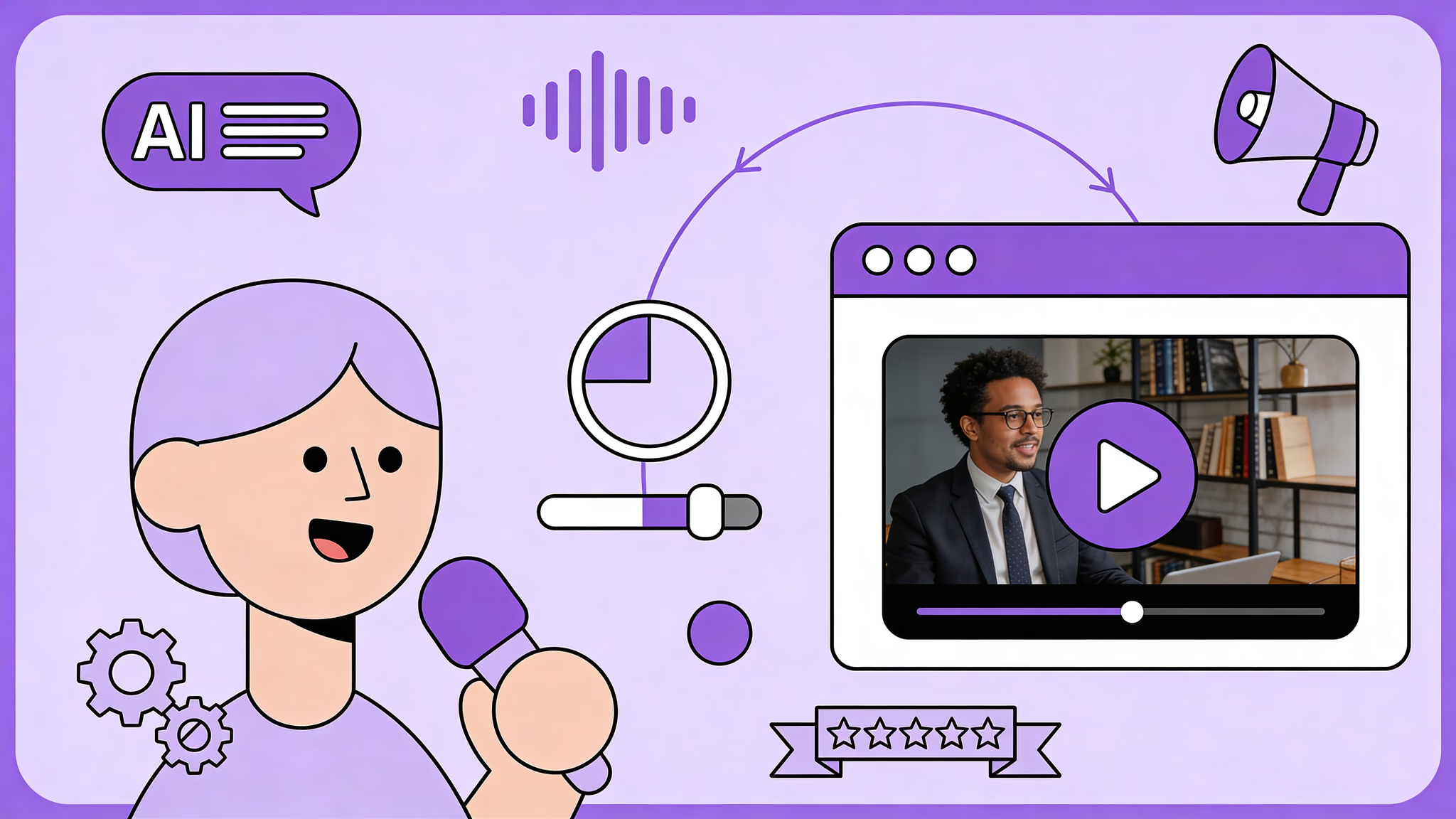
AI voice dubbing generates translated audio that sounds like the original speaker — their tone, their pitch, their emotional delivery — in another language with native pronunciation. The visual side of dubbing gets all the attention (lip sync is impressive, admittedly). But the voice is what the viewer actually connects with. Get the voice wrong, and nothing else matters.
I've listened to thousands of dubbed videos across dozens of tools. The range in voice quality is staggering. Some sound like the speaker lived in that country their whole life. Others sound like a better-than-average robot reading a script. The technology powering both is nominally "AI voice dubbing." The results couldn't be more different.
This article explains what determines voice quality in AI dubbing, what you can control, and what to listen for when evaluating results.
Key Takeaways
- Voice quality in AI dubbing depends on four factors: vocal identity preservation, native pronunciation, emotional range, and speaking rhythm
- Reference audio quality is the biggest controllable variable — invest in clean recordings for speakers you'll dub frequently
- Language pair matters — major pairs deliver the best results, less common pairs may show quality variation
- Listen for specific things: the robot test, the same person test, the emotion test, the weird sentence test
What "Voice Quality" Actually Means in AI Dubbing
Voice quality in dubbing isn't one thing. It's the combination of multiple factors that together determine whether a listener perceives the output as the original speaker or as artificial.
Vocal Identity Preservation
Does the dubbed version sound like the same person? Not similar. Not close. The same. The speaker's pitch range, their particular timbre, the way their voice resonates — these need to transfer. A CEO with a deep, calm voice should sound deep and calm in every language. A creator with energetic, rapid delivery should sound energetic and rapid.
This is what voice cloning technology does. It analyzes the speaker's vocal fingerprint and builds a model that reproduces it in other languages. The quality of this cloning directly determines whether viewers recognize the speaker — or just hear a voice that's sort of like them.
Native Pronunciation
The cloned voice must speak each language natively. Not with the speaker's original accent. Not with a generic "AI accent." Natively. A German speaker dubbed into Korean should sound Korean. Period.
This is the insight that surprises most people. And it's what separates modern AI voice dubbing from earlier approaches that just applied the speaker's voice pattern to foreign phonetics — which sounded wrong in every language.
Emotional Range
A flat, monotone voice destroys content. Emotions need to transfer: excitement, concern, humor, authority, warmth. When the speaker gets passionate in the original, the dubbed version needs to carry that same energy. When they slow down for emphasis, the dub should slow down too.
This has improved dramatically since 2023. Modern systems achieve naturalness scores in standardized listening tests (Mean Opinion Score) that are barely distinguishable from those of human speakers. Enthusiasm, seriousness, friendliness, confidence — these transfer accurately. Where it falls apart: screaming, sobbing, raw anger, singing. The extremes. We're honest about that. It's improving fast, but it's not solved.
Speaking Rhythm and Pacing
Every person has a natural cadence. Short, punchy sentences. Or long, flowing explanations. Quick speakers. Deliberate speakers. Speakers who pause dramatically before the key point.
AI voice dubbing needs to preserve this rhythm while fitting the translated text into the correct timing window. Different languages have different word lengths — German is typically longer than English, Japanese has different sentence structures entirely. The AI has to balance speaker rhythm against timing constraints, and the quality of that balance is immediately audible.
What Determines Voice Quality in Practice
Reference Audio Quality
Garbage in, garbage out. Simple as that. The reference audio — the recording the AI uses to build the speaker's voice model — directly determines everything downstream.
Clean recording, good microphone, quiet room? Excellent cloning. Phone call with background noise and compression artifacts? Don't expect miracles.
Language Pair
Some language pairs produce better results than others. This isn't a secret, but some vendors downplay it.
Pairs with extensive training data — English/German, English/Spanish, English/French, English/Japanese — deliver the highest quality. The AI has learned from millions of examples of how these languages sound.
Less common pairs — say, Finnish to Thai or Hungarian to Vietnamese — have less training data. The results are still professional, but the quality ceiling is lower. Test before committing to volume.
Content Type
Conversational speech produces the best AI voice dubbing results. Presentations, tutorials, interviews, training videos — this is the sweet spot. The speech patterns are natural, the emotional range is moderate, and the pacing is predictable.
Harder content: rapid-fire dialog with overlapping speakers, highly emotional performances, content with singing or chanting, and heavily accented speakers. Not impossible. But worth testing before assuming the quality will match your conversational content.
Processing Settings
Professional dubbing tools give you control over the output. Can you adjust the speaking speed? Can you emphasize certain words? Can you regenerate specific sentences without redoing the entire video?
These controls matter more than most people realize. The difference between a "good" and "great" voice dub is often one sentence that needs a slight speed adjustment or a phrase where the emphasis landed wrong. Tools that let you fine tune at the sentence level produce better results than tools that only offer full-video regeneration.
Translate Your First Video
Results in just a few minutes
No credit card required
Best translation quality worldwide
The Quality Spectrum: What to Listen For
When evaluating AI voice dubbing, listen for these specific things:
The "robot test." Play 10 seconds of the dubbed audio to someone who hasn't seen the original. Ask them if it sounds like a real person or a computer. If they hesitate, the voice quality isn't good enough.
The "same person test." Play the original and the dubbed version back-to-back. Does the listener identify them as the same person? Not the same language — the same person. If not, the voice cloning isn't accurate enough.
The "emotion test." Find a moment in the original where the speaker's emotion shifts — from neutral to excited, or serious to humorous. Does the dubbed version carry that shift? Or does it flatten out?
The "weird sentence test." Listen for sentences that sound slightly off. Unnatural pauses. Odd emphasis. Words that run together. These are the artifacts that distinguish good AI voice dubbing from great AI voice dubbing. Zero artifacts? Probably hasn't been invented yet. Minimal, barely noticeable artifacts? That's the current state of the art.
How Dubly Approaches Voice Quality
Voice quality isn't something we optimize once and ship. It's what we work on every day.
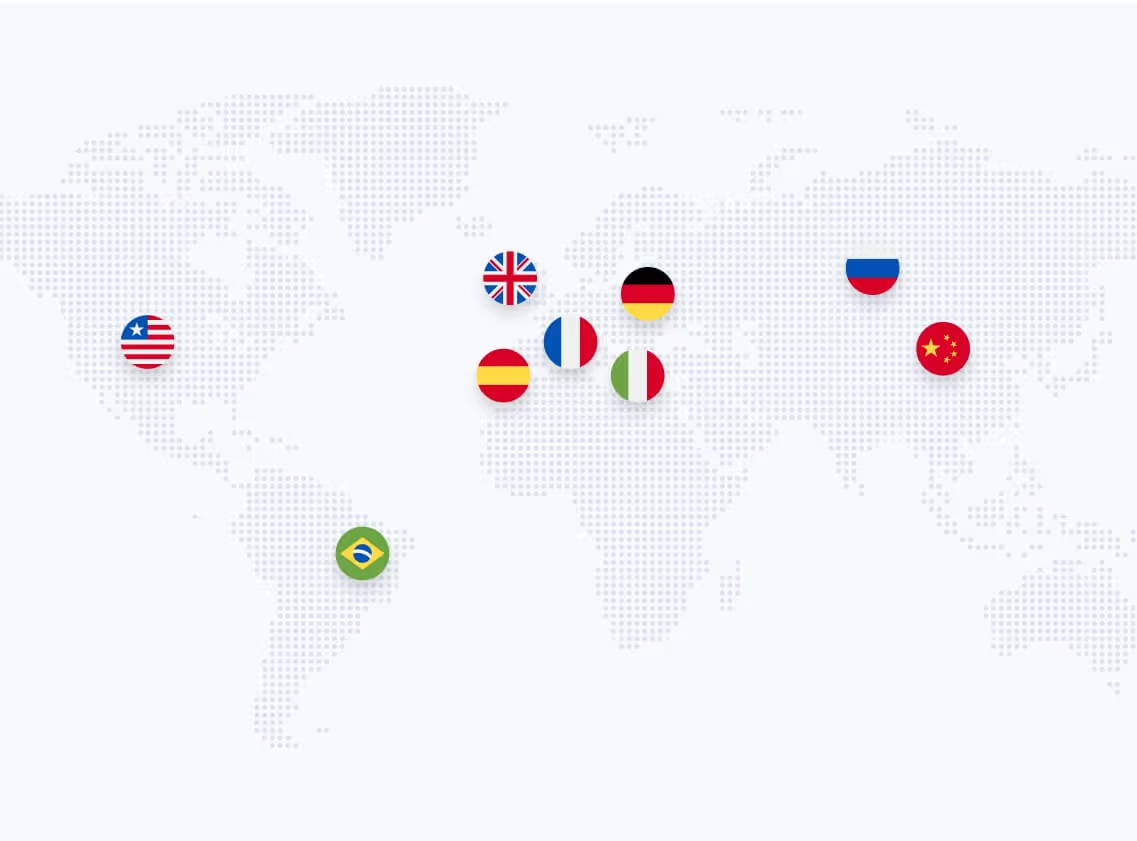
Voice cloning across ~38 languages. Each language gets its own phonetic model. We don't stretch one model across dozens of languages and hope it works. Each language pair is tuned independently for native pronunciation and natural flow.
Emotional preservation, not just pitch matching. Our voice cloning captures intonation patterns, emphasis dynamics, and speaking rhythm — not just the basic frequency of someone's voice. The result sounds like the speaker because it IS the speaker's vocal identity, just in a different language.
Editable output. You can adjust individual sentences. Regenerate a paragraph that didn't sound right. Fine tune pronunciation of specific words. This level of control is what lets you go from "good enough" to "I can't tell it's dubbed."
Honest about limitations. We don't claim every language pair sounds perfect. We don't pretend extreme emotions are solved. We tell you upfront which scenarios deliver the best results and where you might need to compromise. That honesty is why 330+ companies trust us — they know exactly what to expect.
I've wanted to share my knowledge internationally for a long time — but never had the time for multiple productions. With Dubly, it's now automated, fast, and still sounds like me. The feedback from the community has been incredible.

Christopher Karatsonyi
Creator / Car Maniac
Try it with your own content — 1 minute free, all features including voice cloning, no credit card.
Conclusion
Voice quality is the single most important factor in AI dubbing. Not lip sync. Not speed. Not price. The voice is what the viewer hears, what they connect with, and what determines whether your dubbed content feels authentic or artificial.
The technology is genuinely good in 2026. Professional voice cloning on well-recorded content, in major language pairs, for conversational speech — the results are indistinguishable from the original. But "genuinely good" isn't "universally perfect." Test with your content, in your languages, with your speakers. That's how you know if the voice quality meets your bar.
Back to the complete guide: AI Dubbing — How It Works, Tools & Use Cases
Translate Your First Video
Results in just a few minutes
No credit card required
Best translation quality worldwide
About the author

Maximilian Engler
Co-Founder | Product