Tech
AI Lip Sync Explained: Stop Asynchronous Lips in Video Translations
Asynchronous videos look unprofessional. Learn how AI Lip Sync and Visual Dubbing perfect your translations – GDPR compliant and scalable.

Simon Pieren
Dec 23, 2025
Full Data Sovereignty
Personal point of contact
Highest Quality Lip Sync
Trusted by 1,200+ Companies
Use Cases
September 19, 2025
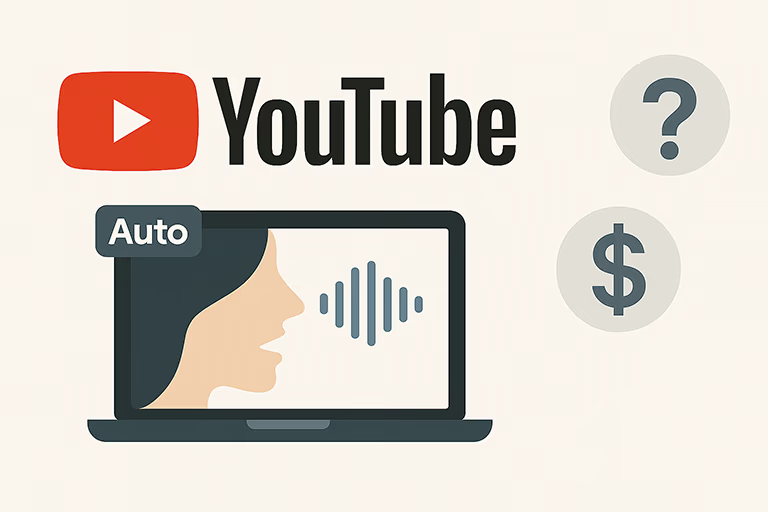
YouTube rolled out auto-dubbing to all creators on February 4, 2026, now supporting 27 languages and a new Expressive Speech feature. A lip sync pilot is also in testing — but only for select creators, limited to five languages and 1080p resolution.
For hobby creators testing international reach, it is a useful starting point. For businesses and professional creators who depend on brand consistency, translation accuracy, and data privacy, YouTube's free tool falls short in critical areas. Here is what YouTube Auto-Dubbing actually delivers, where it reaches its limits, and why specialized providers like Dubly.AI remain the better choice for professional video translation.
YouTube's auto-dubbing feature, first launched as a limited pilot in 2024, is now available to every creator on the platform (YouTube Blog, 2026). The update includes three key components.
First, auto-dubbing now supports 27 languages and generates translated audio tracks automatically when a video is uploaded. YouTube reported that more than 6 million daily viewers watched at least 10 minutes of auto-dubbed content in December 2025.
Second, Expressive Speech — powered by Google's Gemini AI — aims to replicate a creator's original tone and emotional delivery in the dubbed version. It is currently available in eight languages: English, French, German, Hindi, Indonesian, Italian, Portuguese, and Spanish.
Third, YouTube is testing a lip sync pilot that adjusts a speaker's mouth movements to match the translated audio. However, this feature is still in early testing and far from a general rollout.
YouTube's auto-dubbing works best as a discovery tool. Creators who enabled dubbed audio tracks during the pilot phase saw more than 25% of their watch time come from viewers in non-primary languages. For channels publishing educational or entertainment content at scale, that reach boost is significant.
But the feature comes with hard limitations. You cannot edit automatic dubs — YouTube generates them, and you either accept them or reject them before publication (YouTube Help). Videos longer than 60 minutes are ineligible. There are no custom glossaries for brand terminology, no accent or regional variant selection, and no option to preserve your original voice through voice cloning.
For businesses that rely on consistent brand communication — where a product name, technical term, or tone of voice must be exactly right — these limitations are deal-breakers.
YouTube's lip sync feature is the most anticipated part of the announcement, but also the most limited. According to Android Authority, the pilot only supports five languages (English, French, German, Portuguese, and Spanish), is limited to 1080p resolution — no 4K — and is available to a small group of selected creators only.
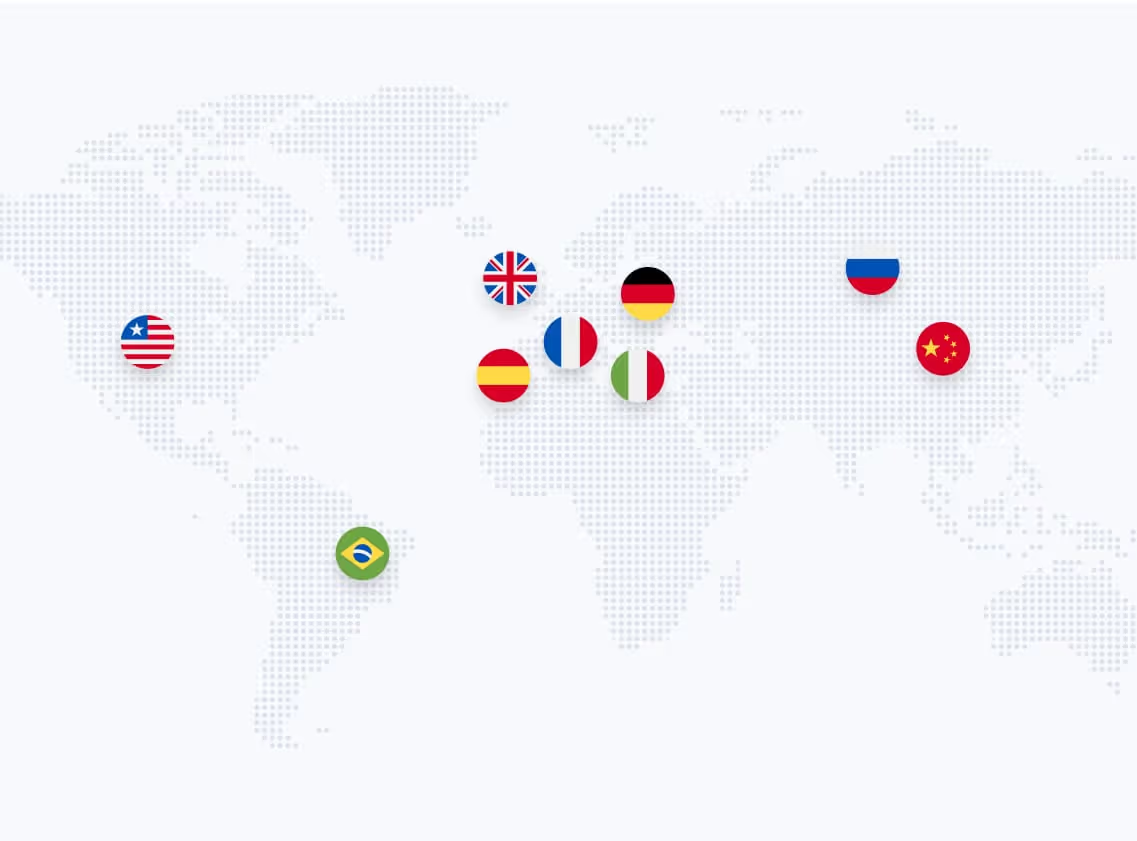
Compare that to Dubly.AI's Generative Lip Sync, which works across 32+ languages, supports resolutions up to 4K, and is available to every customer from day one. The technology analyzes original lip movements, translated audio phonetics, and scene context to adjust mouth movements frame by frame — changing only the lips while preserving the rest of the face.
Lip sync is binary: it is either convincing, or it breaks the viewer's trust. A pilot limited to five languages and 1080p does not meet the standard that professional content requires.
The following table compares YouTube's auto-dubbing with Dubly.AI across the factors that matter most for professional video translation.
| Comparison Factor | YouTube Auto-Dub | Dubly.AI |
|---|---|---|
| Translation Editing | Not possible — accept or reject only | Fully editable translations, unlimited revisions |
| Voice | Generic AI voice, Expressive Speech in 8 languages | Voice Cloning — original voice preserved in every language |
| Lip Sync | Pilot: 5 languages, max 1080p, select creators only | Generative Lip Sync: 32+ languages, up to 4K, available to all |
| Brand Control | No glossaries, no terminology management | Custom glossaries for consistent brand vocabulary |
| Quality Assurance | Automated only, manual review limited to approve/reject | Fully editable per segment, with your own native speakers as external reviewers at no seat |
| Data Privacy | Google servers (US), content may be used for model improvement | EU servers, 100% GDPR-compliant, no AI training with customer data |
| Video Length | Max 60 minutes | Unlimited |
Results in just a few minutes
No credit card required
Best translation quality worldwide
YouTube auto-dubbing solves one problem well: making content discoverable in other languages at zero cost. For hobby creators or channels that publish daily vlogs, that is valuable.
But for content where brand perception matters — marketing campaigns, corporate communication, product tutorials, e-learning courses — the gap between "auto-generated" and "professionally translated" is the gap between brand damage and brand growth.
Consider a CEO town hall video sent to 15,000 employees in eight countries. Or a product launch campaign running simultaneously in five markets. Or a compliance training video where terminology must be legally precise. In each of these scenarios, you need editable translations, consistent brand terminology through glossaries, Voice Cloning to preserve speaker identity, and GDPR-compliant processing on European servers.
YouTube offers none of these. Dubly.AI offers all of them — through a platform built specifically for professional video translation needs. Discover how creators scale their channels internationally with Dubly.
More than 330 companies trust Dubly.AI for multilingual video content, including:
These creators and brands chose a specialized provider because they needed control over quality, voice, and data — something a free platform feature cannot deliver.
For a step-by-step guide on translating your YouTube content professionally, see our comprehensive YouTube video translation guide.
YouTube's February 2026 update makes auto-dubbing more accessible than ever. With 27 languages, Expressive Speech, and a lip sync pilot, the platform is moving in the right direction. For creators who want to test international reach with zero investment, it is worth enabling.
But for anyone who depends on translation accuracy, brand consistency, and professional quality — whether you are a business, an agency, or a serious creator — YouTube's auto-dubbing is not enough. No editing, no glossaries, no voice cloning, no 4K lip sync, and no data privacy guarantees.
Dubly.AI fills exactly that gap: professional AI video translation with Voice Cloning, Generative Lip Sync in 32+ languages, full translation control, and 100% GDPR-compliant processing on European servers. Try it yourself — 1 minute free, all features included, no credit card required on the pricing page.
Key Takeaways:
About the author

Simon Pieren
Co-Founder | Marketing & Sales
Tech
Asynchronous videos look unprofessional. Learn how AI Lip Sync and Visual Dubbing perfect your translations – GDPR compliant and scalable.
Simon Pieren
Dec 23, 2025
Use Cases
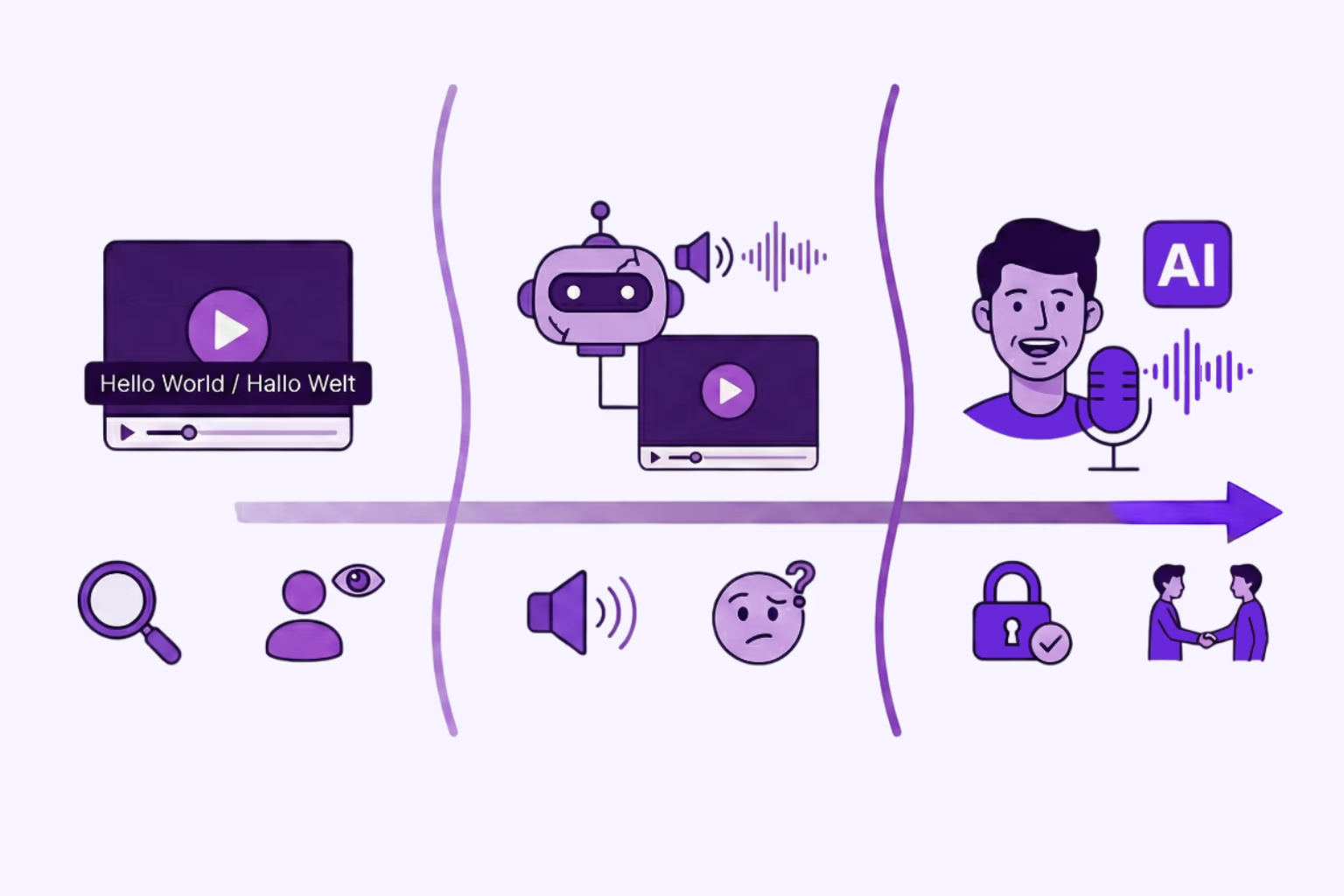
Looking for an AI video translator? We answer how to translate video free using 3 methods: Subtitles, Basic TTS, and Professional Lipsync.
Simon Pieren
Dec 8, 2025
Use Cases
Looking to "translate video free"? Learn the technical differences between standard dubbing and generative AI Lip Sync, and how to test professional quality risk-free.
Simon Pieren
Nov 28, 2025