Tech
AI Lip Sync Explained: Stop Asynchronous Lips in Video Translations
Asynchronous videos look unprofessional. Learn how AI Lip Sync and Visual Dubbing perfect your translations – GDPR compliant and scalable.

Simon Pieren
Dec 23, 2025
Full Data Sovereignty
Personal point of contact
Highest Quality Lip Sync
Trusted by 1,200+ Companies
Use Cases
September 12, 2025
The best video translation software in 2026 combines AI voice cloning, generative lip sync, and editable translations — while keeping your data safe. With the AI video translation market reaching $2.68 billion in 2024 and growing at 28.7% annually (Source: Market.us, 2025), the demand for professional multilingual video content has never been higher.
But not every tool delivers the same quality. Some platforms produce robotic voices with visible lip sync artifacts. Others lack enterprise features like glossaries, multi-speaker support, or GDPR compliance. This guide compares the leading platforms side by side — and shows you which software actually meets professional standards in 2026.
Before choosing a platform, it helps to understand the three fundamentally different approaches to video translation — each with distinct trade-offs in cost, speed, and quality.
Professional studios use human translators, voice actors, and audio engineers. The result is high quality — but at a cost of $100–300 per minute and delivery times of several weeks. For continuous content production, this approach simply doesn't scale.
Tools like YouTube's auto-captions or Subtitle Edit create text overlays. They're fast and cheap, but subtitles don't carry the emotional weight of spoken language. On platforms like TikTok or Instagram, where sound drives engagement, subtitles alone fall short.
Modern AI platforms translate spoken content into new audio tracks — complete with voice cloning and lip sync. They deliver results in minutes instead of weeks, at a fraction of traditional costs. However, quality varies dramatically between providers. The right choice depends on voice naturalness, editing capabilities, data privacy, and scalability.
A professional video translation platform in 2026 needs to go far beyond basic text-to-speech. According to industry research, 68% of global businesses already use AI translation tools for marketing and training videos — and their expectations are rising. Here are the features that separate professional tools from basic solutions:
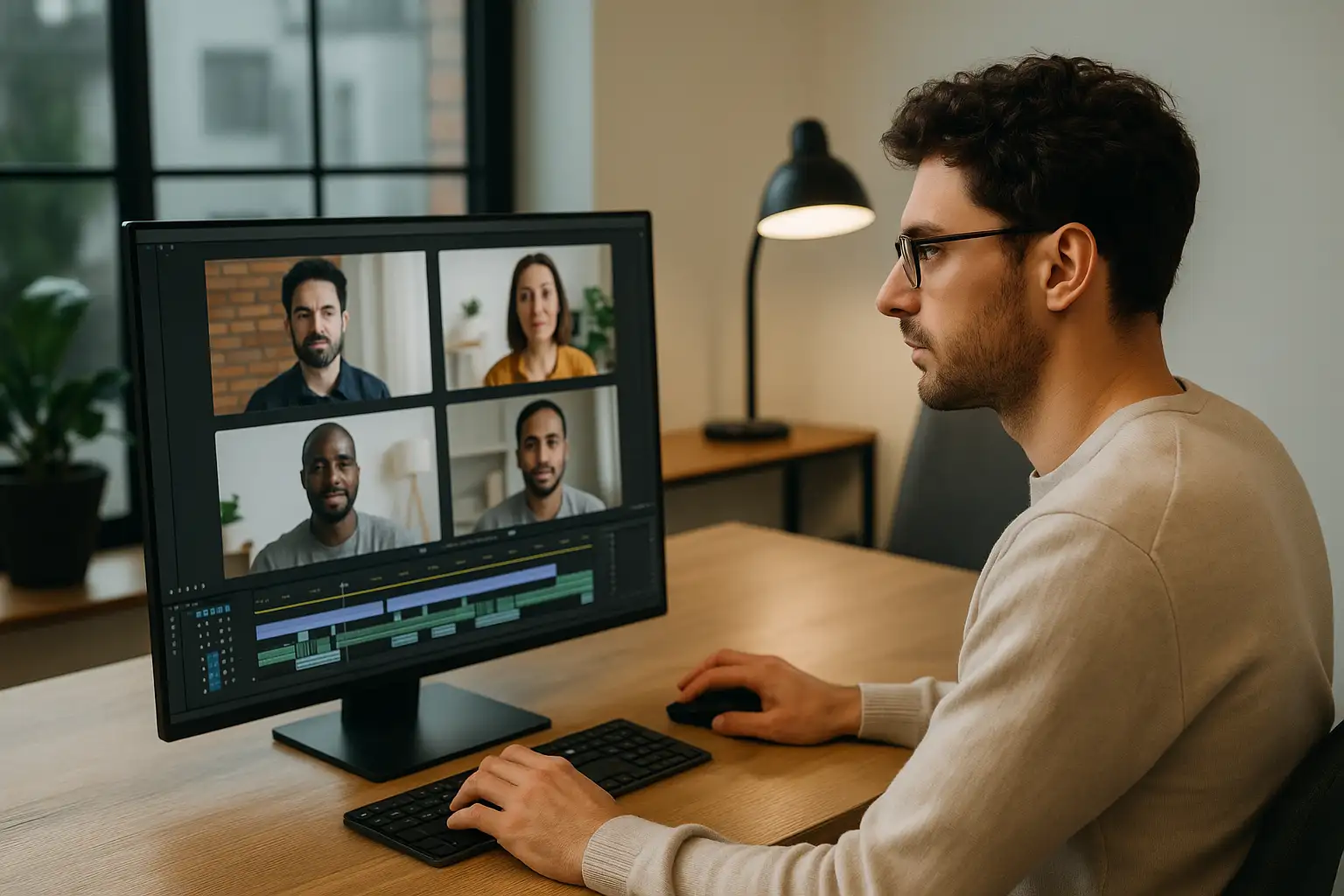
The market has consolidated around a few key players. Here's how the most relevant platforms compare in 2026.
HeyGen started as an AI avatar platform and expanded into video translation. It supports 175+ languages and offers voice cloning with lip sync. The strength: fast turnaround for avatar-based content. The limitation: minimal control over translations, no glossary function, and US-based infrastructure with unclear GDPR adherence. Best suited for quick social media clips — less so for brand-critical or enterprise content.
Rask AI offers solid automatic translation with voice generation. The platform is functional for basic dubbing needs and affordable for small teams. However, it lacks deep editing capabilities, gives external reviewers no free access, and provides limited support for brand-specific terminology. For high-volume professional workflows, the quality ceiling becomes apparent quickly.
ElevenLabs built its reputation on industry-leading voice cloning quality. The voice output captures subtle emotional tones that most competitors flatten. However, ElevenLabs is primarily an audio tool — not a complete video translation platform. There's no built-in lip sync, no glossary management, and no visual output. You'll need additional tools to get from translated audio to a finished video.
Dubly.AI is the only European platform that combines all professional features in one workflow: voice cloning, generative lip sync (up to 4K resolution), editable translations, custom glossaries, multi-speaker recognition, and free reviewer access for your own native speakers. All data is processed on EU servers, fully GDPR-compliant, with no customer data used for AI training. 330+ companies — including BMW, Axel Springer, and Charité Berlin — trust Dubly.AI for their video localization. See how Liebscher & Bracht scaled their YouTube channel to 8 languages and 43.8 million views.
| Comparison Factor | HeyGen / Rask AI / ElevenLabs | Dubly.AI |
|---|---|---|
| Voice Cloning | Available, but limited emotional range (HeyGen/Rask) or audio-only (ElevenLabs) | Full voice cloning with tone, emotion & cadence preserved |
| Lip Sync | Basic (HeyGen/Rask) or none (ElevenLabs) | Generative Lip Sync — frame-by-frame, up to 4K |
| Translation Editing | Limited or no manual control | Fully editable translations at no extra cost |
| Custom Glossaries | Not available or very basic | Account-wide glossaries for brand terminology |
| Human review | Not available | Your own reviewers in any language, at no extra seat |
| Data Privacy | US-based servers, unclear GDPR status | 100% GDPR-compliant, EU servers, TÜV-certified |
| Support | Chat/email, often delayed | Live support — chat and phone, real people |
Since February 2026, YouTube offers auto-dubbing to all creators — powered by Google's Gemini models. It's free, and for hobby creators exploring new audiences, it's a useful starting point. But for businesses and professional creators, the limitations are significant: no editing of translations, no voice cloning, no glossary support, no lip sync control, and no GDPR guarantees. YouTube's auto-dubbing is a one-size-fits-all feature — not a professional localization solution. For a detailed breakdown, see our analysis of YouTube Auto-Dubbing vs. professional tools.
Results in just a few minutes
No credit card required
Best translation quality worldwide
The video translation market has matured rapidly. In 2026, businesses have more options than ever — but the quality gap between tools remains significant.
HeyGen and Rask AI serve well for fast, basic dubbing. ElevenLabs excels at voice quality but lacks video capabilities. YouTube's auto-dubbing removes the cost barrier for casual creators.
For professional use — where brand voice, translation accuracy, visual quality, and data privacy matter — Dubly.AI is the clear recommendation. It's the only platform that delivers generative lip sync, voice cloning, editable translations, custom glossaries, and free reviewer access in one GDPR-compliant workflow. Start with a free test minute — no credit card required — and see the difference on our pricing page.
Key Takeaways:
About the author

Maximilian Engler
Co-Founder | Product
Tech
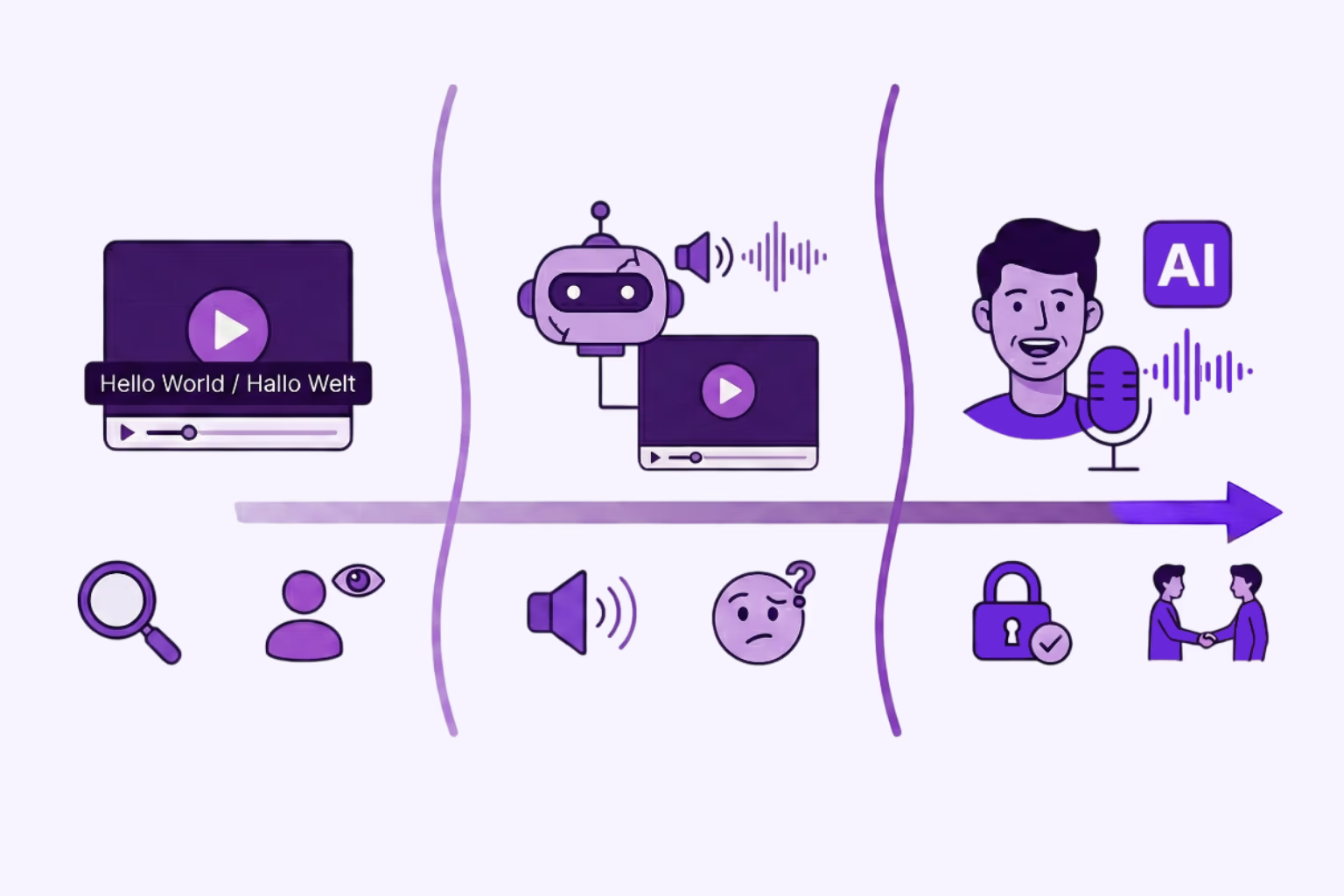
Asynchronous videos look unprofessional. Learn how AI Lip Sync and Visual Dubbing perfect your translations – GDPR compliant and scalable.
Simon Pieren
Dec 23, 2025
Use Cases
Looking for an AI video translator? We answer how to translate video free using 3 methods: Subtitles, Basic TTS, and Professional Lipsync.
Simon Pieren
Dec 8, 2025
Use Cases
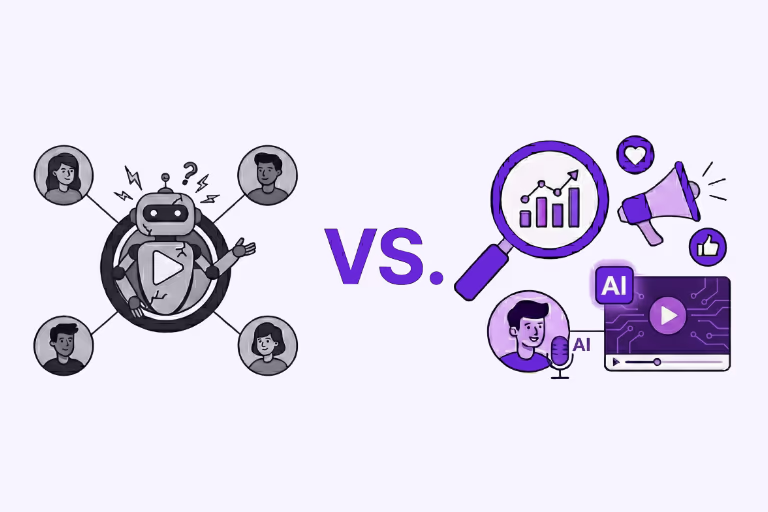
Looking to "translate video free"? Learn the technical differences between standard dubbing and generative AI Lip Sync, and how to test professional quality risk-free.
Simon Pieren
Nov 28, 2025