Tech
AI Lip Sync Explained: Stop Asynchronous Lips in Video Translations
Asynchronous videos look unprofessional. Learn how AI Lip Sync and Visual Dubbing perfect your translations – GDPR compliant and scalable.

Simon Pieren
Dec 23, 2025
GDPR compliant
Made in Germany
Highest quality lip sync
Recommended by YouTube
Tech
September 12, 2025
AI-powered video localization is fast, scalable, and efficient.
But when it really matters – when tone, clarity, or legal precision are key – automation alone isn’t enough.
That’s where Native Speaker Control (NSC) from Dubly comes in.
An optional service designed to take already strong AI translations and elevate them to a level that feels truly native – linguistically, culturally, and stylistically.
NSC is an optional, high-quality review layer within Dubly’s workflow:
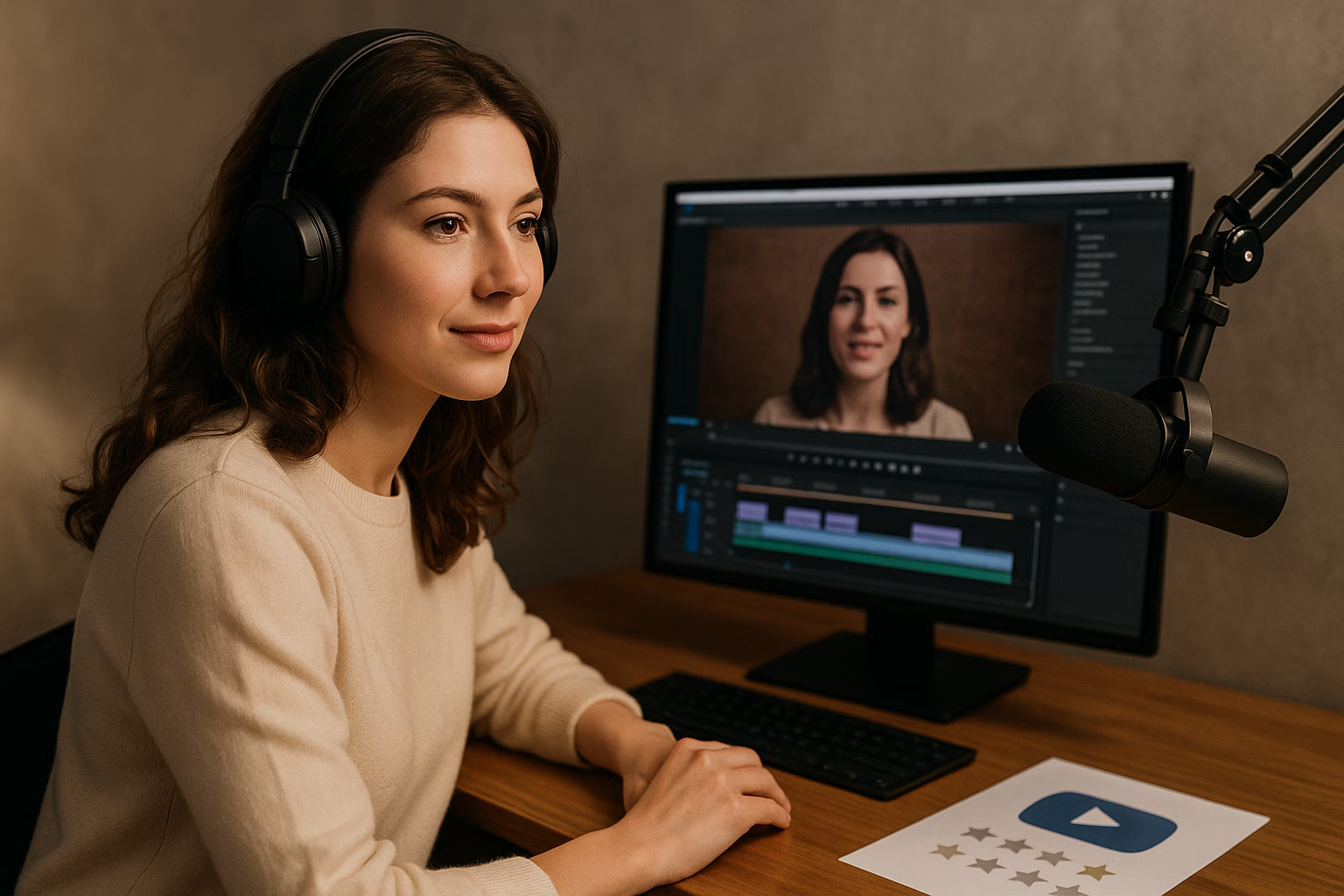
Professional native speakers carefully review and refine each AI-generated translation before the final version is delivered.
It’s not just about grammar. It’s about ensuring your message feels like it was created in the target language from the start.
Dubly’s NSC process is structured, seamless, and fully integrated into the platform:
Manual activation per account
NSC needs to be enabled for your account. Once activated, you can flag individual videos for Native Speaker Control directly inside the Dubly platform.
Trusted pool of professionals
Dubly works with a carefully vetted pool of native speakers – no crowdsourcing, no anonymous freelancers.
Fast turnaround
NSC reviews are completed within 72 hours maximum, often faster depending on language and project size.
Custom briefings supported
You can upload tone-of-voice guidelines, glossaries or campaign-specific notes. Native speakers will follow them during the review.
Edits happen inside Dubly
Native speakers make direct improvements to the translation – including grammar, tone, style and even technical aspects like pacing or sync timing.
Per-language activation
You can choose which target languages get NSC – useful for prioritizing key markets or content types.
You retain final control
After the native speaker review, you still have the option to make further adjustments.
Dubly’s AI already produces strong translation quality.
NSC takes it further – especially in high-stakes, sensitive or brand-critical content.
Some common improvements:
Polishing tone and style
(e.g. adjusting formality levels or softening direct statements)
Fixing minor grammar and spelling inconsistencies
that slip past automation
Ensuring on-brand terminology
in every language – especially for product names or slogans
Fine-tuning speed and phrasing
so that Lip Sync and visual timing feel natural
Adapting culturally
e.g. regional idioms, humor, tone of voice or politeness conventions
Native Speaker Control is especially valuable for:
Product launches or brand campaigns
Executive messages, investor or internal comms
Employer branding or recruitment videos
Content for linguistically sensitive regions (e.g. Arabic, Asian markets)
Compliance, legal or medical training content
Highly public or long-term evergreen content
Agencies often rely on NSC when localizing premium content for key clients – ensuring both quality and peace of mind.
Results in just a few minutes
No credit card required
Best translation quality worldwide
AI translation delivers speed and scale.
But when it comes to accuracy, tone, and audience trust – Native Speaker Control provides the final layer of confidence.
With Dubly, you get the best of both worlds:AI-powered automation plus human precision – built directly into your localization workflow.
About the author

Maximilian Engler
Co-Founder | Product
Tech
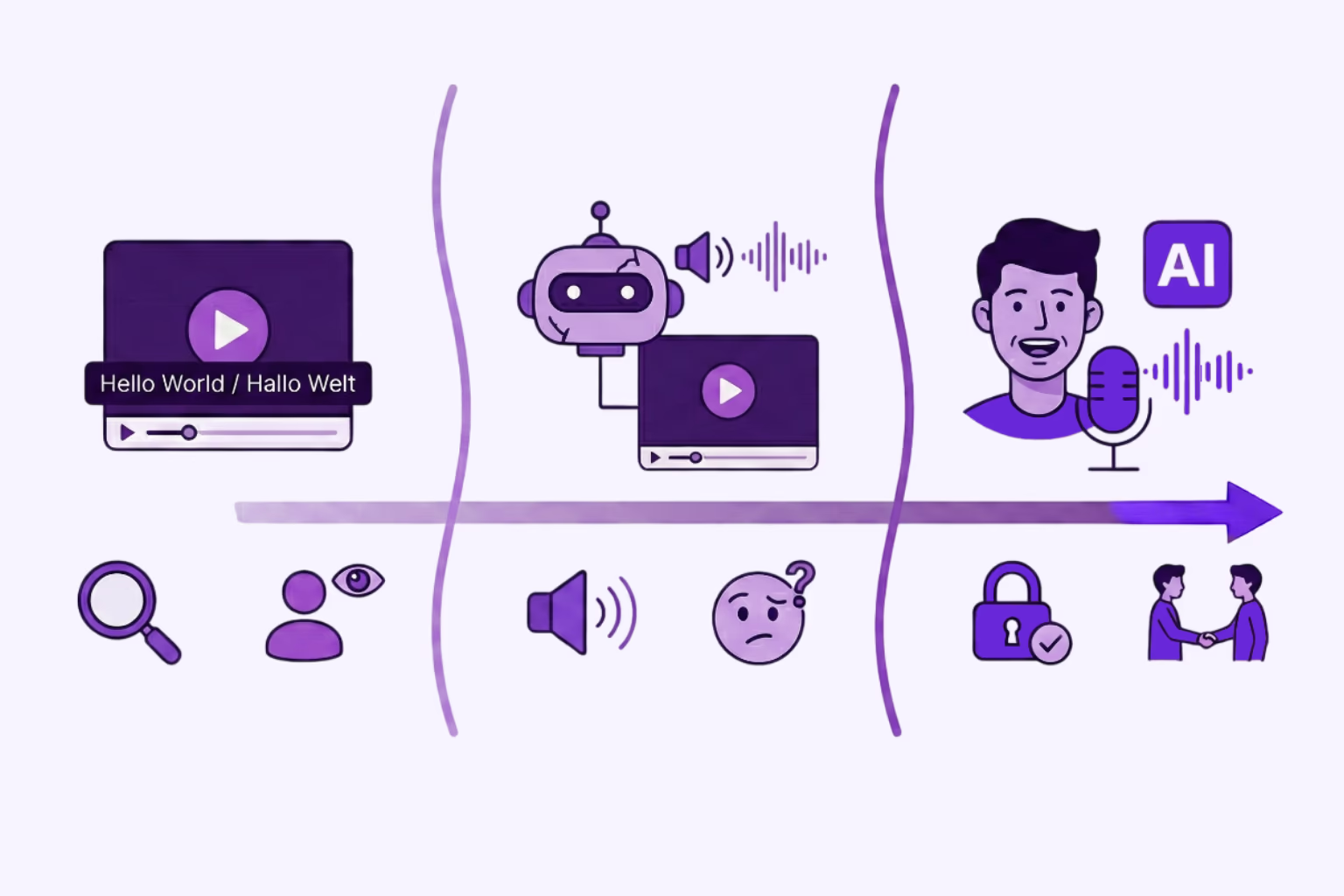
Asynchronous videos look unprofessional. Learn how AI Lip Sync and Visual Dubbing perfect your translations – GDPR compliant and scalable.
Simon Pieren
Dec 23, 2025
Use Cases
Looking for an AI video translator? We answer how to translate video free using 3 methods: Subtitles, Basic TTS, and Professional Lipsync.
Simon Pieren
Dec 8, 2025
Use Cases
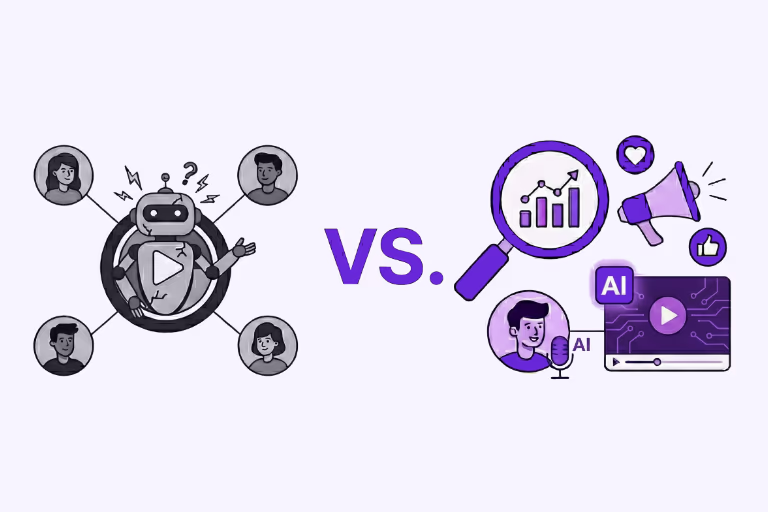
Looking to "translate video free"? Learn the technical differences between standard dubbing and generative AI Lip Sync, and how to test professional quality risk-free.
Simon Pieren
Nov 28, 2025