Tech
AI Lip Sync Explained: Stop Asynchronous Lips in Video Translations
Asynchronous videos look unprofessional. Learn how AI Lip Sync and Visual Dubbing perfect your translations – GDPR compliant and scalable.

Simon Pieren
Dec 23, 2025
Full Data Sovereignty
Personal point of contact
Highest Quality Lip Sync
Trusted by 1,200+ Companies
Use Cases
September 12, 2025
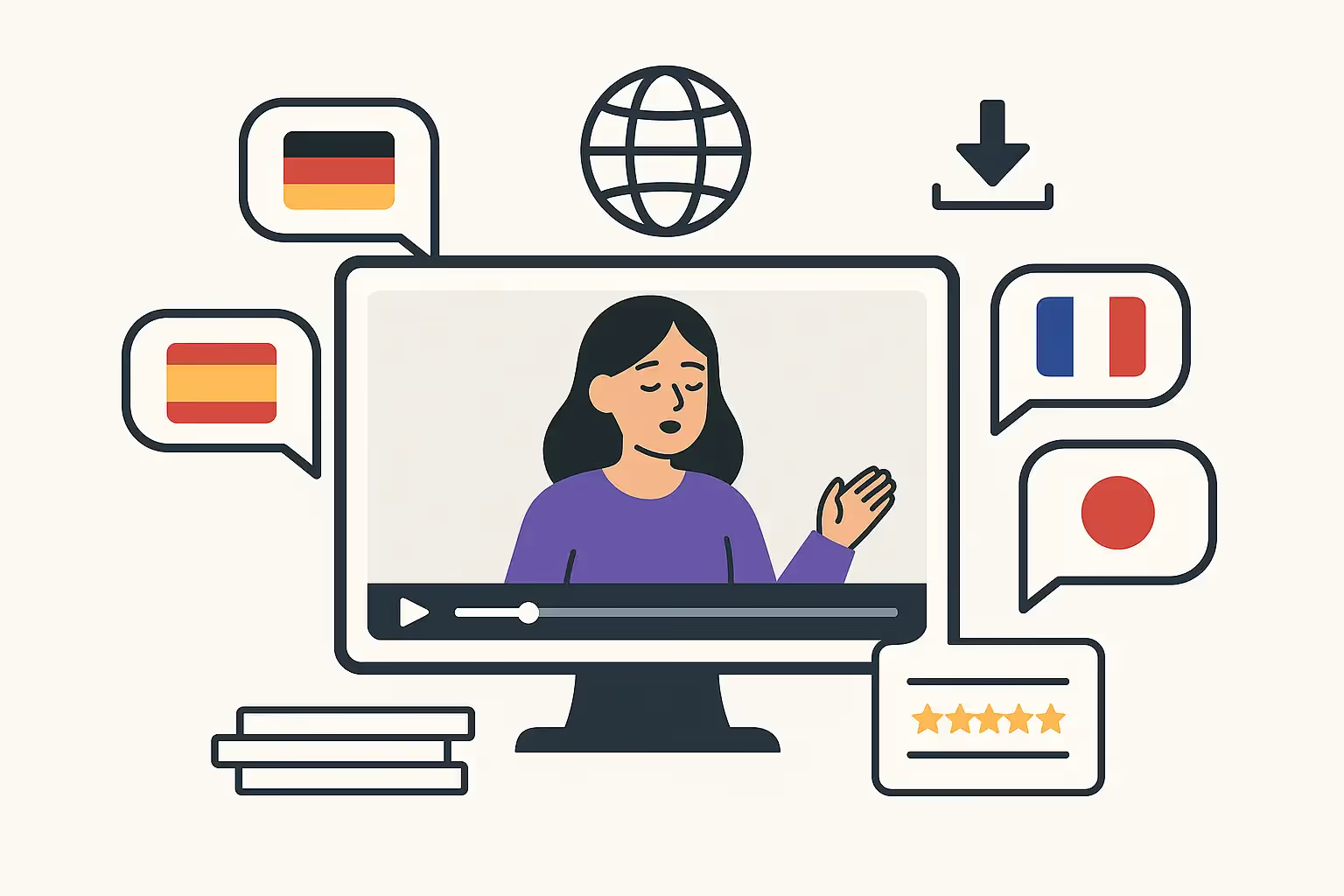
You’ve put time, effort, and expertise into your webinars. They’re full of insights, delivered by your best minds, and carefully tailored to your audience. But if that audience only speaks one language – you’re limiting your impact.
In a global business environment, webinars shouldn’t be restricted by language.
They’re one of the most powerful formats for building trust, sharing knowledge, and guiding prospects.
With multilingual versions, your webinars become scalable content assets that reach across borders.
Most webinars are already recorded, edited, and structured. That makes them the perfect candidate for localization. Instead of producing ten new versions from scratch, you can reuse your core content – but make it work for every market.
Translated webinars allow you to:
Expand reach without extra production cost
Serve diverse customer groups across regions
Train international teams with unified content
Build a consistent global brand voice
And unlike subtitles, voice-based translation with proper lip sync keeps your content engaging and professional – especially in long-form formats.
There are many reasons to localize your webinar library – whether for marketing, education or internal communications:
Turning live webinars into on-demand content for international leads
Presenting product updates and demos to regional markets
Delivering training or onboarding to global teams
Supporting partners and resellers with clear, native-language content
Communicating leadership updates in a way that builds trust
If your webinar is worth doing once, it’s worth doing in ten languages.
Hiring voice actors, renting studio time, and syncing everything manually is time-consuming, expensive, and rarely scalable.
Subtitles can help – but they often don’t match the pace of speech, and become tiring for longer sessions. Worse, they break immersion and weaken the message.
Many AI tools also struggle with real-world webinars: multiple speakers, spontaneous phrasing, technical vocabulary, pauses, accents.
This is where most systems fail.
Dubly was designed to handle exactly these challenges. Our AI-powered platform can translate spoken content into over 30 languages – with high-quality audio, accurate lip sync, and support for even the most complex input.
Whether your webinar includes one or five speakers, scripted content or free-form discussion – Dubly delivers clean, natural-sounding results.
You can even choose to retain the original speaker’s voice, re-generated in the target language, for a truly seamless experience.
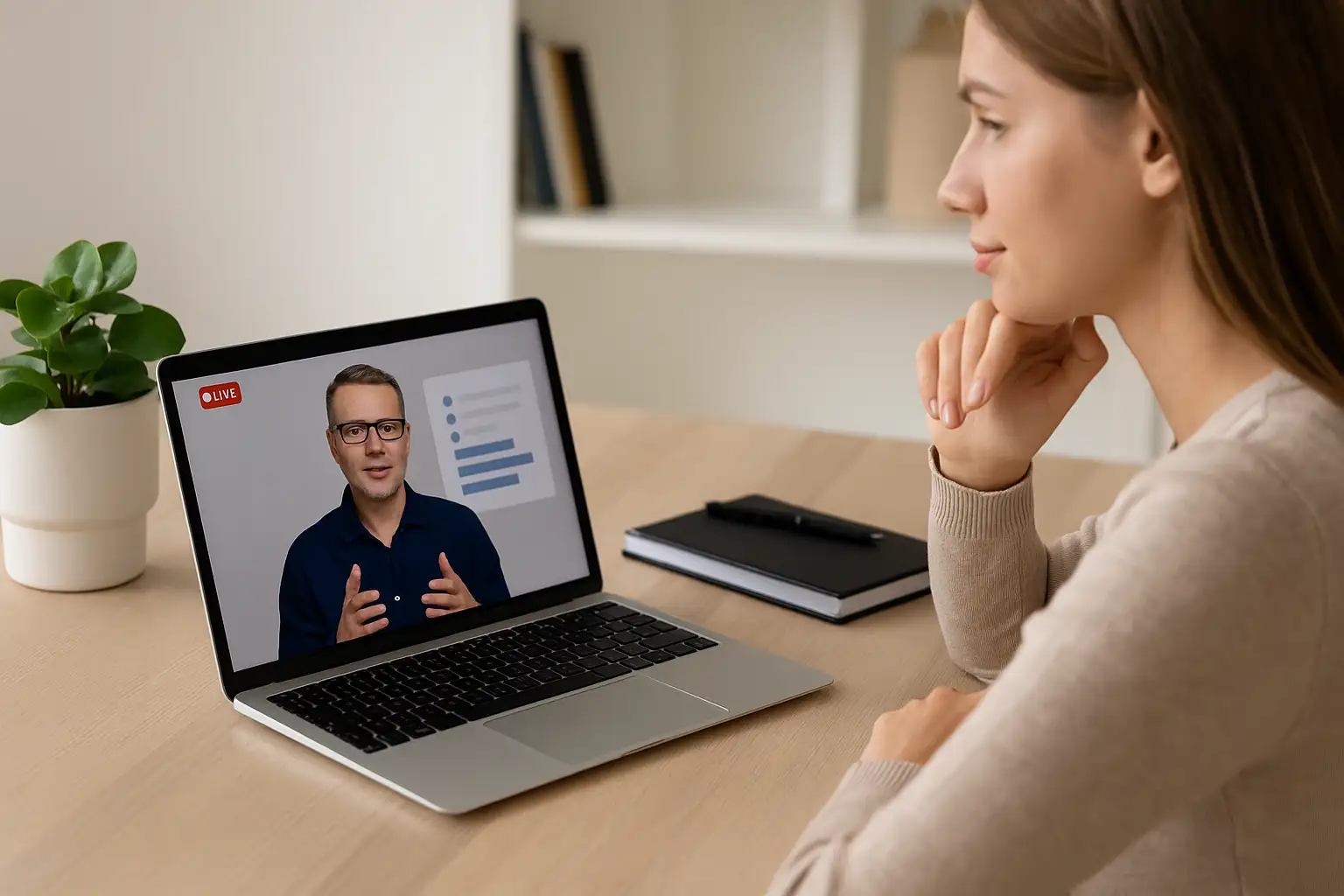
Our platform isn’t just fast – it’s made for quality:
Smooth, native-sounding voiceovers
Automatic speaker separation, no need to pre-process
Accurate lip sync, even for long sessions
Custom glossaries and prompts for industry terms
Optional reviewer access for your own native speakers for high-priority content
Secure, **GDPR-compliant processing on EU servers only
**
The result? A webinar that looks, sounds, and feels like it was created in the target language – not just translated after the fact.
The Dubly workflow is simple and scalable:
Upload your recorded webinar
Choose your target languages and settings
Define any glossary terms or brand phrasing
(Optional) Invite a native speaker as a reviewer
Let Dubly handle translation, voice synthesis, and lip sync
Download and distribute your localized versions
No studios. No manual syncing. No drama.
Results in just a few minutes
No credit card required
Best translation quality worldwide
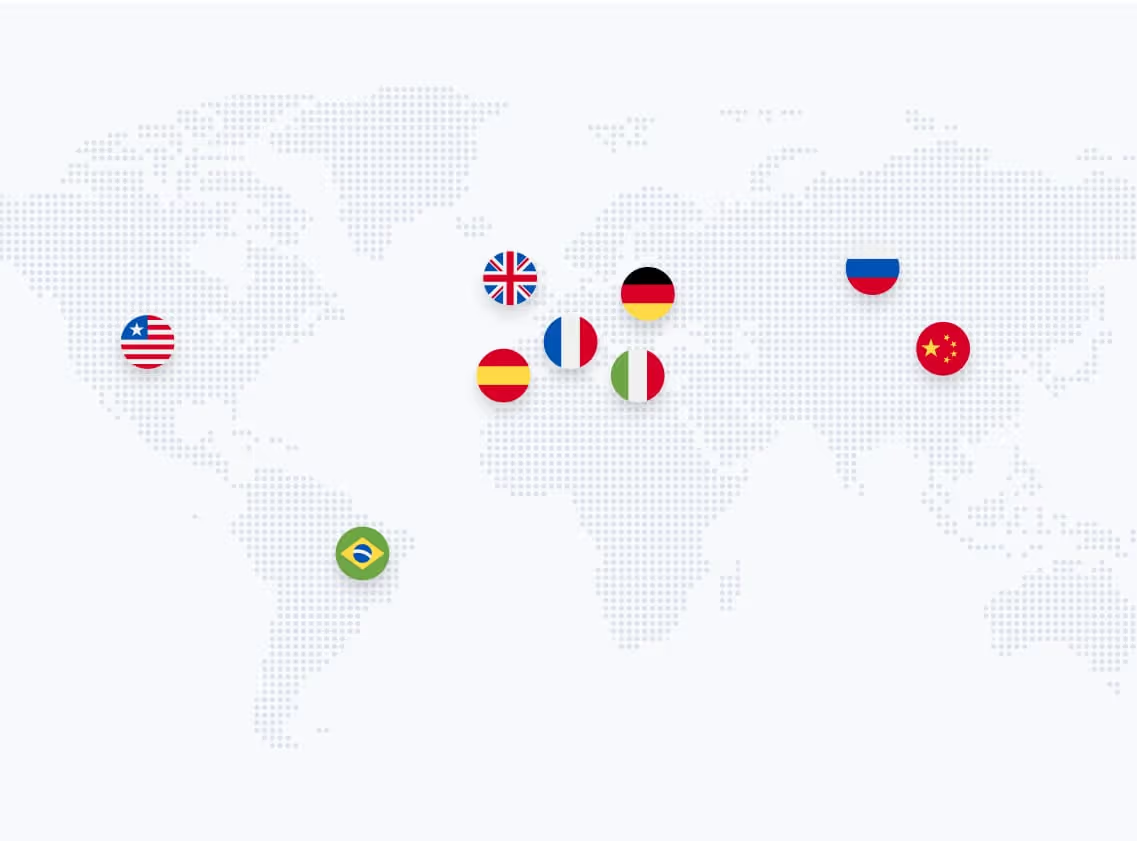
Webinars are too valuable to stay local.
They’re the ideal format to scale knowledge, build global trust, and generate long-tail value from a single piece of content.
With Dubly, you can translate your webinars faster, more naturally, and with the quality your brand deserves – all while staying compliant with European data standards.
About the author

Simon Pieren
Co-Founder | Marketing & Sales
Tech
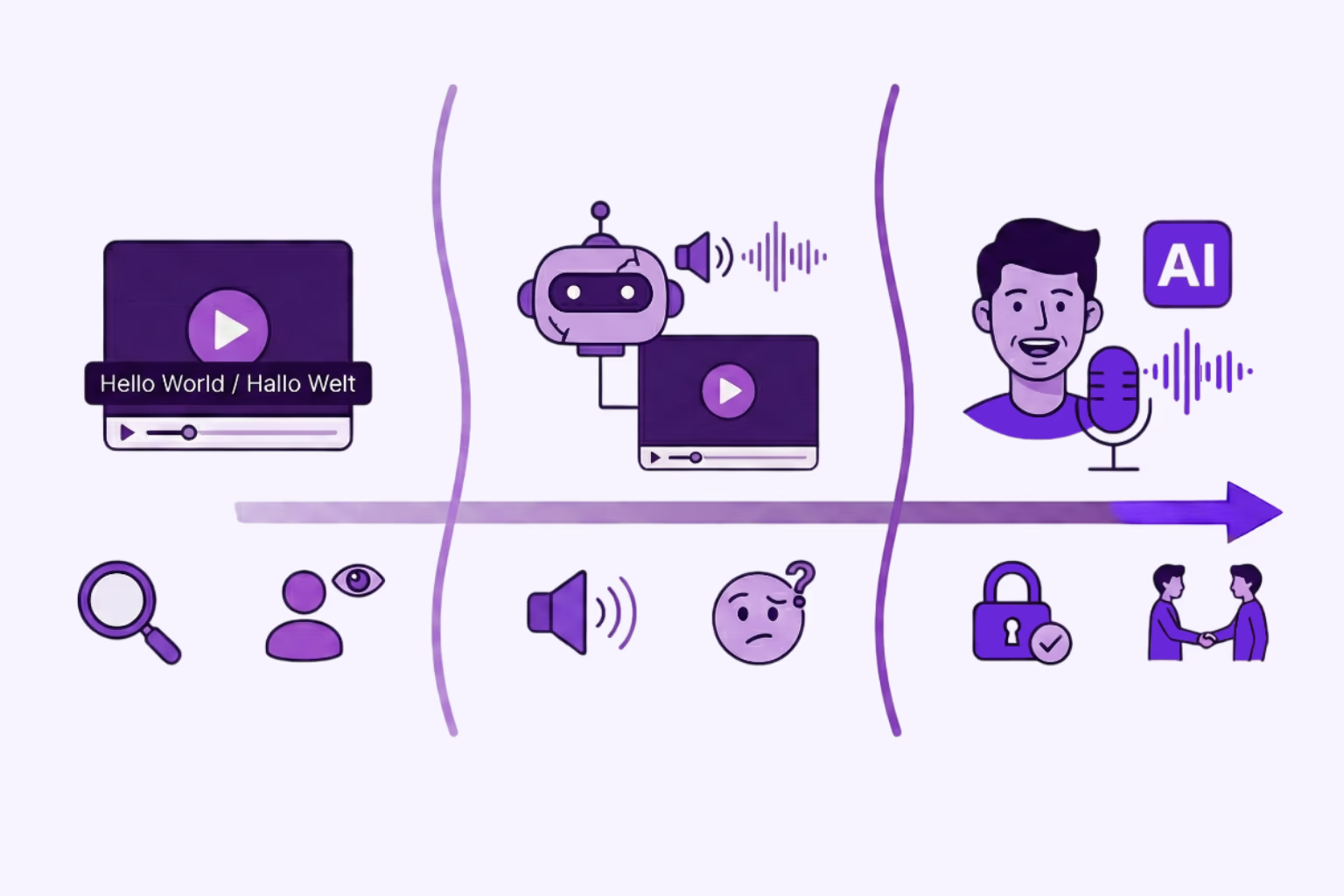
Asynchronous videos look unprofessional. Learn how AI Lip Sync and Visual Dubbing perfect your translations – GDPR compliant and scalable.
Simon Pieren
Dec 23, 2025
Use Cases
Looking for an AI video translator? We answer how to translate video free using 3 methods: Subtitles, Basic TTS, and Professional Lipsync.
Simon Pieren
Dec 8, 2025
Use Cases
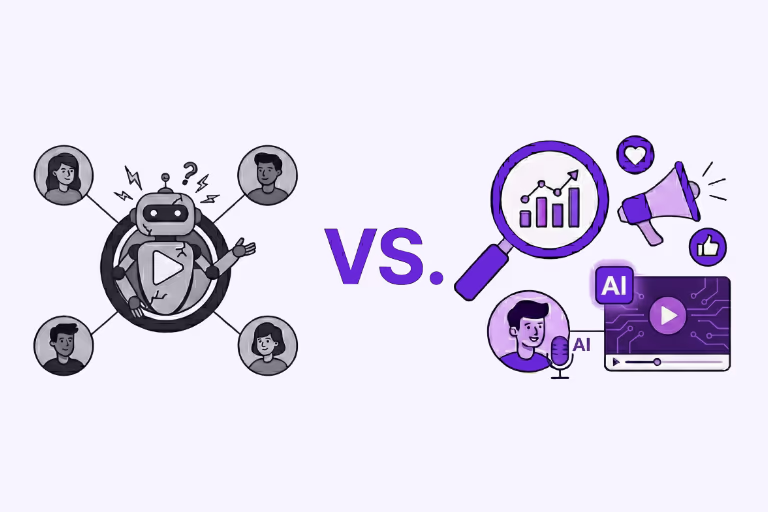
Looking to "translate video free"? Learn the technical differences between standard dubbing and generative AI Lip Sync, and how to test professional quality risk-free.
Simon Pieren
Nov 28, 2025