Tech
AI Lip Sync Explained: Stop Asynchronous Lips in Video Translations
Asynchronous videos look unprofessional. Learn how AI Lip Sync and Visual Dubbing perfect your translations – GDPR compliant and scalable.

Simon Pieren
Dec 23, 2025
Full Data Sovereignty
Personal point of contact
Highest Quality Lip Sync
Trusted by 1,200+ Companies
Tech
September 12, 2025
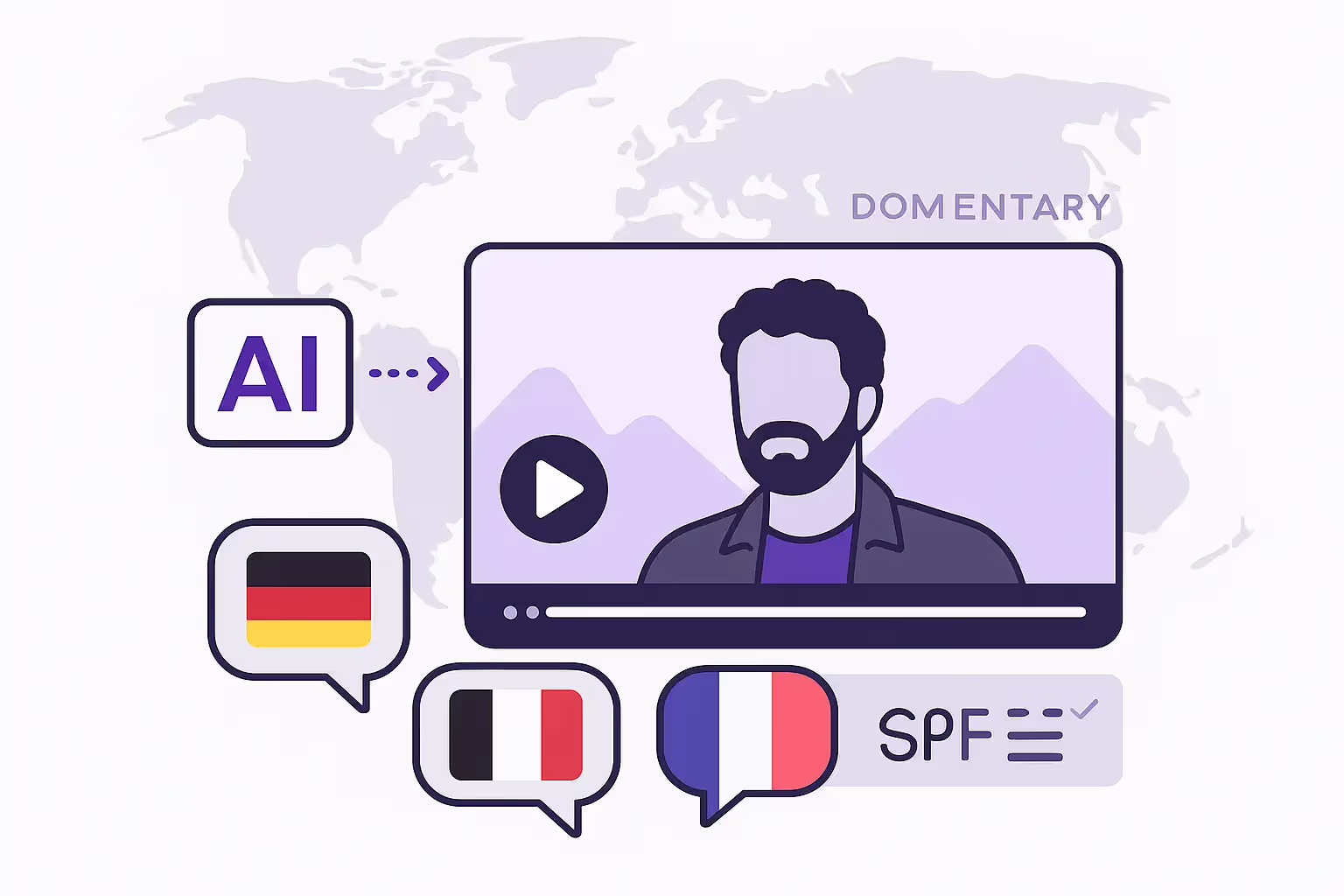
Documentaries are one of the most powerful formats for storytelling and education.
They uncover complex topics, explore history, inspire action, and share deep insights with viewers around the world.
But too often, their reach is limited by language.
A powerful film may resonate deeply in one country — but remain completely unknown in others.
The solution?
Professional translation and dubbing, tailored to your audience — and powered by modern AI.
Documentaries have characteristics that make them ideal for AI-based translation:
Structured and clear narration
Most documentaries follow a logical, paced speech style — perfect for processing and voice synthesis.
Low emotional volatility
Unlike drama or fiction, documentaries rarely involve extreme emotional expressions like screaming or whispering.
Long-form value
Documentaries often have long runtimes and rich information — which makes it more worthwhile to translate them into multiple languages.
Evergreen content
Many documentaries are reused across channels or platforms, making multilingual access a smart long-term investment.
Subtitling is affordable and fast, but may distract from visuals — and lacks emotional connection.
Pros: Simple, accessible
Cons: Limited engagement, not fully inclusive
Studio dubbing offers excellent quality — but is time-consuming, expensive, and rarely scalable for large projects.
Pros: Natural voice work
Cons: High cost, long lead times
The smart solution: Dubly combines speed, cost-efficiency, and quality, offering:
Natural-sounding voices
Optional Lip Sync
Custom glossaries for domain-specific language
Reviewer access for your own native speakers for stylistic and cultural fine-tuning
Support for bulk workflows and large files
High translation accuracy powered by advanced AI
Custom glossaries for medical, scientific, or technical terms
Speaker recognition and support for multi-speaker content
GDPR-compliant, secure processing – your data stays safe
Optional reviewer access for your own native speakers for maximum quality
API and manual workflows – designed for flexibility
Optional high-res delivery including ProRes formats for post-production use
1. Complex terminology
→ Handled with account-level glossaries and tailored prompts
2. Multiple voices and roles
→ Multi-speaker detection and voice matching included
3. Accuracy and natural flow
→ Refined by your own reviewers for grammar, speed, pronunciation, and more
4. Long runtimes & large files
→ Dubly is built to handle extended content efficiently, even via API or bulk upload
Results in just a few minutes
No credit card required
Best translation quality worldwide
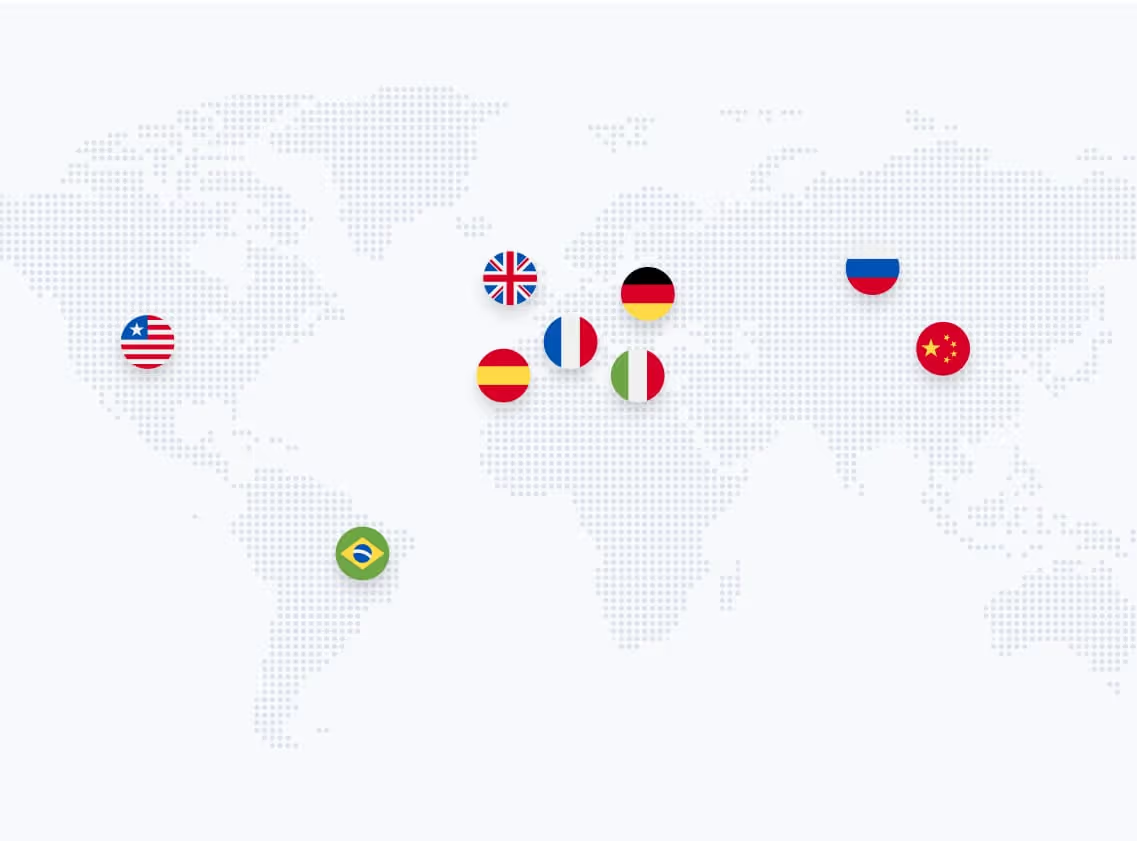
If your mission is to inform and educate, don’t let language get in the way.
Dubly helps you translate and localize documentaries with speed, precision, and professionalism — without compromising on tone, clarity, or compliance.
About the author

Maximilian Engler
Co-Founder | Product
Tech
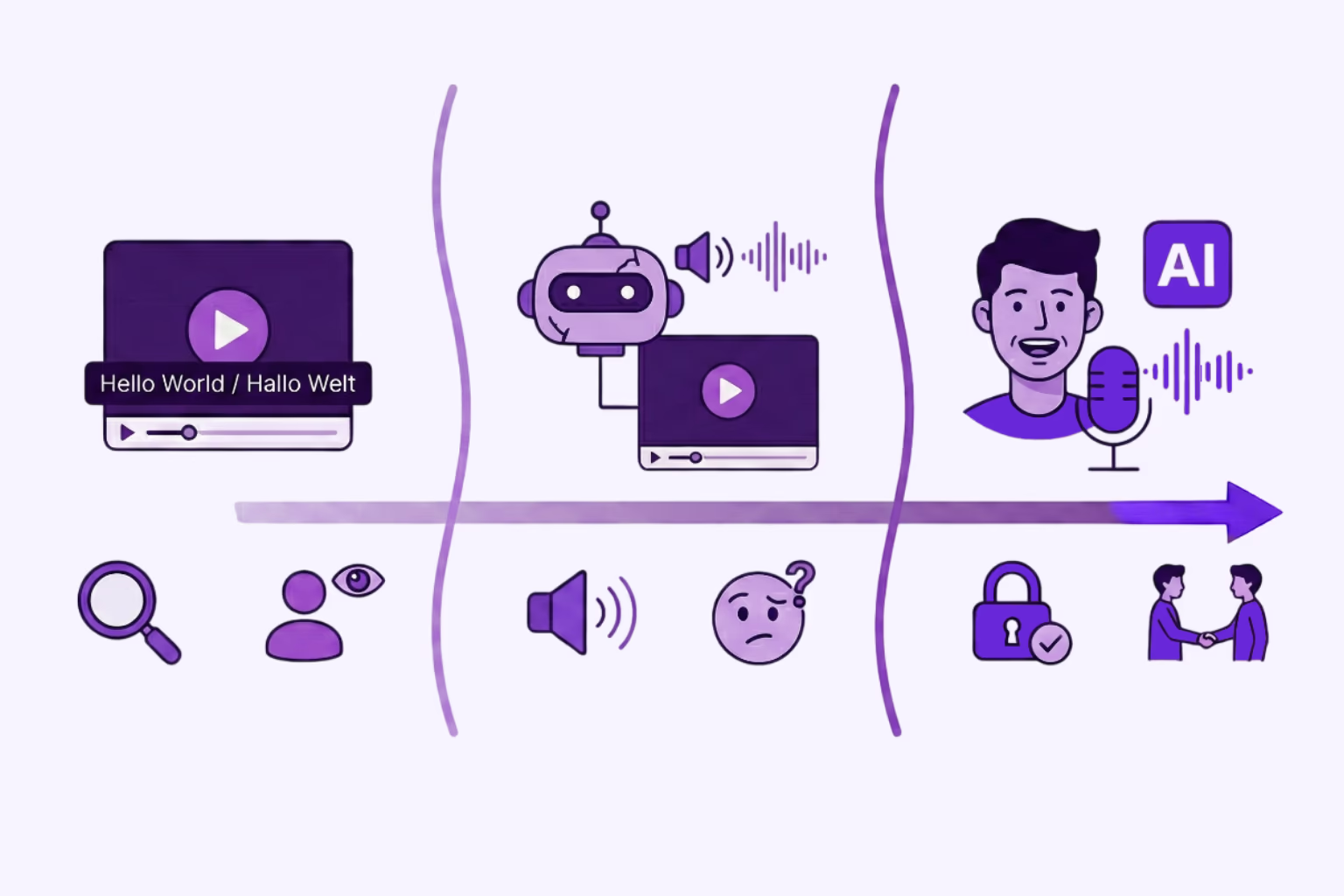
Asynchronous videos look unprofessional. Learn how AI Lip Sync and Visual Dubbing perfect your translations – GDPR compliant and scalable.
Simon Pieren
Dec 23, 2025
Use Cases
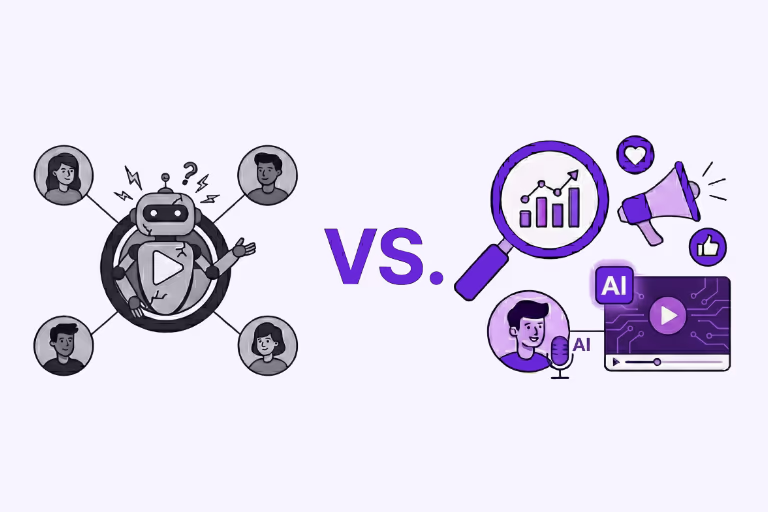
Looking for an AI video translator? We answer how to translate video free using 3 methods: Subtitles, Basic TTS, and Professional Lipsync.
Simon Pieren
Dec 8, 2025
Use Cases
Looking to "translate video free"? Learn the technical differences between standard dubbing and generative AI Lip Sync, and how to test professional quality risk-free.
Simon Pieren
Nov 28, 2025