Tech
AI Lip Sync Explained: Stop Asynchronous Lips in Video Translations
Asynchronous videos look unprofessional. Learn how AI Lip Sync and Visual Dubbing perfect your translations – GDPR compliant and scalable.

Simon Pieren
Dec 23, 2025
Full Data Sovereignty
Personal point of contact
Highest Quality Lip Sync
Trusted by 1,200+ Companies
Use Cases
September 12, 2025
From TikTok clips to LinkedIn campaigns –
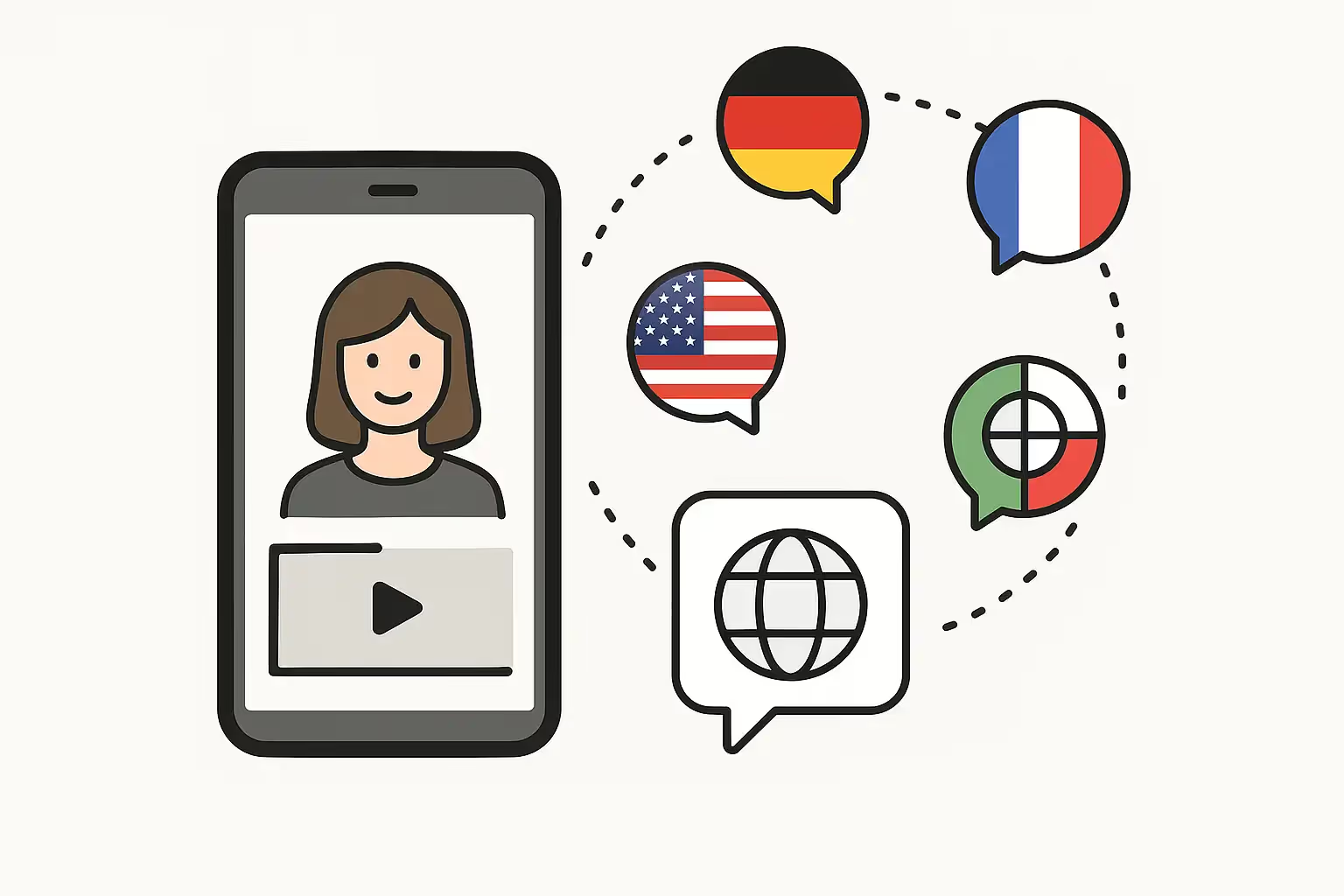
video is the core of modern social media communication. It drives emotion, reach, and conversion. But in a global world, it’s not enough to post in just one language. If you want to truly connect with your audience, your content needs to speak their language – literally.
Multilingual social media videos are no longer optional – they’re a competitive advantage.
Social media works globally, but audiences think locally.
A well-produced video in German won’t resonate in Brazil or Italy if the language, phrasing, or tone feels off.
This is especially true for fast-paced platforms like TikTok or Instagram. Here, users expect content to feel natural, native, and visually in sync. Subtitles are often skipped, disrupt visuals, or simply don’t work in short, fast clips.
Professional, voice-based translations increase engagement, watch time, and credibility – especially on social.
Virtually any short-form content can benefit from proper localization:
Reels and ad campaigns for global distribution
Product demos and how-to videos for multiple markets
Employer branding or CEO messages on LinkedIn
TikToks and Shorts with high posting frequency
Testimonials, behind-the-scenes, and founder videos
For teams and agencies producing at scale, a flexible, high-quality solution becomes critical.
Most AI dubbing tools provide basic text-to-speech output – technically correct, but often robotic, awkwardly timed, or poorly synced with visuals.
That might pass in a training video. But on social?
There’s no room for “almost.” Viewers scroll away, engagement drops, and your brand perception suffers.
On visual-first platforms, language must align perfectly with tone, image, and timing – anything less feels amateur.
Dubly was built for precision, scale, and natural sound – making it ideal for dynamic, short-form content like Reels and campaign clips.
High-quality lip sync, even for close-ups and fast editing
Natural-sounding voices, with the option to retain the original speaker’s tone
Fast turnaround for one-off or high-volume projects
Bulk support for content batches and video libraries
API access for automation and full workflow integration
**Optional reviewer access for your own native speakers on request for high-visibility content
**
Whether you're localizing a handful of Reels or running multi-market social campaigns – Dubly ensures your message lands cleanly in every language.**
**

You can start with a single video upload or build a fully automated pipeline via API – the process is built to be simple:
Upload a video manually or send via API
Choose languages and voices
Set translation parameters – including glossaries or custom terms
(Optional) Invite a native speaker as reviewer for high-sensitivity content
Receive fully translated & lip-synced versions
**Download and publish across your channels
**
Everything is streamlined – from test clip to campaign roll-out.
Results in just a few minutes
No credit card required
Best translation quality worldwide
Social content is emotional, fast, and visual.
But without proper translation, even the best video can miss its mark.
With Dubly, you translate your social media videos professionally, securely, and at scale – with the quality, support and flexibility you need for every language and market.
About the author

Simon Pieren
Co-Founder | Marketing & Sales
Tech
Asynchronous videos look unprofessional. Learn how AI Lip Sync and Visual Dubbing perfect your translations – GDPR compliant and scalable.
Simon Pieren
Dec 23, 2025
Use Cases
Looking for an AI video translator? We answer how to translate video free using 3 methods: Subtitles, Basic TTS, and Professional Lipsync.
Simon Pieren
Dec 8, 2025
Use Cases
Looking to "translate video free"? Learn the technical differences between standard dubbing and generative AI Lip Sync, and how to test professional quality risk-free.
Simon Pieren
Nov 28, 2025