Tech
AI Lip Sync Explained: Stop Asynchronous Lips in Video Translations
Asynchronous videos look unprofessional. Learn how AI Lip Sync and Visual Dubbing perfect your translations – GDPR compliant and scalable.

Simon Pieren
Dec 23, 2025
Full Data Sovereignty
Personal point of contact
Highest Quality Lip Sync
Trusted by 1,200+ Companies
Tech
September 12, 2025
AI is transforming how we work with video. But when it comes to translation, there’s one question every team asks sooner or later:
Can I really trust the output?
If you’re translating marketing content, training videos, or corporate communication, accuracy isn’t optional. You need results that reflect your message — clearly, naturally, and reliably.
In this article, we’ll explore:
What "accuracy" in AI video translation really means
What factors improve or reduce translation quality
What Dubly offers to help you fine-tune every result
Translation quality in video involves several key elements:
Content accuracy – Does the message retain its original meaning?
Linguistic accuracy – Are grammar, vocabulary, and tone appropriate?
Technical accuracy – Does the timing match the original audio/video?
Emotional accuracy – Does it sound natural and match the speaker’s tone?
A truly professional AI video translator must deliver on all of these – and Dubly is built to give you full control over each layer.
Clear and well-spoken audio without heavy background noise
Neutral or standard language without idioms or slang
Good audio quality (no distortion or reverb)
Use of glossaries and custom prompts
**Logical sentence structure and consistent context
**
Heavy accents, dialects, or unclear articulation
Emotional extremes (e.g., shouting, sobbing, sarcasm)
Complex metaphors or local expressions
Overlapping speakers or noisy background
Rapid or improvised speech
That said, modern AI models — especially those used by Dubly — handle the vast majority of content with remarkable precision.
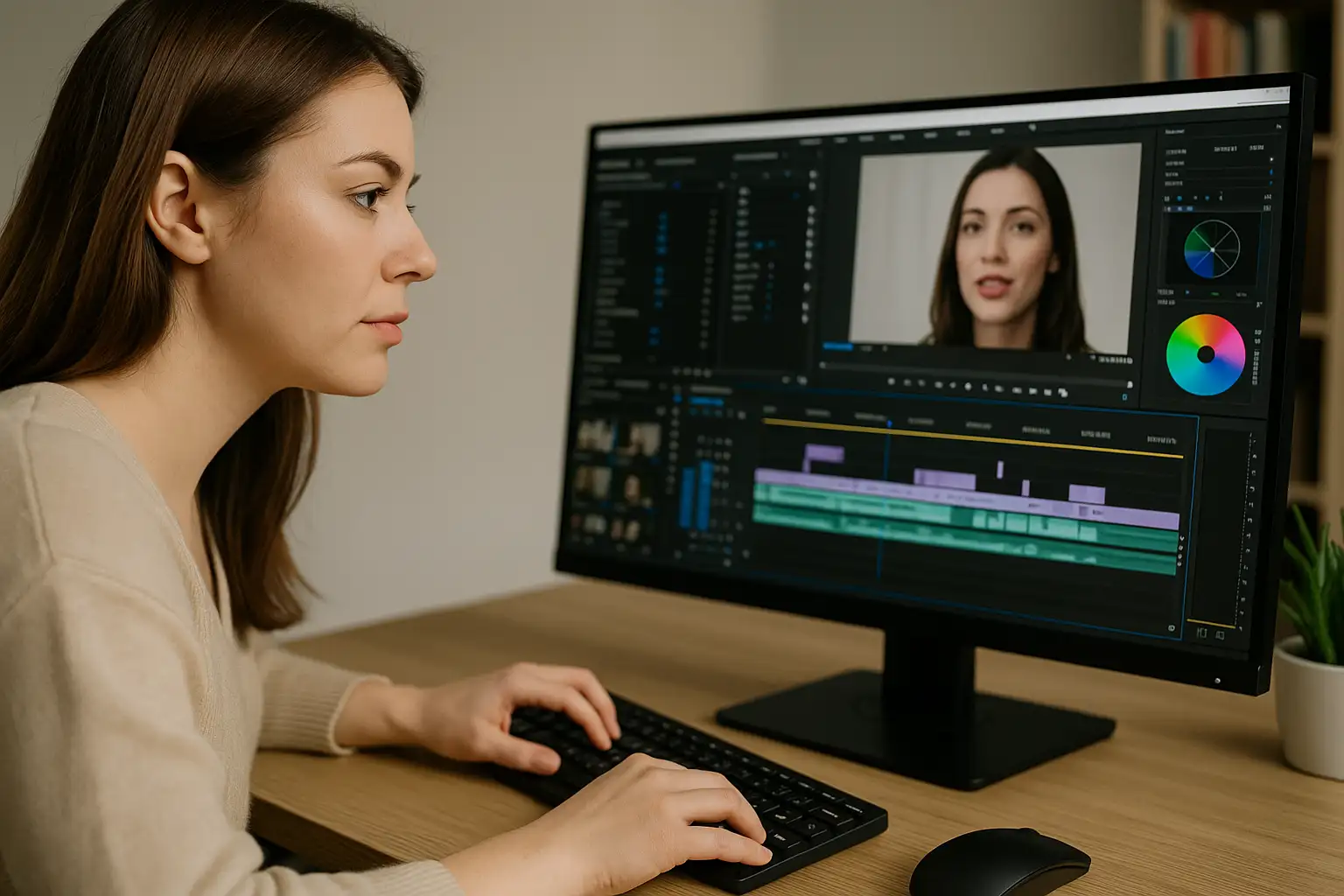
Unlike "black box" AI tools, Dubly gives you full transparency and editing options, so you're never stuck with a bad translation.
After automatic processing, you can easily review and refine each section of translated text:
Adjust phrasing or tone
Correct industry-specific terms
Align language with your brand voice
Tweak sentence length for better timing
Every change is immediately reflected in the generated audio.
Dubly allows you to define a custom glossary at the account level. This ensures consistent translation of key terminology – such as product names, legal terms, or brand-specific vocabulary – across all your videos.
For content that’s particularly sensitive or critical, add a human review step — done by the people who know your market:
Invite colleagues, your agency or any native speaker as an external reviewer — without using a seat
They review grammar, timing, cultural appropriateness, and tone, directly in the editor
Revisions are unlimited, and corrections feed your glossary
Ideal for public-facing, medical, legal, or compliance-related content
Dubly offers additional features to refine results:
Speaker count & recognition
Audio enhancement & pacing adjustment
Custom prompts for tone (e.g. friendly, formal, technical)
You don’t need to be a linguist – but if you want fine-tuned output, the tools are there.
Results in just a few minutes
No credit card required
Best translation quality worldwide
AI video translation is no longer experimental — but only if you choose the right tool.
With Dubly, you get:
✅ Modern language models trained for real dialogue
✅ Manual review & editing features
✅ Glossary integration and brand language consistency
✅ Free reviewer access for your own native speakers
✅ Full visibility into every line of translated text
The result? Accurate, scalable, and professional-grade video localization — without the traditional overhead.
About the author

Maximilian Engler
Co-Founder | Product
Tech
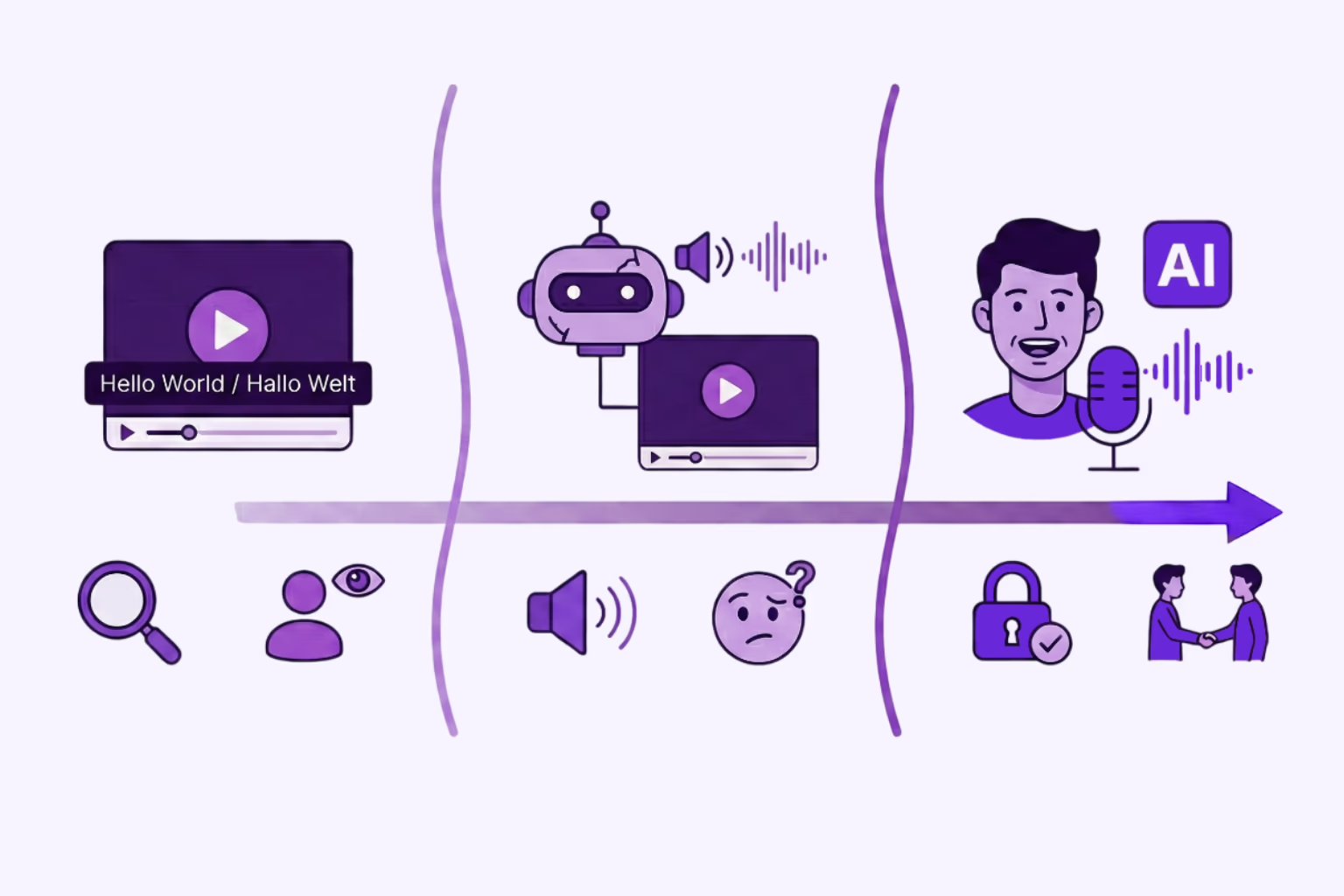
Asynchronous videos look unprofessional. Learn how AI Lip Sync and Visual Dubbing perfect your translations – GDPR compliant and scalable.
Simon Pieren
Dec 23, 2025
Use Cases
Looking for an AI video translator? We answer how to translate video free using 3 methods: Subtitles, Basic TTS, and Professional Lipsync.
Simon Pieren
Dec 8, 2025
Use Cases
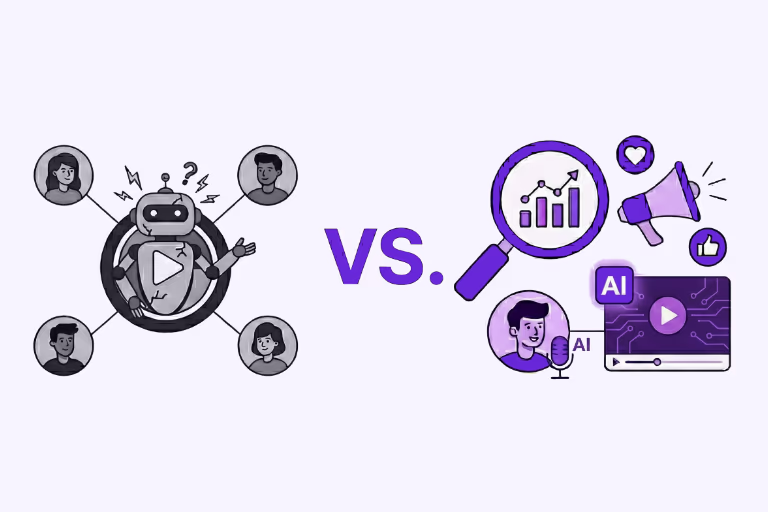
Looking to "translate video free"? Learn the technical differences between standard dubbing and generative AI Lip Sync, and how to test professional quality risk-free.
Simon Pieren
Nov 28, 2025