Tech
AI Lip Sync Explained: Stop Asynchronous Lips in Video Translations
Asynchronous videos look unprofessional. Learn how AI Lip Sync and Visual Dubbing perfect your translations – GDPR compliant and scalable.

Simon Pieren
Dec 23, 2025
Full Data Sovereignty
Personal point of contact
Highest Quality Lip Sync
Trusted by 1,200+ Companies
Tech
September 12, 2025
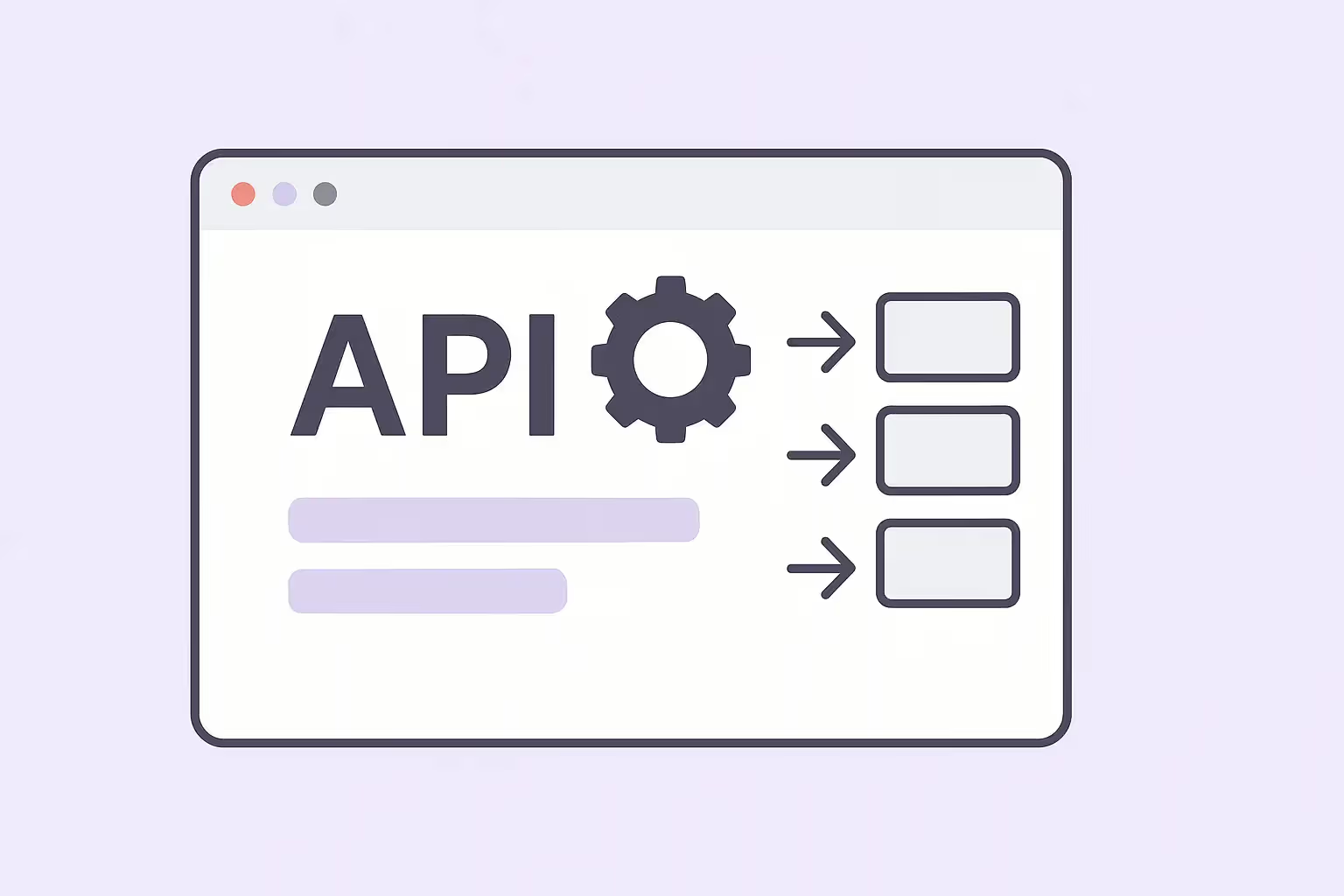
If you need to translate large volumes of video content automatically — with quality, control, and speed — then an API is the way to go.
Whether you're a creative agency, media group, e-learning platform, or global brand, a strong video translation API is the backbone of any scalable localization workflow.
But not all APIs are created equal.
In this article, we break down:
What a great video translation API needs to offer
What features actually matter in real production workflows
And why Dubly is the market leader for enterprise-grade, high-quality AI video translation
Modern content teams deal with:
Large libraries of videos across platforms
Ongoing content creation cycles
Multilingual audiences
Custom tech stacks (CMS, DAM, LMS, etc.)
Manual uploads are not sustainable.
You need translation that’s fast, repeatable, and deeply integrated.
That’s where the API comes in.
REST API with full documentation
Token-based authentication
Webhooks for real-time status updates
Sandbox environment for testing
Dubly offers a modern, well-documented REST API built for developers.
Accepts formats like MP4, MOV, ProRes
Outputs available as MP4, WAV, SRT, and JSON
Preserves original resolution and frame rate
Dubly delivers in full resolution, with optional ProRes exports on request.
Choose target languages
Set number of speakers
Enable or disable lip sync
Apply custom glossaries for brand and product terms
Inject tone/style instructions via custom prompts
Dubly’s API allows full editorial control – even programmatically.
Track jobs by status (“queued”, “processing”, “done”)
Get notified via webhook when files are ready
Retrieve metadata: speaker mapping, timecodes, transcripts
Dubly supports polling and push workflows for full automation.
Parallel processing for high throughput
Batch/bulk processing support
Monitoring tools available for high-volume clients
Whether you process 10 videos a week or 1,000, Dubly scales effortlessly.
Dubly isn’t just another AI tool — it’s a full platform for scalable, high-quality video localization.
✅ Studio-level voice & audio quality
✅ High-resolution lip sync that looks natural, even close-up
✅ API-based control over tone, glossary, speaker count, and output format
✅ Separate audio and video delivery for editing workflows
✅ GDPR-compliant data handling
✅ EU server storage, with US subprocessors only under Standard Contractual Clauses
✅ Developer support & enterprise onboarding available

A leading European agency group handles campaign videos for an international retailer.
Before Dubly:
Manual translation of 3–4 languages per video
Voiceovers only, no lip sync
Weeks of delay per rollout
With Dubly’s API:
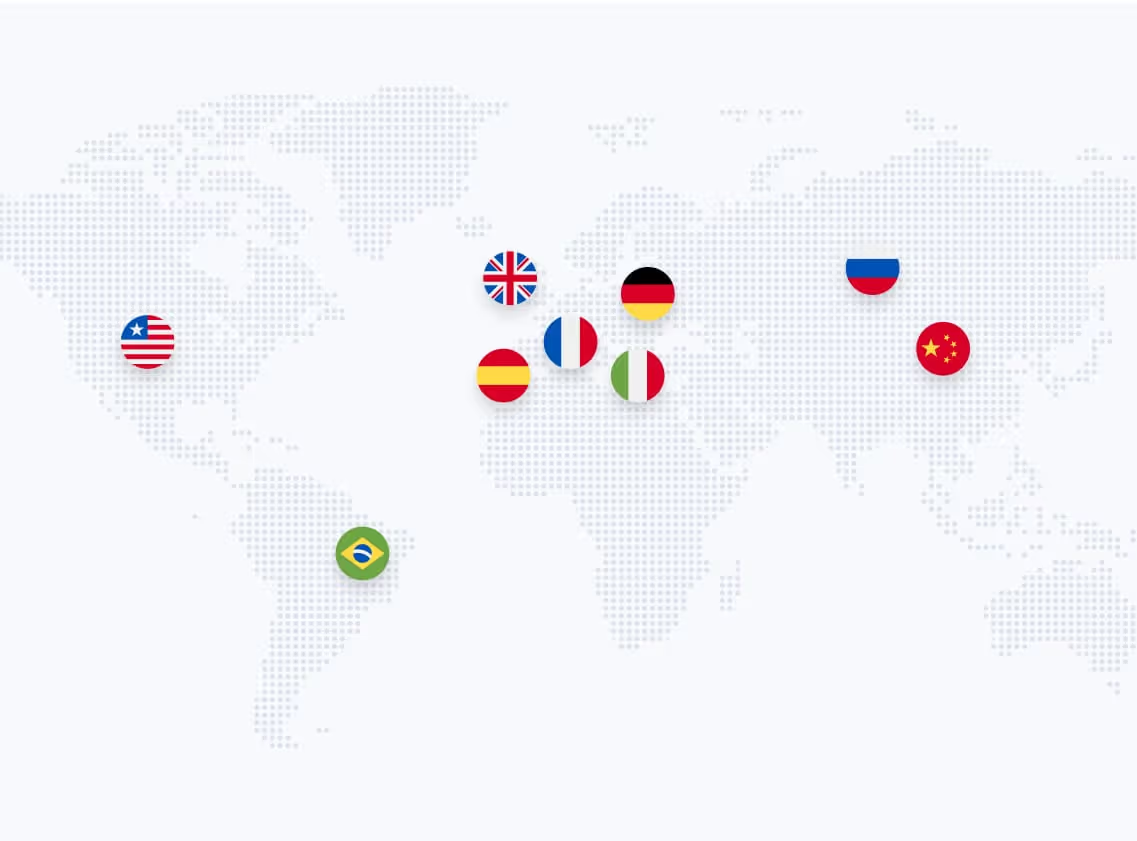
20+ videos per week translated into 15 languages
Fully automated via API: upload → translation → lip sync → download
All brand language is enforced via custom glossaries
Translated clips are delivered back in ProRes HQ + WAV
QA team reviews final videos in Dubly’s UI before publishing
Results:
Cut turnaround time by 70%
Scaled multilingual content x5
Dramatically improved localization quality
Results in just a few minutes
No credit card required
Best translation quality worldwide
If you’re translating dozens or hundreds of videos a month, you don’t just need “an API.”
You need the right API — one that’s secure, scalable, and built for professionals.
Dubly is built for exactly this.
Trusted by major agencies and brands
Designed for high-output creative workflows
Supported by real people who understand your needs
About the author

Maximilian Engler
Co-Founder | Product
Tech
Asynchronous videos look unprofessional. Learn how AI Lip Sync and Visual Dubbing perfect your translations – GDPR compliant and scalable.
Simon Pieren
Dec 23, 2025
Use Cases
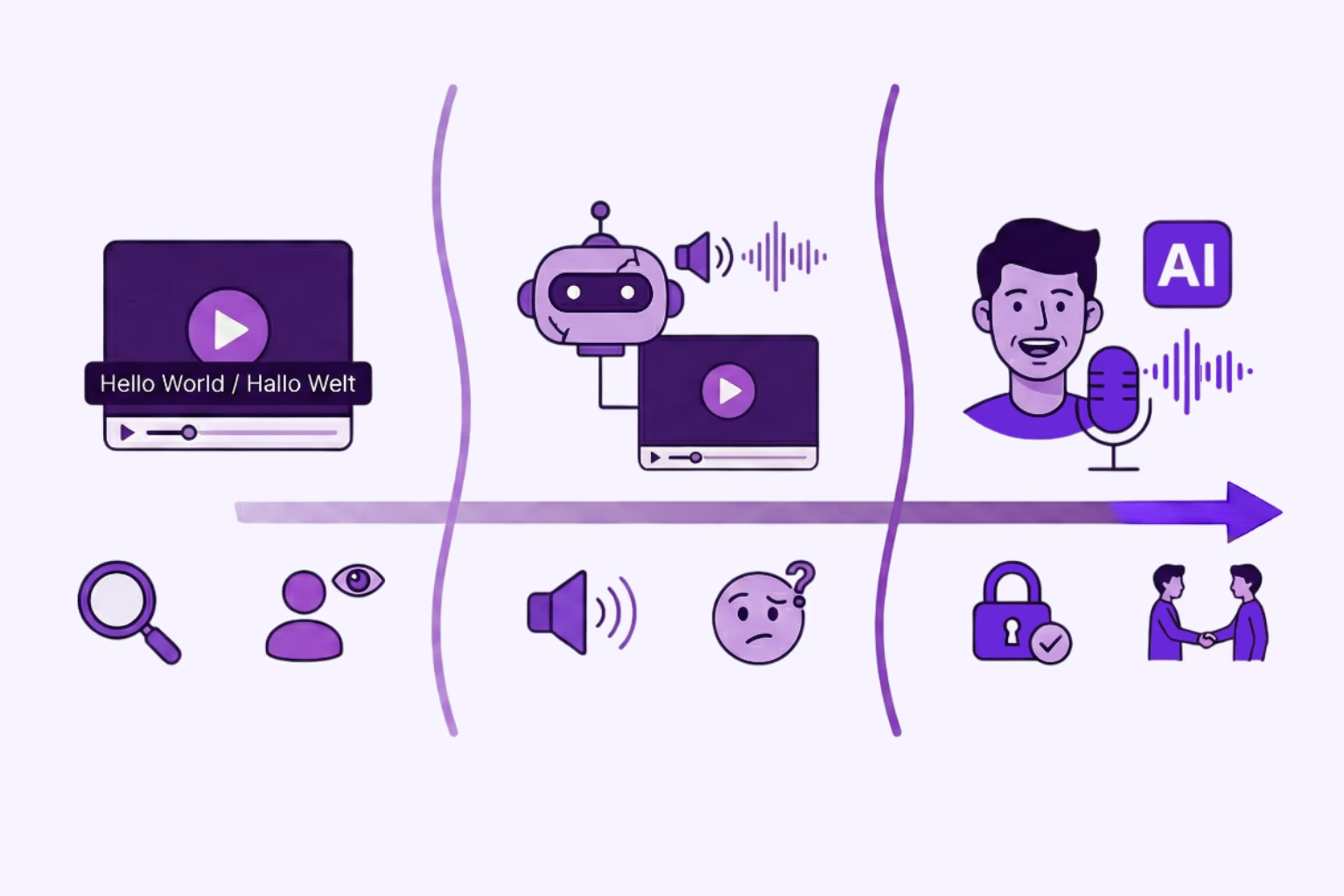
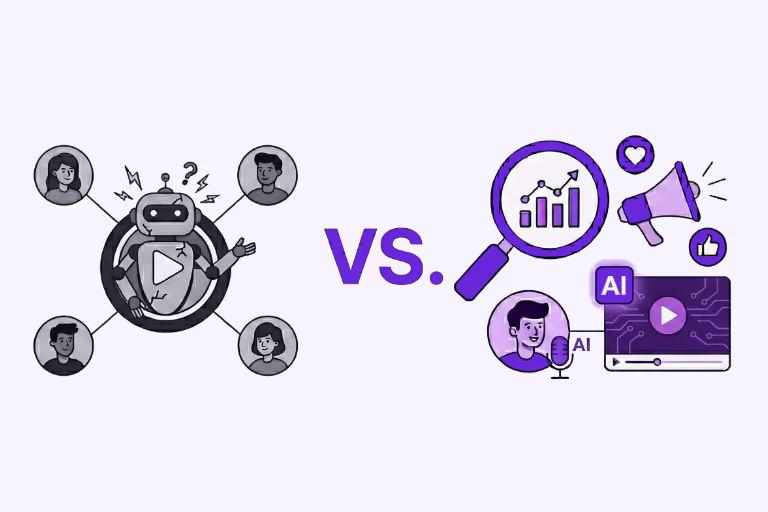
Looking for an AI video translator? We answer how to translate video free using 3 methods: Subtitles, Basic TTS, and Professional Lipsync.
Simon Pieren
Dec 8, 2025
Use Cases
Looking to "translate video free"? Learn the technical differences between standard dubbing and generative AI Lip Sync, and how to test professional quality risk-free.
Simon Pieren
Nov 28, 2025