Tech
AI Lip Sync Explained: Stop Asynchronous Lips in Video Translations
Asynchronous videos look unprofessional. Learn how AI Lip Sync and Visual Dubbing perfect your translations – GDPR compliant and scalable.

Simon Pieren
Dec 23, 2025
Full Data Sovereignty
Personal point of contact
Highest Quality Lip Sync
Trusted by 1,200+ Companies
Tech
September 12, 2025
Video has become a cornerstone of modern communication – across marketing, training, social media, and internal messaging.
For any organization with international reach, the question is clear:
How do we efficiently and professionally bring our videos into other languages?
The promise of AI sounds compelling:
Tools that automatically translate and voice your video content in minutes – no studio, no voice actors, no post-production.
And yes, the market is booming. But when quality, control, and scale matter, it becomes obvious: not all tools are created equal.
A powerful AI video translation tool should ideally cover the full process:
Transcription and translation of speech
Generation of a natural-sounding voiceover
Lip Sync that adapts the speaker’s mouth movements
Support for multiple speakers
Optional: voice cloning, subtitles, audio optimization
Export in multiple formats
Integration into existing workflows (API, permissions, bulk upload)
The goal: A translated video that looks and sounds native – as if it were recorded in the target language from the start.
When using AI-powered video translation in a professional environment, these are the must-haves:
Synthetic, robotic tone breaks trust. Good tools offer emotional nuance, clear articulation, and professional delivery.
If someone is visibly speaking, their lip movements must match the new audio – down to each syllable. Poor Lip Sync looks fake and distracts from the message.
Being able to use the speaker’s original voice in other languages is a major advantage – especially for leadership videos, creators, and brand communication.
You need to be able to define vocabulary, tone, and style. Look for tools that offer glossaries, custom prompts, speaker settings, and audio optimization.
For large-scale projects, it's essential to have features like API access, webhook integration, bulk processing, and user roles.
Translation is a high-trust task. Reliable tools offer hands-on support, human review options, and workflows designed for professional teams.
Especially in Europe, GDPR compliance, secure hosting, and transparent data practices are non-negotiable. ISO certification and German data centers provide additional reassurance.
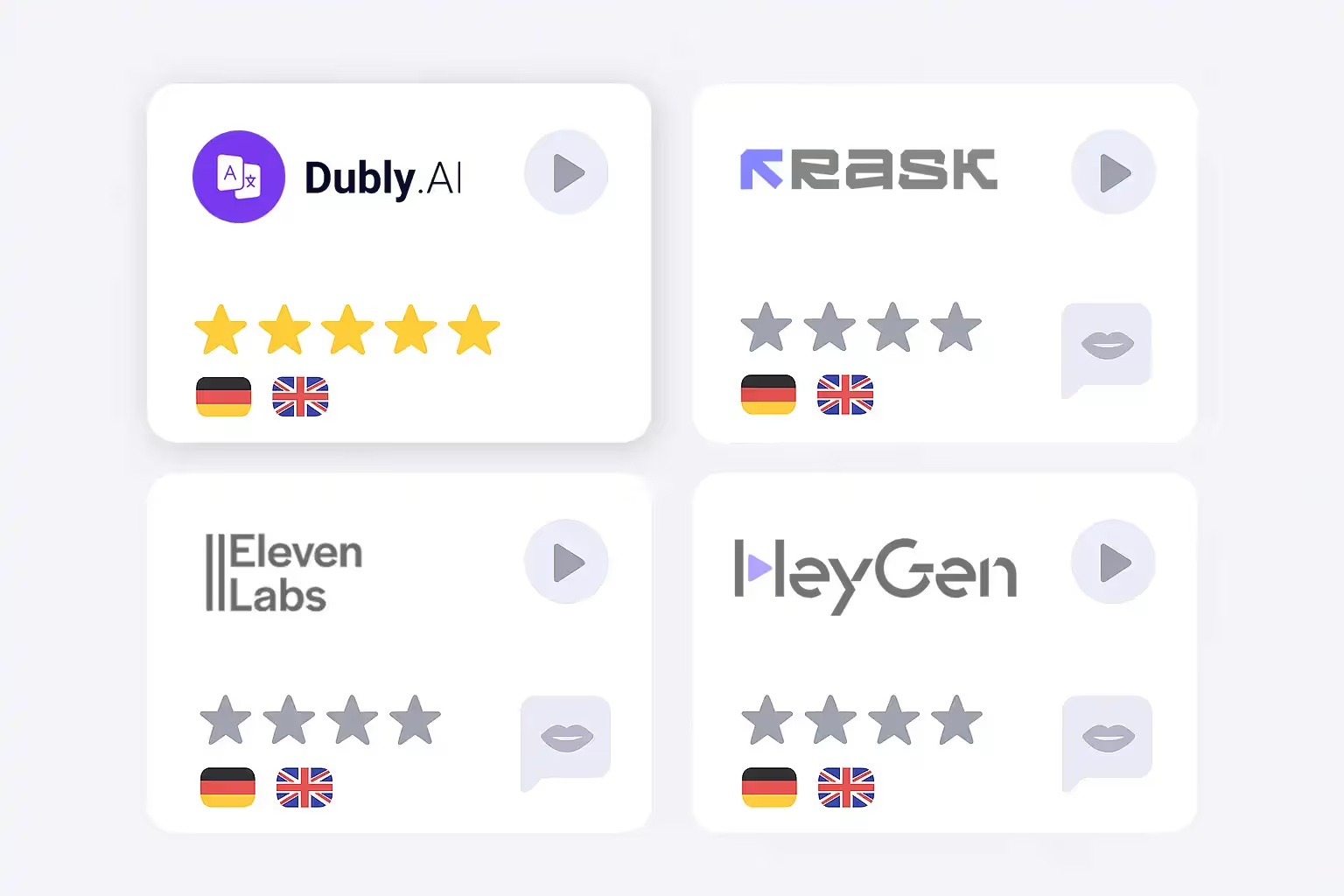
Let’s take a look at a few popular options – and where they shine or fall short:
Known for AI avatars and synthetic presenters
Quick outputs, geared toward social video
Lacks deep customization, visual fidelity is limited
Conclusion: Fast and flashy, but lacks quality and brand control
Focuses on auto-translating existing videos
Simple UI, fast turnaround
No true Lip Sync, limited editing options
Conclusion: OK for basic use – not suitable for premium content
Industry leader in text-to-speech and voice cloning
Excellent speech quality
Not built for video – no Lip Sync, subtitles, or editing
Conclusion: Great for voice generation, but no end-to-end solution
Offers broad language support and AI dubbing
Lacks advanced controls and visual customization
Conclusion: Good base functionality, but not suited for professional workflows
Tailored for professional video translation at scale
Realistic, expressive voice generation
Precise Lip Sync – frame-accurate and visually natural
Use your original voice across languages
Full customization: tone, vocabulary, speaker count, prompts
Bulk upload, powerful API, team features, webhook integration
Free reviewer access for your own native speakers
Hosted in Germany, GDPR-compliant, ISO 27001 certification in progress
Personal, solution-oriented support – from onboarding to rolloutConclusion:Dubly is not a one-size-fits-all tool. It’s a specialized, enterprise-grade platform for serious use cases.
Results in just a few minutes
No credit card required
Best translation quality worldwide
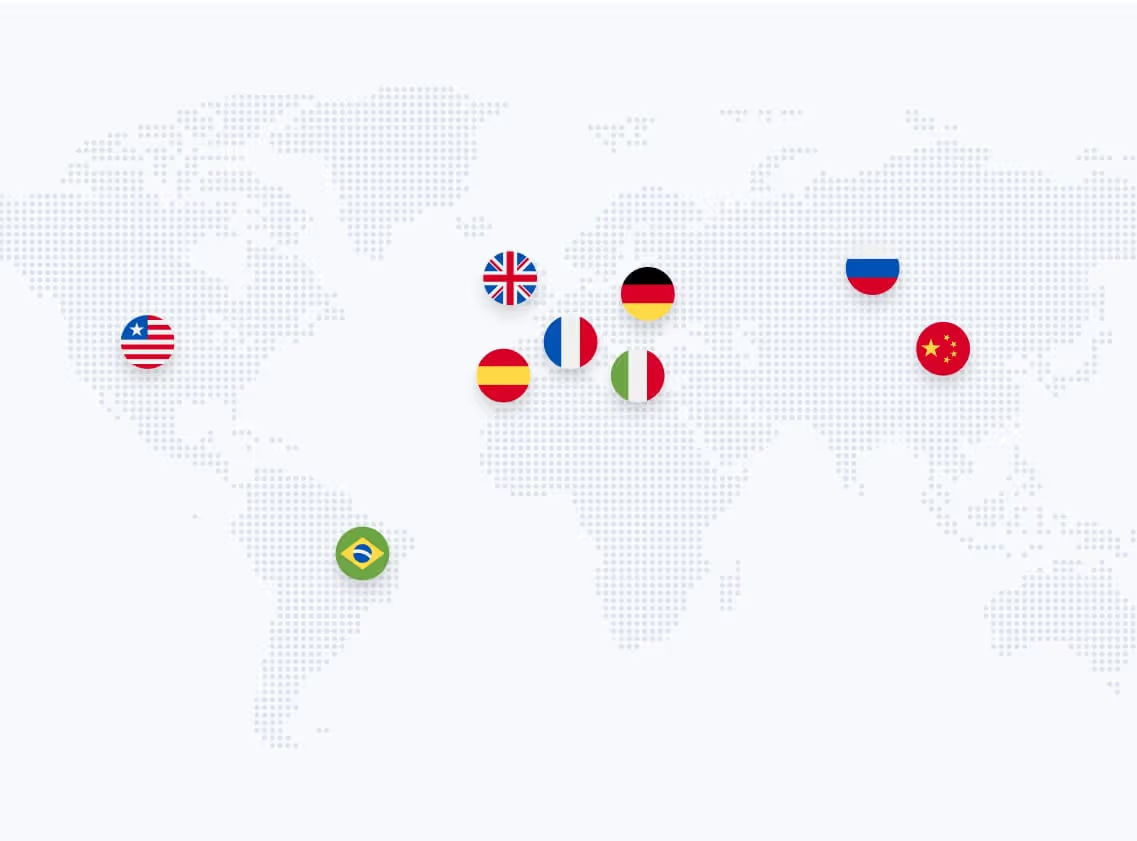
Built for agencies, media houses, and enterprise teams
Fully scalable, deeply customizable, API-ready
Privacy-first: hosted in Germany, GDPR-compliant
Premium technology, paired with exceptional support
Enterprise features like white-label options, free external reviewer access, and more
If you take your video communication seriously – Dubly is the solution built for you.
About the author

Maximilian Engler
Co-Founder | Product
Tech
Asynchronous videos look unprofessional. Learn how AI Lip Sync and Visual Dubbing perfect your translations – GDPR compliant and scalable.
Simon Pieren
Dec 23, 2025
Use Cases
Looking for an AI video translator? We answer how to translate video free using 3 methods: Subtitles, Basic TTS, and Professional Lipsync.
Simon Pieren
Dec 8, 2025
Use Cases
Looking to "translate video free"? Learn the technical differences between standard dubbing and generative AI Lip Sync, and how to test professional quality risk-free.
Simon Pieren
Nov 28, 2025