Übersetze dein erstes Video

Ergebnis in wenigen Minuten

Keine Kreditkarte notwendig

Beste Übersetzungsqualität weltweit

Jetzt Video hochladen
Simon Pieren
Simon Pieren
Co-Founder | Marketing & Sales

Why Dubly is the trusted EU-based partner

Dubly is one of the very few AI video translation providers in Europe built specifically for professional, secure, and scalable use – fully aligned with EU regulations.

Here’s what sets Dubly apart:

  • Data stored exclusively on servers within the EU
  • Any processing involving non-EU subprocessors is conducted strictly under EU Standard Contractual Clauses (SCCs)
  • No training on customer data – your files are never used to improve general AI models
  • Full Data Processing Agreement (DPA) available
  • Support for all data subject rights, including access and deletion
  • Comprehensive documentation of TOMs: encryption, access control, data segregation, etc.
  • Optional signing of Non-Disclosure Agreements (NDAs) for sensitive projects
  • Legal entity based in Germany – fully accountable under EU law
  • Personal, expert support for all data protection and legal queries

With Dubly, your teams can use cutting-edge technology without compromising your legal obligations or ethical standards.

To blog overview

Data Privacy

September 12, 2025

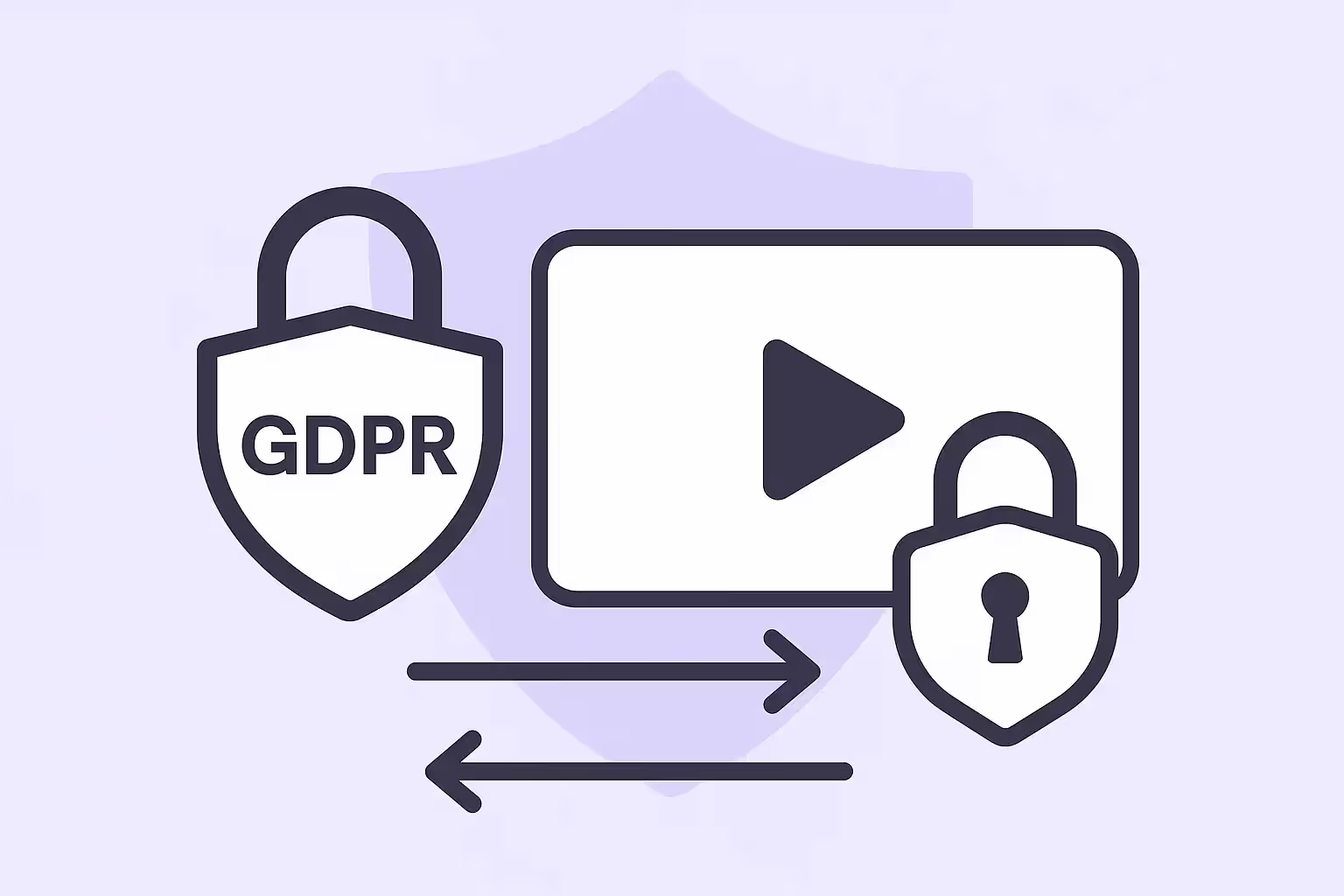
AI Video Translation & Data Protection – What Really Matters in the EU

AI Video Translation & Data Protection – What Really Matters in the EU

AI-powered video translation is transforming how companies communicate across borders.
Whether for marketing, training, or internal communication – multilingual video content is no longer a luxury, it’s a necessity.

But when videos contain people’s voices, faces, or sensitive information, a critical question arises:
Is the translation process compliant with EU data protection laws?

The answer depends entirely on how and where the data is processed – and which provider you choose.

Why video translation is a data protection issue

Videos often contain personal data, such as:

  • A person’s voice (a biometric identifier)
  • Recognisable faces or individuals
  • Spoken content revealing roles, opinions, or confidential information

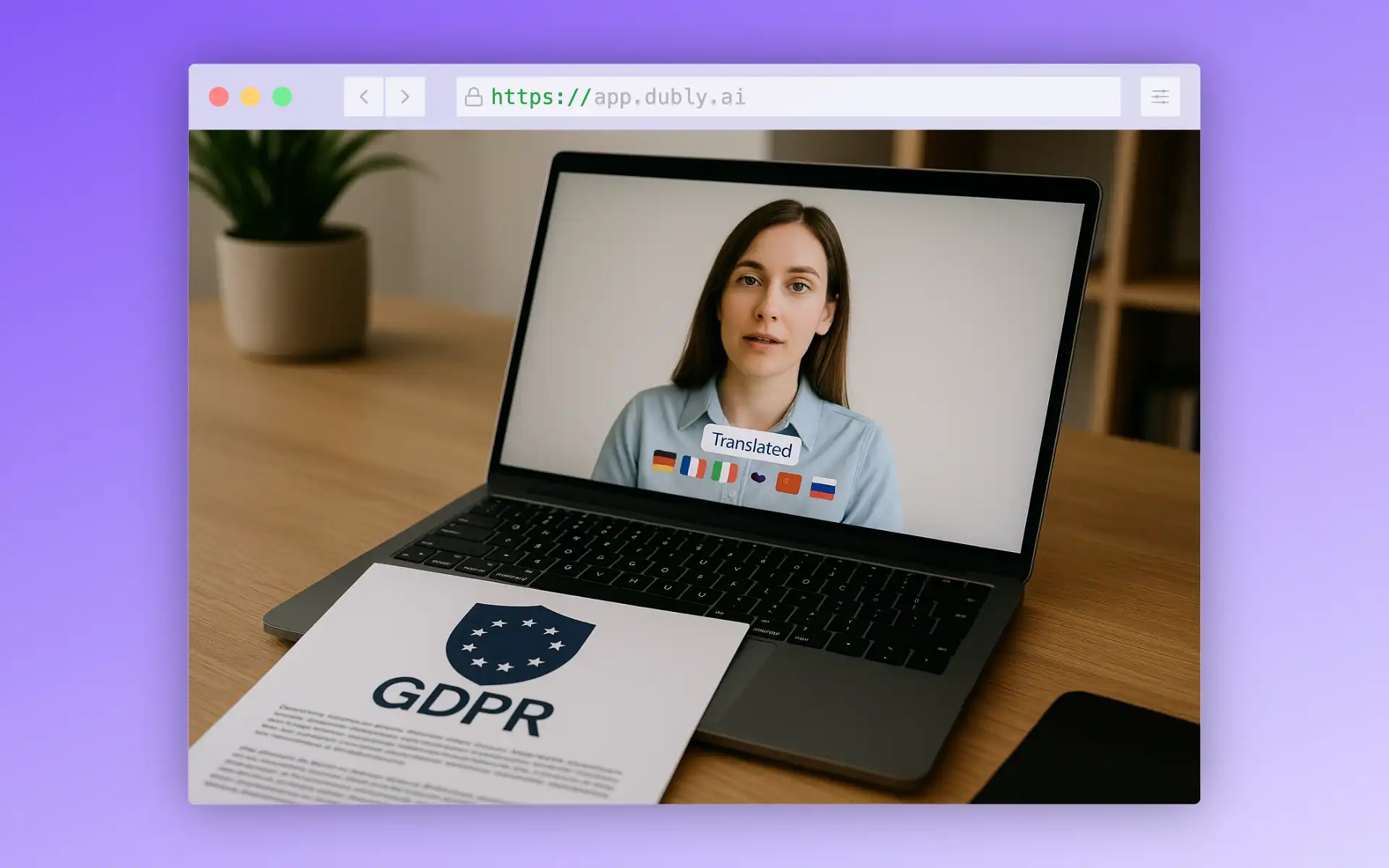
Whether it’s an internal training video or a public-facing brand message – as soon as identifiable people are involved, the General Data Protection Regulation (GDPR) applies.

This makes companies responsible for ensuring any third-party AI provider processes the content lawfully, securely, and transparently.

What the GDPR requires

Under the GDPR, any processing of personal data must meet strict requirements. These include:

Data Processing Agreement

If a third-party provider (like Dubly) processes video data, a Data Processing Agreement (DPA) under Article 28 GDPR is mandatory.

Data Subject Rights

Data subjects (e.g., employees, customers, partners) have the right to access, correction, and deletion of their personal data. Companies must ensure this is technically and contractually possible.

Purpose Limitation & Data Minimisation

Only the data strictly necessary for the translation task may be used – and only for the specified purpose.

Security & Technical Safeguards

Providers must implement appropriate Technical and Organisational Measures (TOMs), such as encryption, access control, and audit logging.

Deletion & Retention Rules

Video and audio data must be deleted promptly once it’s no longer needed.

International Transfers

If non-EU subprocessors (e.g. in the US) are involved, EU Standard Contractual Clauses (SCCs) must be in place to ensure lawful processing.
The problem with many AI platforms

Many AI video translation tools are built for speed and convenience – but neglect core data protection principles. Common issues include:

  • Processing data on US-based servers without safeguards
  • No DPA available or incomplete contracts
  • Reuse of user data for training general AI models
  • Lack of transparency on data retention or subprocessors
  • No way to fulfil access or deletion requests
  • No real control over security standards

In short: what seems like a smart tech shortcut can become a legal and reputational liability – especially for organisations in the EU.

Your GDPR compliance checklist

Before choosing an AI video translation provider, check for the following:

  • Is a Data Processing Agreement (DPA) under Article 28 available?
  • Is data stored exclusively in the EU – and only processed under SCCs where necessary?
  • Are your files excluded from any AI model training?
  • Are technical and organisational safeguards (TOMs) properly documented?
  • Are deletion and retention policies clearly defined and implemented?
  • Can the provider support full compliance with data subject rights (access, erasure, etc.)?
  • Can NDAs or custom confidentiality agreements be signed if needed?

If the answer to any of these is unclear or negative – proceed with caution.

FAQ: AI Video Translation and Data Protection in the EU

What does GDPR require when processing video data?

GDPR requires a data processing agreement, strict purpose limitation, and transparency about where data is stored and who can access it.

Which technical and organisational safeguards are essential?

Key safeguards include encryption, access control, logging, clear deletion timelines, and regular audits.

What rights do data subjects have?

They have the right to access their data, correct it, and request deletion. Providers must ensure these rights can be exercised.

How are data transfers outside the EU handled?

Transfers to third countries require Standard Contractual Clauses or equivalent safeguards, with full transparency for users.

Why are deletion and retention rules important?

Data must only be stored as long as it is needed for its purpose. Once that purpose is fulfilled, deletion is mandatory.

{{cta}}


{{callout}}

Conclusion: AI and GDPR – fully compatible with the right partner

AI video translation can be fast, powerful and cost-efficient – but only if your provider is legally and technically fit for purpose.
Dubly combines innovation with trust, helping you localise content at scale without legal uncertainty.

If your organisation values control, transparency, and GDPR compliance – Dubly is the partner that truly delivers.

Does the Dubly.AI free trial include the Lipsync feature?

Yes. We believe you need to experience the full technology to understand its value. The free trial includes Generative Lipsync and Voice Cloning, not just simple audio translation.

Is there a difference between a standard "Video translater" and Dubly.AI?

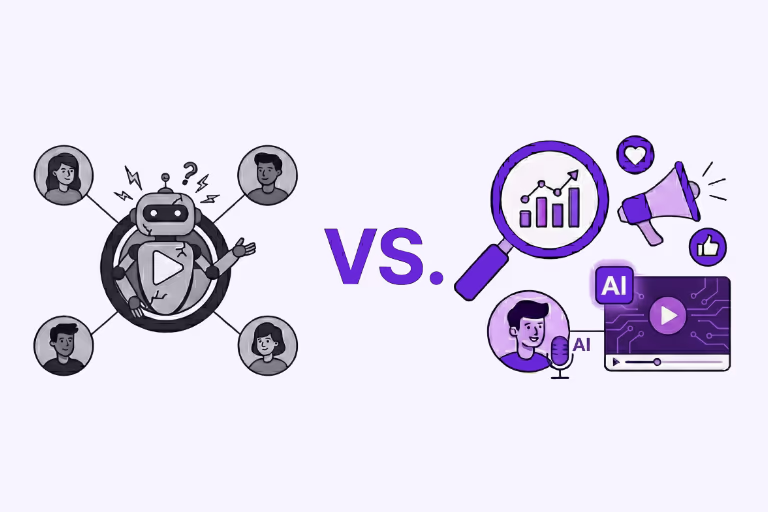
Yes. A standard "Video translater" often only translates text or audio. Dubly.AI is a comprehensive AI solution that adapts the visuals (mouth movements) to the audio, creating a seamless experience.

Can I use Dubly.AI for long-form content?

Yes. While many free tools limit you to 60 seconds, Dubly’s engine is built for scale – from TikTok Shorts to hour-long corporate training modules.

Can I use translate video free tools to internationalize my content?

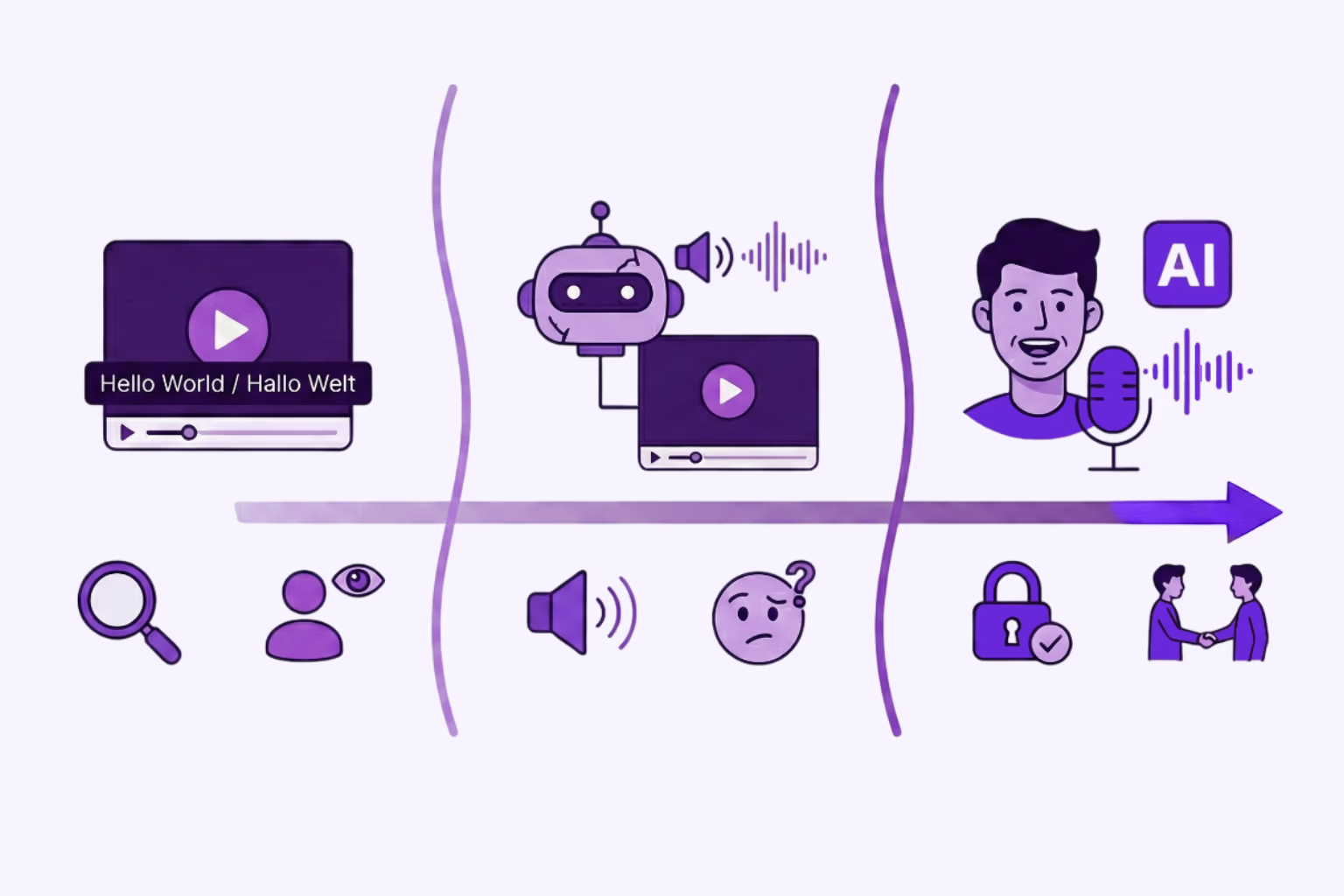
Yes, absolutely. Using free tools is a great starting point to test new markets without a budget. However, keep in mind that methods like subtitles or basic video translator apps usually only transfer information, not emotion. To truly internationalize your brand's personality and retain viewers, you will eventually need lipsync technology to ensure the audience feels connected to you, not just the text.

Does a free ai video translator work for all types of videos?

It works well for content where the speaker is not visible, such as screen recordings or faceless tutorials. However, for any video featuring a person speaking on camera, a standard tool often falls short. Because it lacks lipsync, the visual mismatch distracts the viewer. For content meant to build trust or emotion, you need a solution that adapts both the voice and the visuals.

Is there a free version of Dubly.AI?

You can translate your first video for free so you can validate the quality with your own files. We believe in letting you prove the value first.

Does this work for any language?

Our AI supports over 30 languages, covering the majority of global markets (English, Spanish, German, French, Japanese, Mandarin, etc.). The Lip Sync works universally across these languages.

How accurate is the translation?

AI translation is very good (95%+), but for critical content, context matters. That is why we offer Native Speaker Control (NSC) as an add-on, where humans review the AI's work. This combines the speed of software with the precision of a native speaker.

Can I automate this process?

Yes. For agencies, media houses, or companies with high volume, we offer an API. This allows you to integrate video translation directly into your content management workflow, removing manual upload steps entirely.

Über den Autor

Simon Pieren
Co-Founder | Marketing & Sales

Newest articles

All articles
How to Translate Video Free: 3 Ways to multiply your reach

Use Cases

How to Translate Video Free: 3 Ways to multiply your reach

Looking for an AI video translator? We answer how to translate video free using 3 methods: Subtitles, Basic TTS, and Professional Lipsync.

Simon Pieren

Simon Pieren

December 8, 2025

Artikel lesen
Translate Video Free: A Guide to AI Translation, Lip Sync & Voice Cloning

Use Cases

Translate Video Free: A Guide to AI Translation, Lip Sync & Voice Cloning

Looking to "translate video free"? Learn the technical differences between standard dubbing and generative AI Lip Sync, and how to test professional quality risk-free.

Simon Pieren

Simon Pieren

November 28, 2025

Artikel lesen
How AI Video Translation Connects Global Teams

Use Cases

How AI Video Translation Connects Global Teams

How AI video translation breaks down language barriers in enterprises - secure, empathetic, and scalable.

Simon Pieren

Simon Pieren

November 24, 2025

Artikel lesen